

Why Your Stools Should Always Have Three Legs Instead Of Four
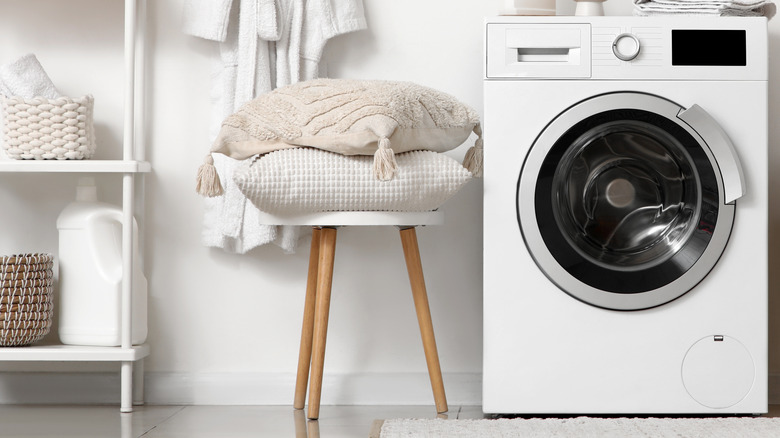
Here's a little design fact that may surprise you — three-legged stools are often more stable than four-legged ones. You'd be forgiven for thinking otherwise, as four legs sound safer and more grounded. But the reality is, four legs only work well when the floor is perfectly flat — and truthfully, most floors are not perfectly flat. Floors are built within acceptable tolerances, which means small variations and areas of unevenness are normal and actually expected. And even on a level floor, wooden floor boards can shift over time, so any ensuing uneven patches on the floor can result in that all-too-familiar wobbly stool, which is a four-leg problem.
Three-legged stools don't have this issue, as with three points of contact, they will always sit evenly regardless of what's underneath. This can be especially useful if you're using them every day. This reliability is a big reason why three-legged stools are a great choice if you're decorating with stools at home, because flexibility and ease matter just as much as looks. Three-legged stools are a classic for good reason, which is exactly why they have been around for centuries.
Where three-legged stools make more sense
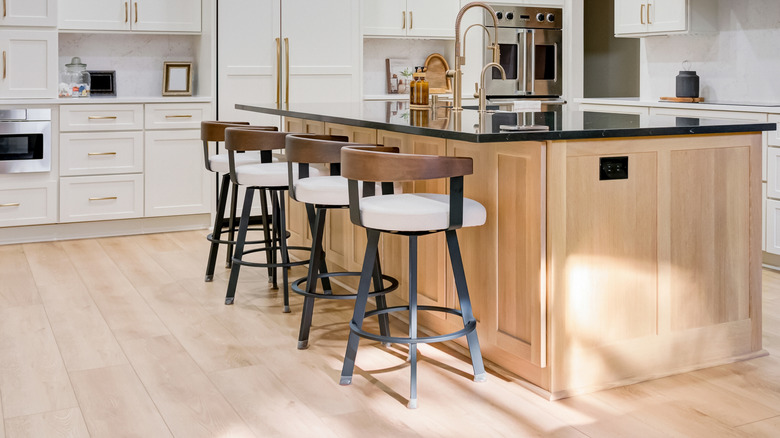
While it is a design quirk, it isn't just that. Having three legs has a real impact on how your stool will function in your space. If you are picking seats for your kitchen island, for example, you have to consider that people don't tend to sit still on those. They often lean and move around whilst sitting and eating, and so a wobble can quickly become very annoying. If you have noticed this at your own kitchen island, try swapping in a three-legged stool and notice how much more stable it becomes. This logic extends across all rooms in your house. Small stools in particular can have many functions; they can go from being a plant display in the bedroom to being pulled into the living room for extra seating when guests drop in. A three-legged stool has more flexibility to be moved around and adapt to various uses, as you know it will stay stable.
Arguably, it might even be more useful outdoors. If you're choosing or even creating a stool for your outdoor space, you have to consider that it will possibly be placed on stones, dirt, decking, or grass. None of these surfaces are typically even, which is just asking for your four-legged stools to wobble around on. At the end of the day, stools are seats — and so, the number of legs a stool has is much less important than if it can actually function the way you need it to. Three-legged stools work with uneven ground, not against it, giving you a guaranteed solid base.