

How To Grow Hanging Basket Flowers From Seed
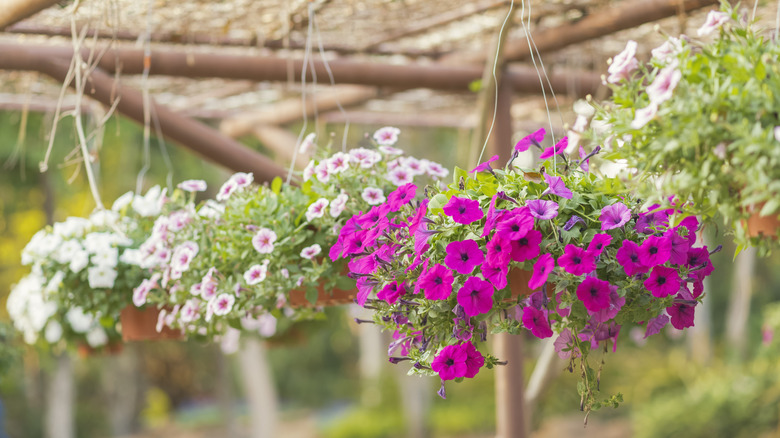
There's nothing like a hanging flower basket to bring playful color to your front porch, balcony, or garden pergola, but the price to line it with pre-planted annuals from a nursery or even a big box store can be steep. Growing an assortment of flowers from seeds is a much more affordable alternative. Gather up some annual flower seeds, a hanging basket with proper drainage, and enough soilless potting mix to fill it, and you'll be on your way to a home-grown display, but the most important step is starting the flowers indoors before adding them to the basket. For this, it's important to have starter plant pots on hand and a good at-home light source set-up. Sow the annual seeds in small containers placed under LED or fluorescent lighting a few weeks before the last frost of the season, then transfer them to the basket and get them used to outdoor conditions before they live outside full-time.
It's more cost-effective to grow your own flowering displays than purchase them, especially if you already have hanging baskets (or well-stored annual seeds less than three years old). Hanging flower baskets from plant nurseries can cost more than $50 each. Even at big box stores, you can expect to spend more than $30 on a single hanging basket with flowers. The cost of seeds varies depending on the specific annual plant, but packets are usually well under $10 each. If that wasn't already enough of a reason, a DIY approach also lets you customize your basket with blooms in your preferred colors and unique varieties that stores may not stock.
Get an early start and provide good light for beautiful flower baskets
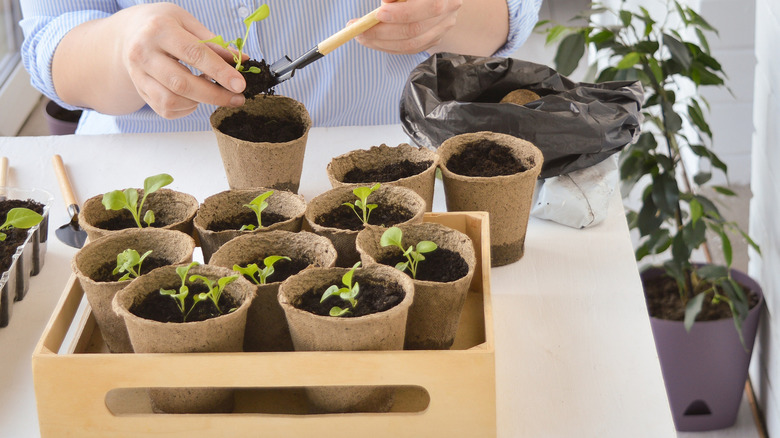
Get going on a gorgeous home-grown basket by planting the seeds of annual flowers known to thrive in containers, many of which can be started from four to six weeks before the last frost. Follow the package instructions, and avoid planting the seeds too early, which can result in spindly seedlings. Plant them in small containers, like store-bought seed trays or affordable household essentials you can start seeds in such as plastic cups. If you're having trouble picking seeds, trailing vines and upright flowers are a surefire combination for visual impact. It's also smart to choose plants that can tolerate drought, since all sides of the basket will be exposed, causing the soil to dry out more often than in other containers. Consider petunia (Petunia x hybrida), wingpod purslane (Portulaca umbraticola), million bells (Calibrachoa x hybrida), or some of the beauties on our list of multicolor flowers perfect for hanging baskets.
Growing seeds under artificial light, rather than in a windowsill, is your best chance to ensure their health. Use fluorescent tubes situated 1 to 2 inches above the containers or more efficient LED lights placed a bit higher. At the last frost date, it's time to move the seedlings into their baskets, which should be filled with a light potting mix. If the young plants have developed noticeable root plugs that stay together when you lift them out of the containers, they're ready to transplant. To avoid overcrowding, stick to three to five plants for 12- to 14-inch baskets. Gradually acclimate your young plants to outdoor conditions by bringing the baskets outside for short periods, as long as temperatures are at least 50 degrees Fahrenheit. Once the temperature is consistently warm, they can fully graduate to outdoor life.
Keep your hanging flower baskets thriving all summer
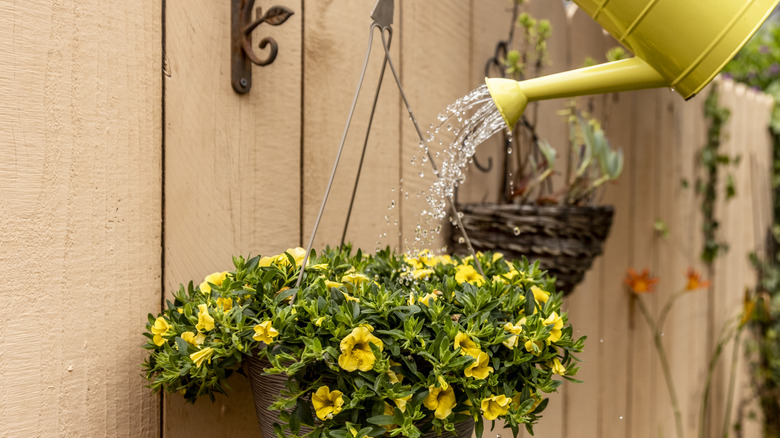
Flower baskets need consistent care once they're adorning your outdoor space, too. For starters, plants in the baskets will be thirsty for plenty of water once they've established roots. Feel the soil every day and if it's dry, water until it streams out of the basket. While you're checking on the plants' water needs, you should also remove any dead flowers, so that more blooms will keep coming. Since your hanging plants only have the soil in the container to work with for nutrition, fertilization is also crucial. Apply a fertilizer that is water-soluble and not too high in nitrogen every few weeks. A tea made from compost or worm castings can also give the plants the gradual fertilizing action they need.
To keep the flower baskets vibrant through the shifting seasons, you may need to adjust their position if they're getting too much (or too little) sun as spring and summer progress. Some stunning hanging basket combos can thrive in intense heat, but others will need more shade by mid-summer. The American Horticultural Society maintains a heat zone map that indicates how much heat plants are exposed to in various regions, which you can cross-reference with information on your seed packets about how much heat each plant can tolerate. Even when they're in the right sun conditions, rotate the plants regularly so each side of the basket gets a chance to soak in the light and the flowers grow evenly.