

What To Do If You Find A Fallen Downspout In Your Yard
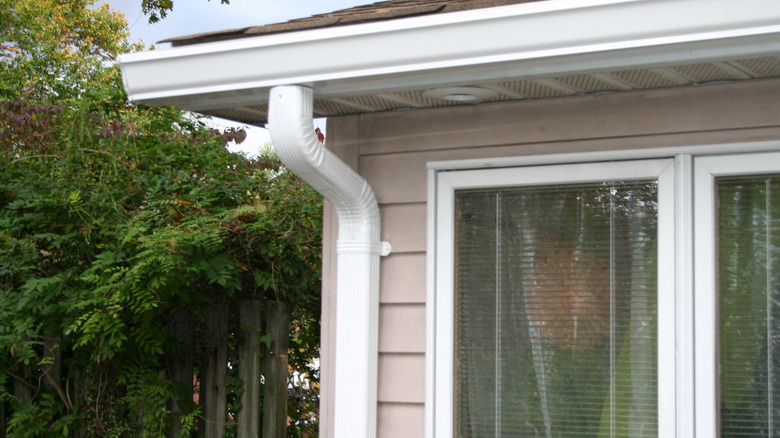
After a severe storm, it's common to walk outside and start looking around to survey your property for scattered tree branches, debris, and damage. What's less common is walking outside and finding a large, ten-foot metal downspout parked on your lawn that definitely doesn't belong to your house. If that's the situation you're in, don't fret. You can try to return it, recycle it, or upcycle it. Since there are ways to repurpose gutters in and around your house, a downspout isn't a huge leap.
Before you haul the stray pipe away, take a moment to check your immediate neighborhood; look for houses with a noticeable gap in their gutter systems, or ask around in person. Since downspouts move rainwater from your gutter down and away from the foundation to prevent basement flooding, a neighbor missing theirs will likely want it back immediately.
If you can't find where it came from, your first instinct at this point is probably just to toss it in the trash. Unfortunately, downspouts are oddly shaped; there's a chance your garbage servicer won't accept an item like that, depending on where you live (but you can try). So your next available steps depend on the material. Traditional downspouts are often created out of aluminum, which is recyclable. Instead of condemning it to a landfill, take it to a local scrap metal facility (they might even pay you a few bucks for it). You can also call your city's sanitation department to set up a bulky item pickup, especially if it's made of vinyl (or PVC) and can't go in your regular trash.
How to take care of a wayward downspout yourself
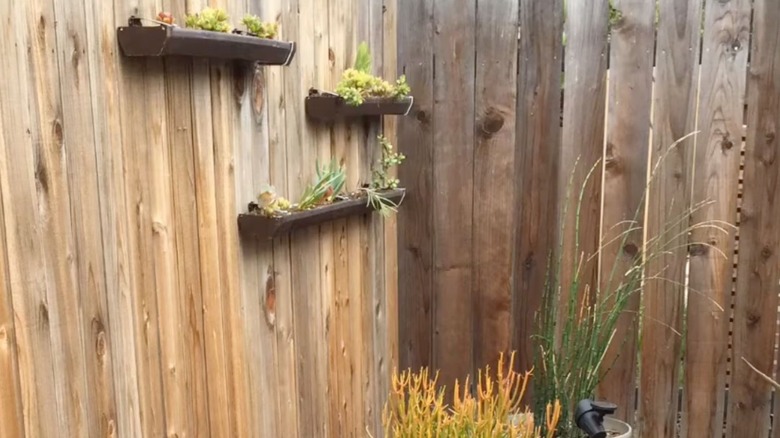
If the downspout remains unclaimed and you don't want to make a trip to the recycling center (which is understandable), there's still another option. Upcycle it into something useful in your home or garden. When you think about it, a hollow metal or plastic tube is the perfect starting point for a variety of DIY projects.
One option is to transform it into a unique garden planter. By capping the ends, drilling a few drainage holes along the bottom, and cutting a long opening along the top, you can create a shallow planter. There are plenty of household items you can turn into planters, and a stray downspout is no different. In fact, these planters would be excellent for growing small plants, like succulents, some flowers, or kitchen herbs. Just be sure to sand down any sharp metal edges before planting to keep your hands safe. The planter can be placed anywhere you want, like at the edge of a garden bed or patio, or mounted to a wall or fence.
If gardening isn't your speed, you could use the pipe as an easy way to keep your garage storage organized. You could cut it into smaller pieces and use them to keep long-handled tools standing upright or for storing things like hand tools. Whether you're able to return the fallen downspout to a grateful neighbor or upcycle the lost gutter piece in your home or garden, a blown-in downspout is an easy yard hazard to clear.