

Not Concrete, Nor Gravel: The Eco-Friendly Driveway Material You Should Consider
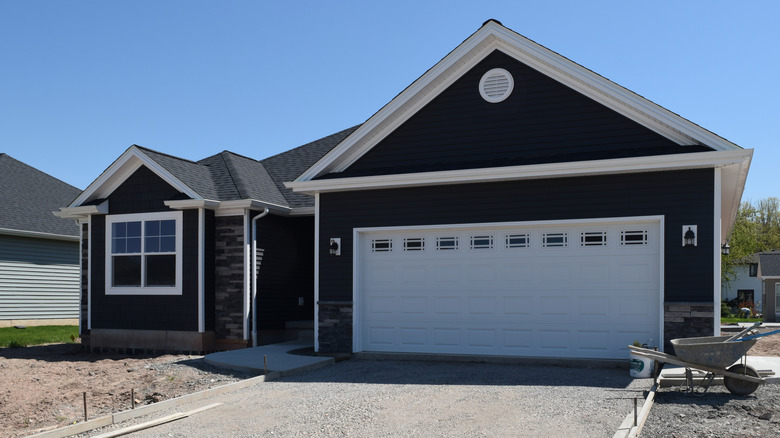
The driveway serves both functional and aesthetic purposes, contributing to your home's curb appeal. You want to choose the perfect material for your driveway — something long-lasting that looks good and comes at a price that will fit your budget. But the eco-friendly driveway material you should consider is not concrete, nor gravel. Crushed stone offers an affordable, durable, and sustainable alternative.
If you are looking for materials to use on your driveway that go beyond concrete and gravel, consider crushed stone for a hard-wearing driveway at a budget-friendly price. A concrete driveway can cost from $5 to $21 per square foot, depending on whether you choose plain or decorative concrete. The costs of crushed stone and gravel are comparable. The exact price varies, depending on the type of stone you choose. Gravel costs between $15 and $250 per cubic yard, and crushed stone costs from $20 to $115 per cubic yard. For context, a cubic yard covers between 80 and 100 square feet at 2 inches deep.
Crushed stone blends contain a mixture of small and larger pieces of stone. When compacted, the stone pieces bind together, creating a surface that offers better stability than gravel. The driveway surface is smoother and easier to walk on than a gravel driveway. Because the stone pieces bind together, it doesn't become displaced as easily as gravel, which results in less rutting in the driveway.
A crushed stone driveway is an eco-friendly alternative to concrete. Unlike impervious concrete, the material allows for water filtration. This helps to reduce stormwater runoff and replenishes groundwater. Crushed stone is often locally sourced, which reduces the pollution associated with transportation, and it does not require any chemicals or sealants to maintain its appearance.
Reasons to choose crushed stone over gravel or concrete
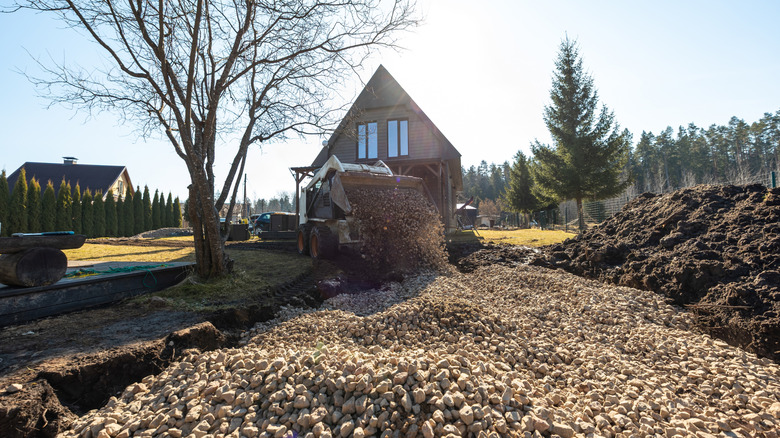
Although concrete is a popular driveway material, the initial investment is higher than with gravel or crushed stone. In addition, concrete can be prone to staining and cracking caused by ground shifting and temperature fluctuations. It can be challenging to repair when cracks or holes develop on the surface. Environmentally conscious homeowners may also want to avoid concrete due to the environmental impact. Concrete production is energy intensive, which contributes to carbon emissions, and mining the materials results in degradation of the land and biodiversity loss. Runoff is another problem, as these surfaces result in pollutants contaminating local waterways.
Gravel driveways are less expensive than either concrete or crushed stone, but you need to know about their drawbacks, too. Gravel requires more upkeep than concrete or crushed stone because it tends to shift. The gravel shifting results in ruts and grooves in the driveway. For this reason, you will need to plan on regrading the driveway every year. In the winter, snow removal is also more challenging because snow blowing the driveway can cause the gravel to become displaced.