

How To Tell If You're Watering An Aloe Vera Plant Wrong (& The Better Method To Try)
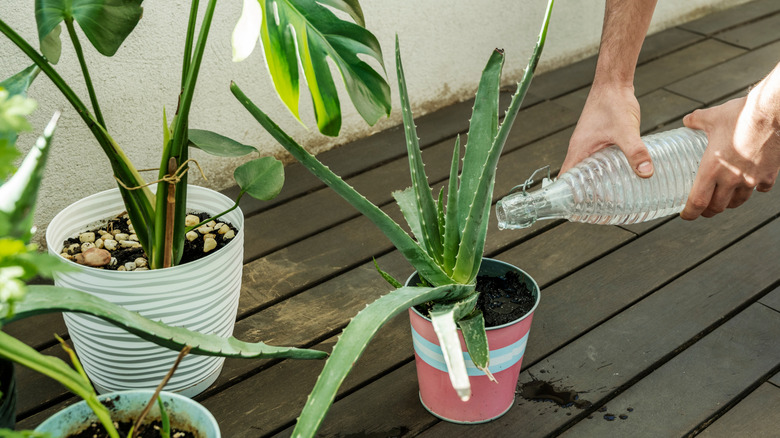
Watering plants should be simple, no? Sometimes, though, this seemingly straightforward task can get a bit tricky — especially when you're watering succulents like aloe vera. These plants don't need much water as they can store it in their fleshy leaves. If their leaves are kept too wet for too long due to overwatering, however, they can develop fungal diseases. This not only makes the leaves look unsightly but can eventually cause them to rot, wither, and die. Equally, failing to water your aloe vera plant according to its needs can also damage the plant.
If you've been watering your aloe vera plant correctly and it still looks dull, it may be time to switch to a new watering method. That's where bottom watering comes in, a watering technique that's often used when you need to avoid wetting the leaves of a plant. Even this method isn't foolproof, however, which means that, to begin with, it's important to be able to recognize the signs that your aloe vera has been watered too much or too little.
Signs your aloe vera plant has been watered incorrectly
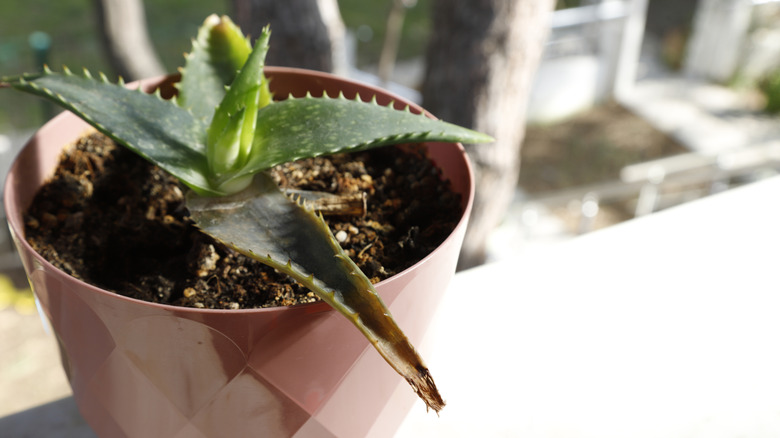
The two biggest mistakes people make when watering aloe vera are underwatering and overwatering. If you've been watering your aloe vera plants too little, you might see their leaves turn yellow or appear shriveled, wrinkled, and puckered. Sometimes, they might also appear thinner than usual and have brown tips as well. In addition, underwatering an aloe vera plant can make its leaves look limp and curled. It's also important to note that these signs can sometimes suggest that your aloe vera plant has a pest issue.
Overwatering has its own tell-tale signs. These usually include mushy, drooping, and soft-feeling leaves along with bumps. These bumps are a classic indication that you've overwatered your aloe vera plant, allowing excess water to accumulate inside the leaf tissue.
Keep in mind that symptoms of overwatering can sometimes be the same as those of underwatering. That's because overwatering can lead to root rot, and when the roots rot, the aloe vera won't be able to absorb water even if it is in excess. So, once again, make sure you pinpoint exactly why your aloe plant is drooping before you try fixing anything.
Bottom watering an aloe plant will keep it healthy and happy
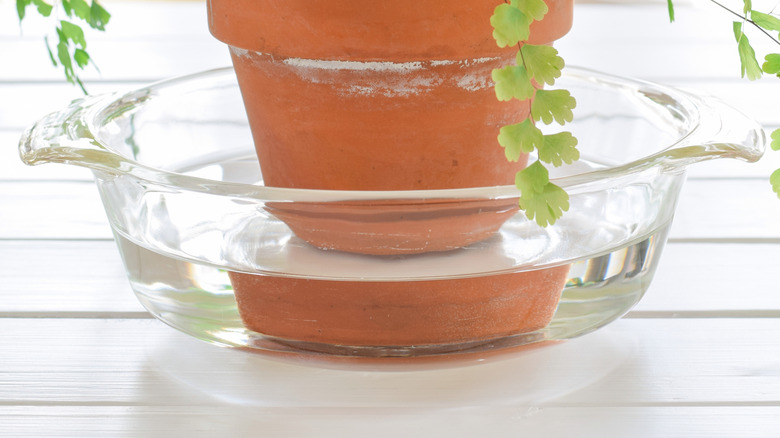
Bottom watering is especially helpful for succulents like aloe vera, since they're so prone to overwatering and root rot issues. However, it's also a lifesaver if your aloe vera plant has been sitting dry for too long. That's because overly dry soils become somewhat hydrophobic and compacted. So, when you water them, the water just sits on the top and fails to seep into the soil. Similarly, dry soil sometimes pulls away from the walls of containers. This means that water escapes down the sides and comes out the drainage holes without ever reaching the root zone.
Bottom watering fixes this issue as it allows the soil to naturally soak up water. You just have to make sure that you take the pot out of the water when the soil on the top starts to feel moist. If you don't, even bottom watering can lead to an overwatered aloe plant.
Also, keep in mind that, once an aloe plant has been watered thoroughly, you don't need to water it again until the top 2 to 3 inches of the soil feels dry. This is especially important in winter, when you need to significantly reduce the watering frequency in order to keep your aloe vera plants happy and healthy.