

The Watering Mistake That Damages Your Hydrangeas & Can Make Them Sick
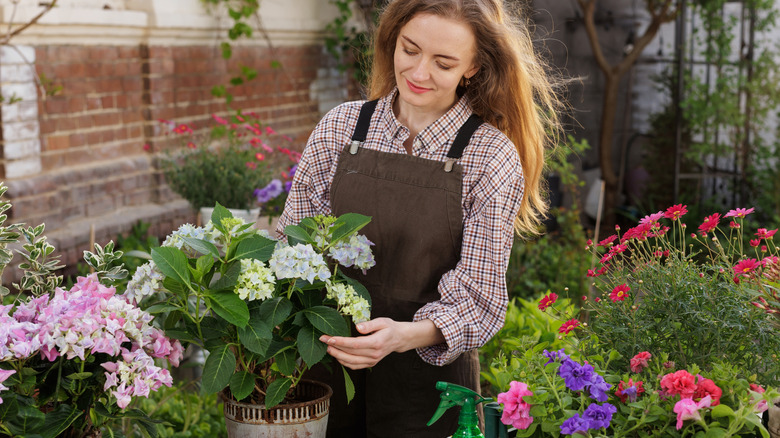
If you've noticed your typically vibrant and healthy hydrangeas starting to show worrying signs of fungal disease, you may be unknowingly watering them incorrectly. Everyone makes mistakes when planting hydrangeas, especially those who are new to these pretty shrubs. Underestimating the nuances of their watering needs is surprisingly common. Hydrangeas are relatively low-maintenance plants, but they can be sensitive when it comes to how they're watered. One of the biggest mistakes when caring for hydrangeas is watering them from overhead instead of at the base.
Overhead watering is, as you may have guessed, the practice of watering a plant from above either by hand or with an irrigation system. The foliage and flowers get wet in the process. While common, this gardening method can lead to fungal diseases like leaf spot, which can wreak havoc on your plants. Hydrangeas infected with leaf spot develop dark brown splotches on their foliage, and the leaves may die and fall off. Overhead watering can also create ideal conditions for bacterial leaf spot, a humidity-loving pathogen; powdery mildew, caused by fungi in the Erysiphaceae family; and various rust diseases, which thrive on wet leaves. When watering hydrangeas, it's important to water the base of the plant, directing the water onto the soil and roots.
Water your hydrangeas at the base of the shrub
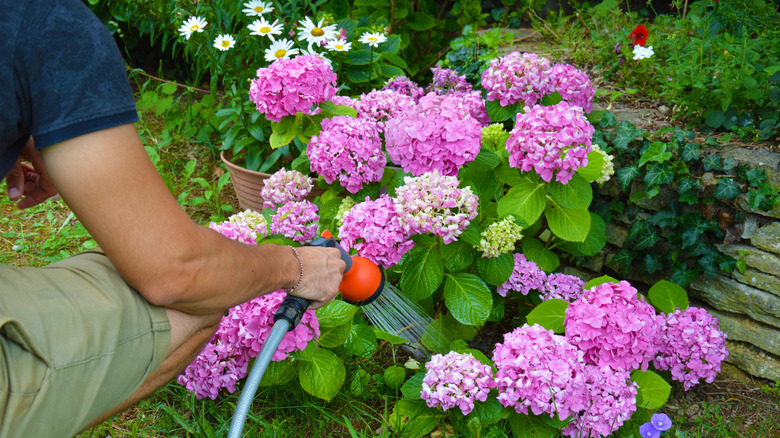
The best method for watering hydrangeas is to water them at the base, directing the stream onto the soil and roots. Avoid getting water onto the leaves and blooms. It's also best practice to water your hydrangeas at the beginning of the day or in the evening. You want to act before the sun is at its fullest or wait until its on its way down. If you water your shrubs in the middle of the day, when the sun is at its hottest, the water may evaporate before it reaches the roots.
One way to tell if your hydrangeas need a hydration boost is to touch the soil above their root ball. If it feels dry, you need to water them. Don't be fooled by wilting leaves. Assuming this means your hydrangeas need watering can be a mistake. Wilting hydrangea leaves can also be caused by extreme sun or heat.
Hydrangeas love water and need plenty of it, but they're not immune to overwatering. They won't thrive in boggy conditions, which overhead watering can easily cause. If you just spray water on the leaves, you won't know how saturated the soil is. Ensure that you are watering at the base of the plant, but don't go overboard. Squishy, yellowing, or dropping leaves are key indicators of overwatering. Whether your hydrangeas are growing in garden beds or large containers, one option is to install a drip irrigation system to regulate their water consumption.