

What To Do If You Find Carpenter Bees In Your Shed
We may receive a commission on purchases made from links.
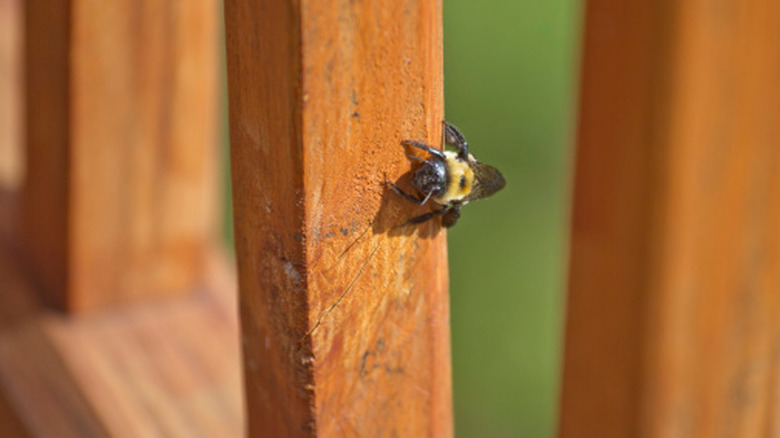
Coming across large, buzzing insects hanging out in your backyard can send chills down your spine, especially if they've inhabited an outdoor structure like your garden shed. You get lucky, however, and discover that they're carpenter bees, which pose very little danger to you or your pets. Like the male bumble bees in your yard, male carpenter bees don't have a stinger. While the females do have a stinger, they'll only use it if they're handled or threatened. While carpenter bees aren't a personal safety concern, they can threaten the structural integrity of your shed. If you have an infestation, seal the holes they create, paint any bare wood, and provide these usually harmless bugs with an alternative home.
Carpenter bees don't actually eat wood like termites, so that's a plus. They do, however, bore perfectly round, ½-inch wide holes into unpainted or aged timber in which they lay their eggs. A single bee might not seem like a massive issue, but they often return to the same nesting site year after year, expanding their tunnels and weakening more boards. Plus, the larvae inside the holes are a tasty treat for woodpeckers. These pesky birds will damage your shed as they aggressively try to reach the larvae. As you can see, a single carpenter bee can lead to large, pricey structural damage if it's not stopped. While these bees are important native pollinators, making them a beneficial backyard visitor, you need to get rid of carpenter bees from your home — your wooden shed included.
How to take the steps needed to safely bee-proof your shed
To take action against these wood-loving bees, you need to make your wooden shed as unattractive for them as possible. As mentioned, these flying insects are broadly beneficial, so focus on mild deterrents over lethal measures. You don't want to force them off your entire property, or, worse, kill them. Carpenter bees love bare timber, so start by examining your shed for any raw wood. Apply a coat of exterior paint to discourage them from nesting there in the first place.
If the bees have already bored holes into your shed, wait until the larvae have grown and left the nest to plug them. The bees only live for one year, and they're most active from late spring into summer. Pack the holes with steel wool, which the adults can't chew through, and seal them shut with exterior wood putty or caulk. You could also spray a pesticide, like Spectracide Carpenter Bee Foaming Aerosol, into the nest holes before sealing them shut — or hire a professional to apply it. Replace any severely damaged wood at the same time.
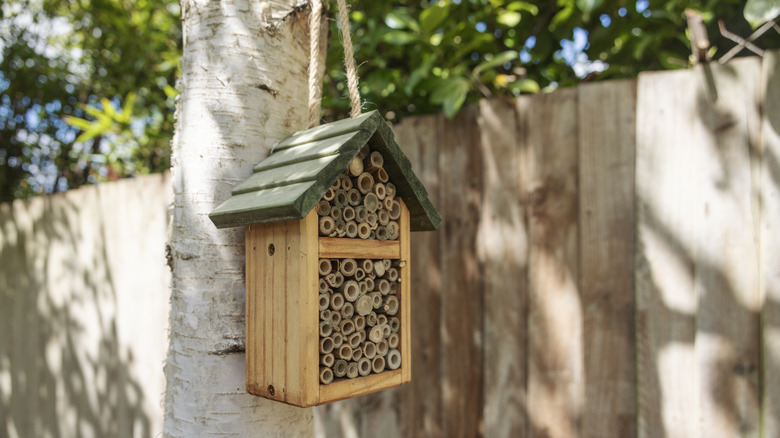
To encourage carpenter bees to move on permanently, look into the benefits of having a bee house in your yard. You can DIY one and mount it to a tree or fence far away from your shed. You could also simply pile untreated, aged soft wood, like pine or cedar, in a remote part of your yard with morning sun. This gives the bees a better option than your shed's walls.