

Naturally Deter Ticks By Growing This Fresh-Smelling Herb
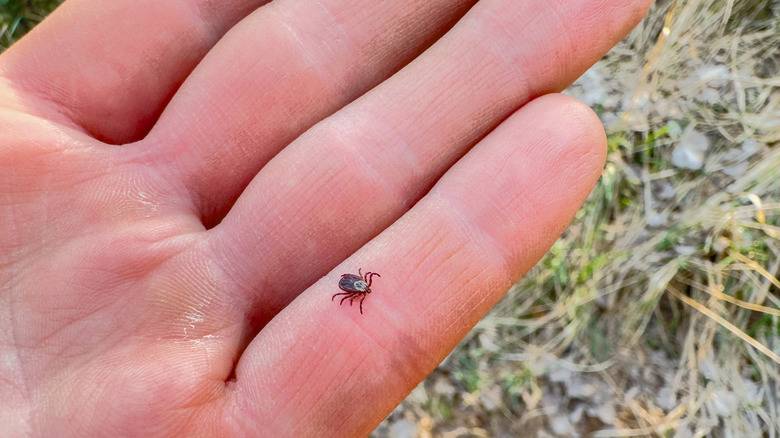
Ticks are small, yet they can cause serious trouble. They bite, feed on human blood, and can cause allergic reactions in sensitive individuals. Even worse, ticks carry and transmit an array of bacterial and viral diseases that can harm our health. Luckily, though, there are ways to deter ticks in and around the home, such as planting fragrant herbs. It turns out that lavender, in particular, isn't just a pretty scented shrub. While it won't eliminate ticks, it can make your home and garden less attractive to these troublesome insects.
"With tick-borne diseases on the rise, it's crucial we utilize every tool in our arsenal for prevention," said Dr. Nevena Zubcevik, a Harvard-educated and board-certified medical specialist, in an interview with Global Lyme Alliance. In the interview, Dr. Zubcevik promotes the use of lavender "as a natural line of defense against ticks." Lavender (Lavandula spp.) contains repellent compounds, such as linalool, camphor, borneol, and lavandulyl acetate, that interact with insect odor receptors in the same way as synthetic repellents. Linalool, in particular, is so effective at repelling insects that it's included in commercial pesticides. Of course, no matter how effective any single plant may seem, it cannot keep ticks away entirely. Always take additional measures to protect yourself and your home from ticks in addition to lavender.
Plant lavender near living spaces to keep ticks away
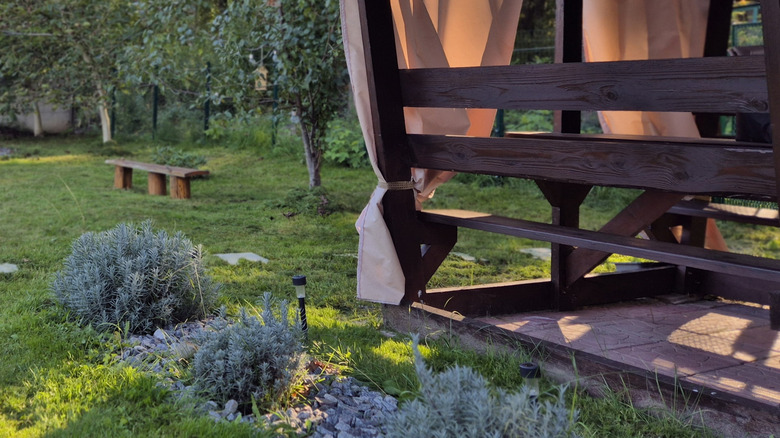
If your goal is to use lavender as a natural tick deterrent, where you plant it really matters. You need to grow it near the places ticks commonly enter a home — for example, near windows, doors, and any other openings. Lavender grows well in pots, which are portable. Place containers of lavender near patios, pathways, decks, or any other commonly used outdoor living spaces. To bolster your defense against ticks, plant lavender alongside other plants that keep ticks out of the yard and that have similar growing conditions, such as rosemary and thyme. Space plants at least 1 to 2 feet apart.
Lavender needs a sunny spot to thrive; this flowering shrub does not do well in shade. If you are growing potted plants indoors — near, say, the door to your enclosed porch — to deter ticks, make sure it's near a window or use grow lights for indoor plants where sunlight is limited. Lavender prefers well-drained soil that is neutral to slightly alkaline. If you can avoid it, don't plant lavender in clay or perpetually damp soil. Lastly, keep in mind that lavender is perennial in USDA Plant Hardiness Zones 5 to 9. If you live outside those zones, you can grow it as an annual.
For maximum deterrence, pair this lavender-focused strategy with other anti-tick gardening strategies. Avoid growing plants that attract ticks, like ferns, brambles, or grasses. Ticks often hitch a ride into residential backyards on deer — and rabbits, among other mammals — so avoid any plants deer love to eat, like hostas and sunflowers. In fact, lavender may even deter these cute but pesky herbivores with its heady scent, too.