

How To Give Your Potted Lavender Plant A Spring Boost For More Flowers In Summer
We may receive a commission on purchases made from links.
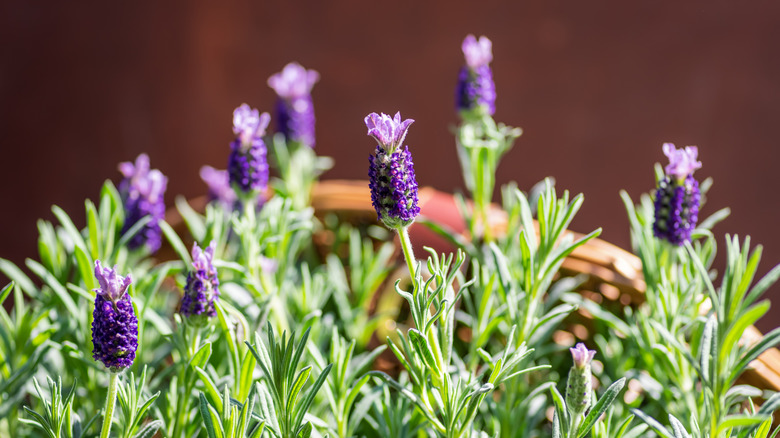
If you've ever noticed a potted lavender plant and marveled at how many blooms it has, you may be wondering what you can do to achieve that same effect. While lavender (Lavandula spp.) likes to be in the ground, it makes a charming planter filler, and there are some good reasons to grow it in a container, such as when you need to overwinter it indoors. So if you're looking at your potted lavender plant in the spring and wondering what to do next, there are a few things to check to make sure it has more flowers in the summer.
Lavender is a drought-tolerant, low-maintenance plant that does well without constant watering and attention, but the first thing to check to make sure it has everything it needs for abundant blooms in the summer is that it has adequate sunlight. It can tolerate partial shade but needs at least six hours of sunlight daily. Without plenty of sunlight, lavender produces more leaves than blooms. Since plants can eventually become rootbound if they're not transplanted every few years, look for signs that your lavender is rootbound. You may notice roots coming out of the pot, bulges in the sides of the container, or water running straight through the pot without soaking in. If your lavender is rootbound, it will need to be repotted in a slightly larger pot with drainage holes to ensure an abundance of blooms.
More ways to give lavender what it needs for prolific summer blooms
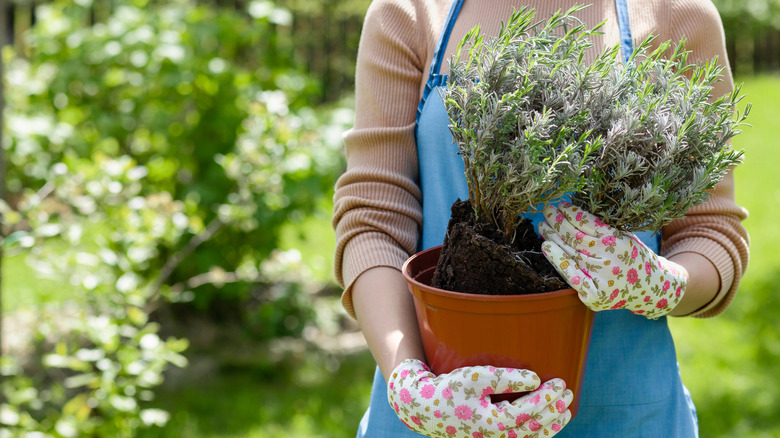
Many perennial herbs should be divided in the spring, and while repotting and dividing aren't exactly the same thing, the logic behind why this is the best time of year to repot your lavender is the same. It's because your plant is still in a dormant state in early spring, so repotting isn't as stressful. When repotting lavender, make sure to swap out the old soil with fresh potting mix. Lavender is drought-tolerant, and overwatering is a common cause of reduced blooms, so water sparingly. The soil should be almost dry before watering, as too much water can even cause your lavender to die.
Many gardeners prefer to add ingredients like perlite or sand to improve drainage, or use a Lavender Potting Soil Mix that's designed for this purpose. Soil is an important factor to consider because lavender prefers nutrient-poor soils. You'll have fewer lavender blooms if you give the plant too much fertilizer, as excess nitrogen signals plants to produce foliage instead of blooms. Still, when you're growing lavender in a container, it is smart to recognize that your lavender plant needs something extra. Adding a light layer of compost or a handful of worm castings to top off the soil in the container is the perfect solution. You just need a little, and if you do this every couple of years, your lavender can produce more flowers every summer.