

What To Do If You Find Baby Rabbits In Your Flower Pot
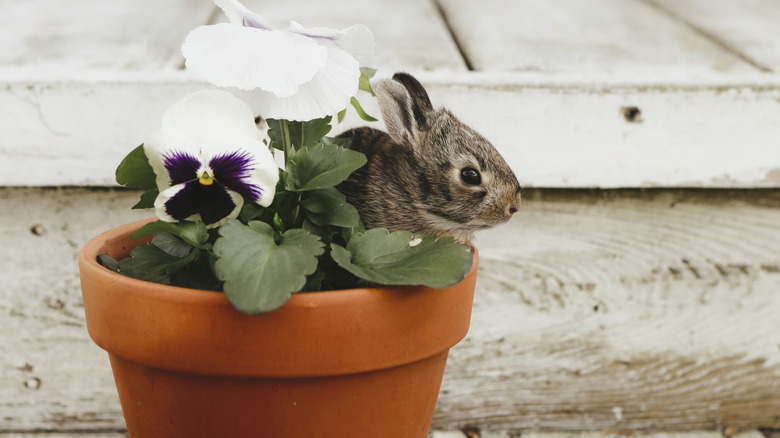
If you grew up thinking every rabbit digs a deep hole underground that takes Alice to a fantasy wonderland, you would have felt a shock after you found a rabbit nest in your flower pot. Turns out, cottontails prefer building a nest in an open area where predators wouldn't readily saunter in — funny enough, your pets don't count amongst them. This means your unmowed yard, garden beds, or, in this case, flower planters are all fair game, as long as the mother can dig a shallow pit in the soil and has sufficient grassy blades and leaves in the vicinity to camouflage the location.
omg found the tiniest cutest bb bunnies in a flower pot by themselves?? pic.twitter.com/6nSrxw4ZT3
— victoria (@pieszeckistann) August 13, 2022
So, the best thing you can do when finding baby rabbits in your flower pot is to leave them alone. Despite any concerns, they're likely being cared for properly by their mother. And considering rabbits are terribly frightful animals (they find us humans quite scary and can actually die from shock, even if lightly petted), giving them their space is the right call.
Ensuring mother bunny is around
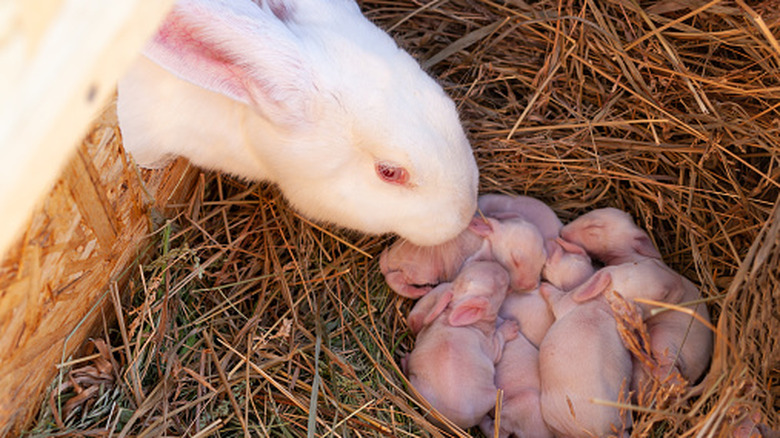
Baby rabbits don't emit any noticeable smell because of the as-yet underdeveloped sweat glands, which is why neither you nor predators discover their presence easily. But that's not the case for the bunny mother. Since masking her distinct smell and presence is difficult, she tends to avoid the nest for the most part, choosing to spend her day in the vicinity, keeping a watchful eye on her nest and foraging for food for herself. Twice a day, around dusk and dawn, she returns briefly to feed them milk.
So, if you want to make sure that she is truly around, you can undertake a test. Place a couple of pieces of twine, twigs, or wool yarn in an "X" or a hashtag pattern, and photograph it. After the next expected visit, examine the pattern for any disturbance (the mother rabbit will not entirely remove these materials). If it has been moved, she is around. If not, wait at least 18 hours before checking again. Baby bunnies can survive unfed for a few days. You may also, after wearing gloves, check their stomach; a rounded, slightly pink belly indicates they've been fed. If both indications are missing or you notice the babies look distressed, injured, or covered in flies, contact the nearest wildlife rehabilitation center for guidance.
Putting other fears to rest
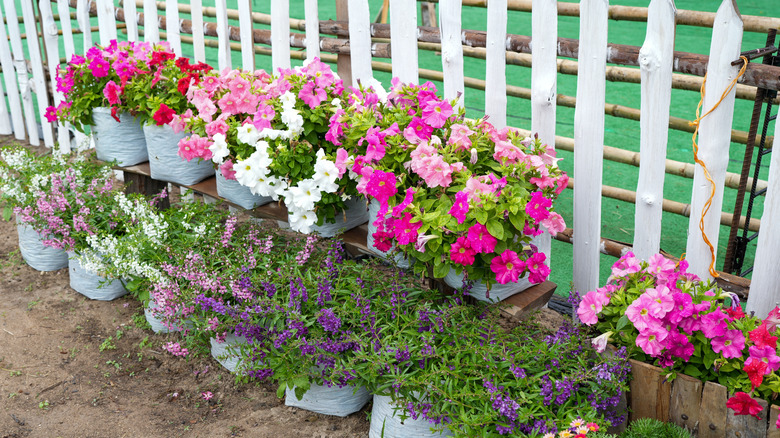
After you've made sure baby momma is taking good care of these adorable creatures, take steps to keep your pets out of your container garden. If your cats and dogs are particularly sly, place a breathable laundry basket atop the flower pot during the day. Hold it down with a brick, and remove both before dusk. You can also cordon off the area by putting a chicken wire fence, hardware cloth, or a tomato cage. Just make sure to cut open a tiny space at the bottom so the mother rabbit can enter the nest and nurture her babies. Whatever you do, don't relocate the planter, as rabbits are particular about location and may abandon it. If you must move it, keep it within 10 feet of its original location. Also, avoid leaving out water for the rabbits, as it may attract predators instead.
That being said, if you're afraid of the rabbits destroying your garden and planters after they grow up, you can rest easy. Baby bunnies quit their mother's territory after maturing. Around that time, they're usually about three weeks old with a full set of fur, eyes wide open, and fully erect ears. While they may briefly return to the nest to sleep, by the time they're six months old, they're ready to breed and build their own nests — usually in neighboring territories. Still, to discourage their return, you may fence the pots or use repellent sprays.