

How To Fill The Bottom Of Large Planters While Keeping Them Light And Movable
We may receive a commission on purchases made from links.
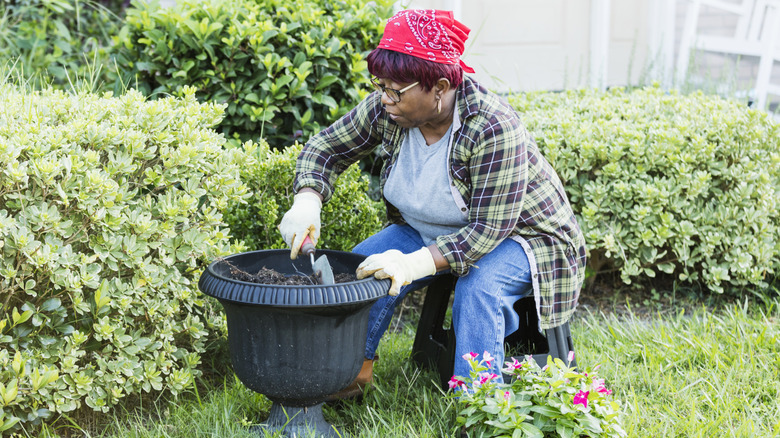
While you can find plenty of materials you could be using to fill the bottom of large planters, some of them, like sand and small flower pots, are not lightweight and will make large planters heavy and challenging to move. What if we told you that the way to avoid wasting potting soil in your jumbo planter is to fill the bottom of them with air?
If you place something mid-pot that the potting soil and plant can sit on, you can leave the bottom filled with nothing but air, making it delightfully lightweight and giving your plants some nice air circulation. Happily, that "something" exists as an inexpensive product called a pot insert that you can use to block off the space you'd normally need to fill.
A pot insert is a plastic disk with holes for drain that provides a platform for your soil and plants higher than the bottom of the pot. It's essentially a false bottom for planters. Probably the best known of these inserts come from a brand called Ups-A-Daisy. You can get them in multiple sizes from 10 to 18 inches in diameter and both round and square shapes at prices ranging from $8 for the smallest insert and just over $13 for the largest at Lowe's.
Use a pot insert to avoid using fillers or excess potting soil
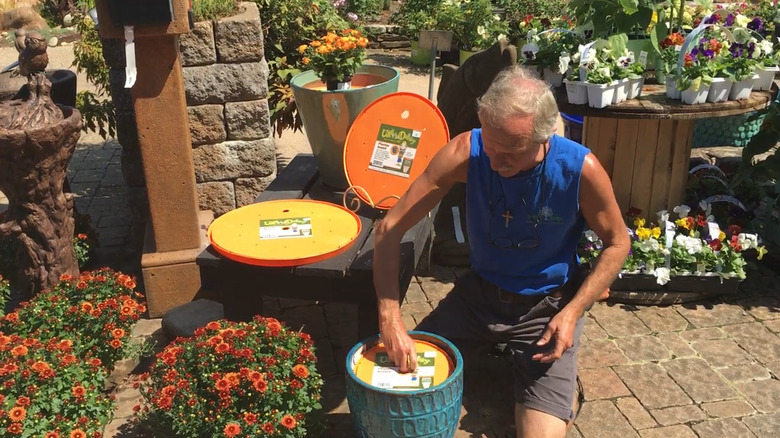
To use a pot insert, you'll first need to determine the size you need, based on the size pot you're using and what you're planting in it. A tapered pot is required, rather that one that's the same diameter from top to bottom. For plants that grow in shallow soil, you can measure the diameter at halfway from the top of the pot.
For tall plants and those with deep roots, measure a little deeper than halfway down. Place the pot insert in the planter until it fits snugly in the pot. Add your soil and plant. You may have to sacrifice some of the lighter weight if you have tall plants and get a lot of wind. Add a weighted item in the bottom of the planter, such as a brick, before inserting the disk to keep potentially top-heavy plants from blowing over. Water as normal.
Consider a DIY pot insert
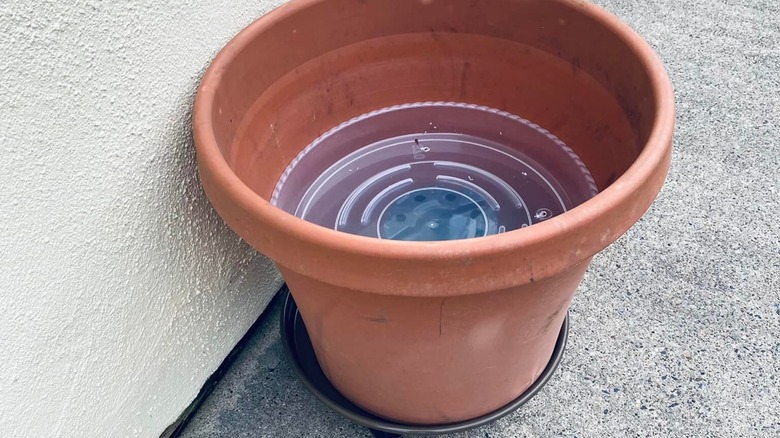
It's also possible to DIY a pot insert. Just add an inverted a nursery pot at the bottom of a large planter and then place a plastic plant saucer on top of it. Drainage holes are critical in both pots and pot inserts so puncture holes in the saucer for water to flow. This option is certainly an economical way to go since plant saucers, like these Mainstays 6-inch Round Clear Plastic Plant Saucer from Walmart, cost less than a dollar. Plus, nursery pots are virtually free since you likely have them on hand if you've ever bought plants.
Sometimes the idea of filling space in large pots gets mixed up with the debunked claim that materials need to be placed in planters to improve drainage. Whatever solution you choose for filling a large planter, whether store-bought or DIY inserts, be sure to avoid common materials you should never use to fill the bottom of large planters, such as large or nonporous objects.