

The Drought-Tolerant Flower That Delivers Vibrant Color From Spring To Summer
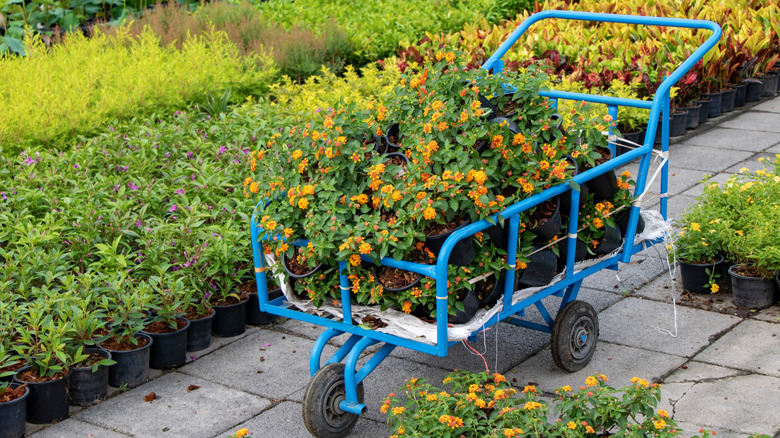
There's nothing like bright, colorful flowers to turn a boring garden into something special. But let's be real: planting colorful annuals year after year is hard work. And buying the same species annually can get pricey. Where can you find a perennial that offers bright color every summer, all season long? And where can you find such a plant that's not only beautiful but also salt- and drought-tolerant? One option is Firestorm lantana (Lantana camara 'CCCF1'), with its red and yellow blossoms and evergreen foliage.
Lantana plants come in many colors and with a variety of different foliage. They're tough, easy to grow, and easy to care for. But lantanas in general aren't for everyone. For one thing, they thrive in USDA Zones 7 to 11, meaning they perform best in areas with mild winters. In addition, while drought-tolerant, lantana often performs best in warmer, slightly humid climates.
Lantana is also non-native in most parts of the United States, especially in Texas and California. If you're hoping to choose native versus non-native plants, lantana may not be the best option. Fortunately, the lantana you can buy at shops are generally sterile, but non-sterile varieties are considered highly invasive in certain areas. If you choose lantana, opt for sterile cultivars when possible.
Growing firestorm and cosmic firestorm lantana
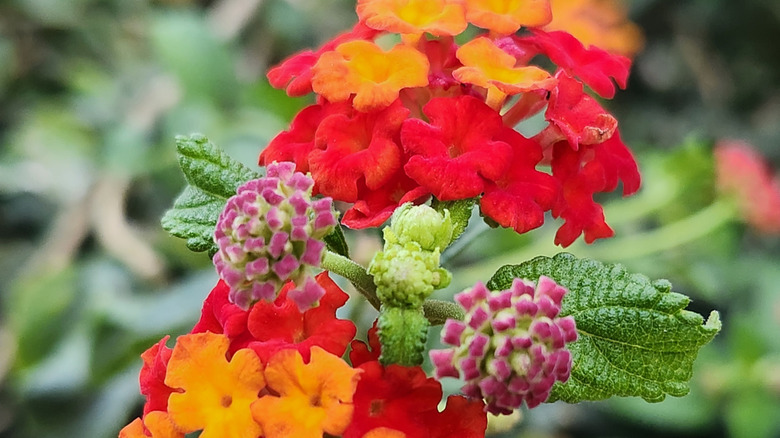
You'll want to plant your lantana in spring, after the soil has warmed up a bit. Lantana prefers well-drained soil, as soggy conditions can lead to root rot. Choose a sunny spot, and space your plants at least a foot apart. Loosen the soil in the area where you're planting, and dig holes just a bit larger than the root ball. Loosen the plant's roots, set it in the hole you've dug, and fill it in. Be sure to water thoroughly and continue regular watering until you're sure it's healthy and thriving.
Once established, lantana requires minimal care. You can fertilize at planting if needed, but avoid overfertilizing, as that can reduce the number of blooms. If you want your lantana to become bushy, prune stem tips and shape the plant as it grows. You will also want to prune your lantana shrub, removing any dead wood and pruning your plants back at the end of the season to encourage new growth. Before pruning, be sure you have the right tools and that you understand the three D rule: dead, diseased, and damaged.
Firestorm lantana is gorgeous and very similar to another cultivar, cosmic firestorm lantana. The only significant difference is in their foliage. While standard firestorm has dark green foliage that provides an ideal background for the bright flowers, cosmic firestorm has colorful, patterned foliage that remains visually interesting even after flowering ends in the late fall.