

For Healthy & Delicious Root Vegetables, This Is The Only Way You Should Plant Them
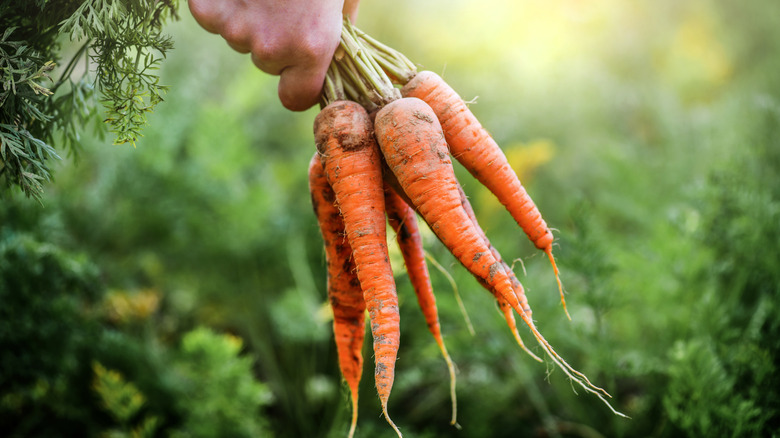
There's no greater feeling than harvesting and eating delicious vegetables grown right in your own garden. However, the method you take to plant veggies can ultimately impact just how successfully they grow. While buying seedlings and transplanting them into your home garden can save on time, certain root vegetables like carrots, beets, and turnips will grow best when you directly sow their seeds in a garden bed.
Root vegetables have complex and sensitive root systems that can become shocked or damaged if you transplant them. Vegetables that grow underground develop a central taproot (which is the part that we eat), and leaving the taproot to grow undisturbed is the best way to reap a healthy and delicious harvest. Direct sowing is the gardening method where you plant seeds directly into the ground. This route gives veggies the time and stability to develop stronger root systems and grow a healthier central taproot without being disturbed or displaced.
Tips to successfully direct sow root veggies
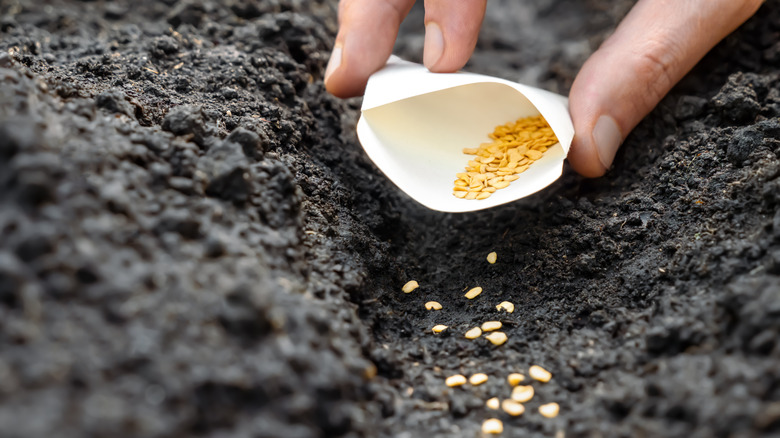
The direct sowing method is relatively straightforward, but there are a few tips for how and when to direct sow in your garden that can ensure a successful harvest. For starters, it's important to plant the seeds when the soil is warm enough. You can use a soil thermometer to get an idea of the temperature. You'll want to wait until the soil is around 50 to 60 degrees Fahrenheit. Soil temperature is important when direct sowing because seeds will germinate slower in colder soil. If a seed germinates too slowly, there's a chance it could rot.
Root vegetables are also more sensitive when it comes to drainage. Generally, they'll grow best in loose, well-draining soil. If you have drainage issues in your yard or the soil is very compacted, you should plant your vegetable seeds in raised garden beds instead of in the ground. The best material to fill your raised garden bed with should encourage good drainage, like landscape fabric, cardboard, or newspaper.
Finally, where you plant your seeds can impact how well they grow. Be sure to follow the spacing and depth instructions outlined on the seed packets to make sure the vegetables have the room they need as they expand. Vegetables also typically need between six and eight hours of sunlight per day, so avoid direct sowing in shady areas of your yard.