

15 Important Tasks To Complete If You're Suddenly Seeing More Bugs At Home
We may receive a commission on purchases made from links.
Finding certain insects around the house is simply part of life. You may spot the occasional spider in the living room, for example, or find a fly buzzing dimly around your bedroom window. But if you've suddenly been swarmed by flies or you've noticed a mysterious black line moving along your baseboards, it's time to take action.
Invasions by insects don't usually happen by accident. Like other creatures, bugs first need a way to get inside your house, and once they're in, they then need a reason to stay there. In other words, the most important thing to do when you find bugs is to try to identify how they got inside, and what it is about your home that attracted them. Are there cracks in your home's foundation, or have the seals around one of your windows gone bad? Has it been a while since you cleaned out your drains? The reality is that there are many ways that insects can get inside, and various things that they like to eat. But don't worry. We'll cover 15 different actions that you can take to help alleviate your insect problem once and for all.
Check your home for food spills, and clean them
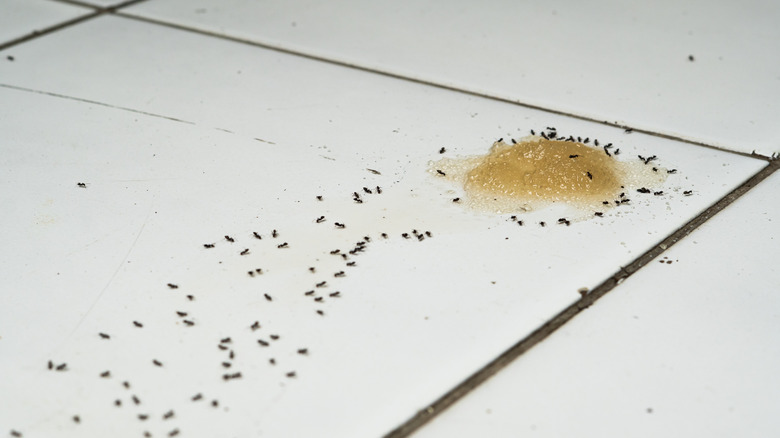
The culprit could be the toaster tray that you've not emptied in a while, or your child's bedroom after a few nights spent snacking and gaming. It could even be a few sugary drops of spilled wine that you forgot to wipe up on your dining room table. One of the most common ways homeowners accidentally attract bugs is by allowing spilled food to go uncleaned. If you do, then you could inadvertently be providing a much-needed source of sustenance for any trespassing bugs in your home.
Ants, cockroaches, and even fruit flies: These are just some of the bugs that are likely to thank you for being careless with your cuisine. With that in mind, be vigilant and clean up any crumbs or spilled drinks whenever they occur. Cleaning up after yourself, by itself, won't necessarily prevent bugs from wandering into your house. But at least if you keep a clean and tidy ship, you'll give them one less reason to stick around when they do.
De-sludge your sinks to keep drain flies at bay
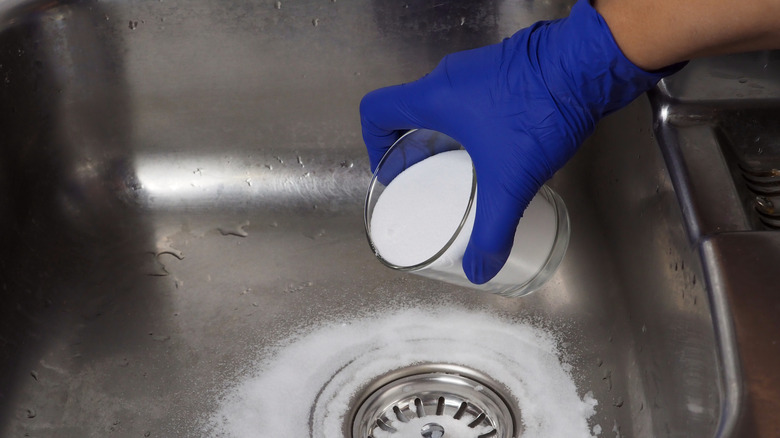
Our drains are subject to all kinds of nastiness. Bits of food and grease inevitably work their way past the plug hole on occasion. Over time, all of this can cause biofilm to build up inside our drains, which in turn can serve as a breeding ground for drain flies. Then, individual flies lay between 30 and 100 eggs in their new homes. And once the larvae start to get hungry, they don't need to look much further than the biofilm for some much-needed munch.
To prevent all of this from happening, the most effective way is to pour an enzymatic drain cleaner into your kitchen and bathroom drains. This should help to break down the gunk that's causing your drain fly problem. If you're suddenly swarmed by bugs and don't have any drain cleaner on hand, try a mixture of baking soda and vinegar. Leave it to work overnight before flushing in the morning with boiling water. Alternatively, you can put out a cider vinegar trap. Cover it with plastic wrap, poke some small holes in it, and set it somewhere near your drain to attract and drown the flies.
De-clutter your cardboard collection
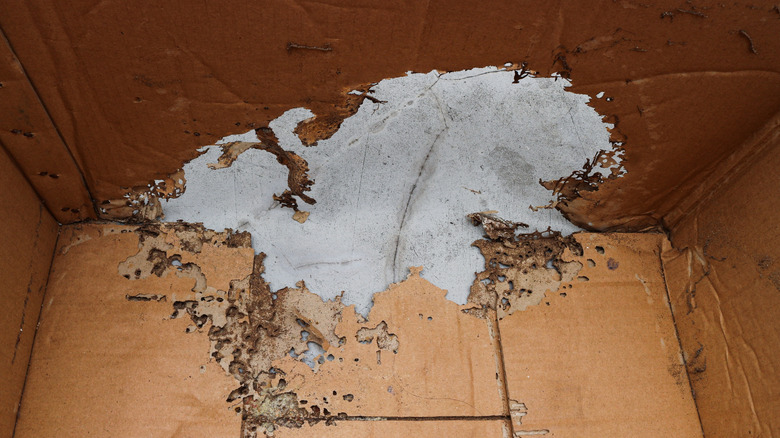
Keeping boxes can feel like a pretty smart move, especially for thrifty homemakers. Big, appliance-sized boxes are excellent for storage, and even those rigid vegetable boxes from the store tend to stack neatly. The problem is that you might unknowingly be bringing bugs like roaches into your home with that stash of boxes. They provide the perfect hiding place for various insects, including silverfish, termites, and more. Roaches, especially, love them. The cardboard is edible, and it serves as a sponge for pheromones, meaning that once one roach finds it, more are likely to follow. And don't forget, you have zero control over the insects inside the factory where your latest mail-order came from.
With all of this in mind, if you've found bugs like silverfish or roaches, and you have a collection of cardboard boxes, then take action. Break them down and relegate them to your outdoor recycling bin, and make a point to do the same whenever a new one arrives with a delivery. If you use cardboard boxes for long-term storage, consider switching them out for longer-lasting plastic bins.
Stop leaving pet food on the floor
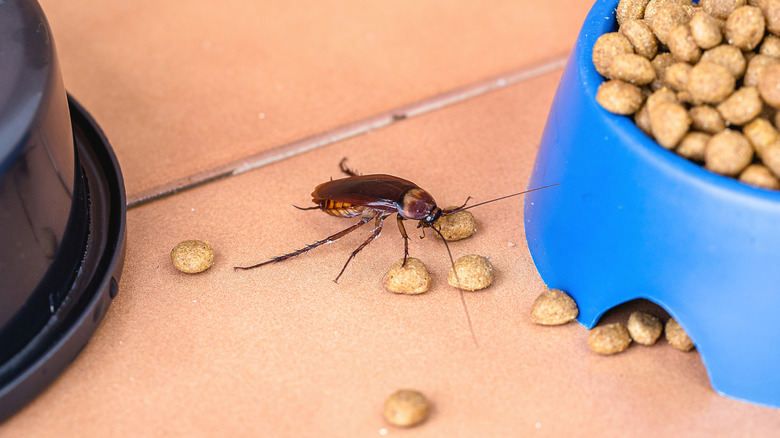
This one probably sounds obvious, but it's amazing how easy it is for your pet's feeding station to become messy. Unfortunately, insects aren't worried whether the food they find in your house was made for your family or your furry friends. This makes pet feeding stations a common discovery zone for pests. And not just common types of unwelcome bugs, like roaches. You could also start to notice pantry moths, a variety of beetles, weevils, and even rodents like mice.
If this sounds familiar, then the problem is unlikely to solve itself for as long as the getting's good. In other words, if you've started to notice bugs sniffing around Baxter's kibble, clean it up! Other steps you can take include ensuring your pet food storage is properly covered and sealed. You could also consider a timed feeding schedule, ensuring your pet's bowl is picked up once dinner time has passed. Make sure to give the area a sweep, too, especially if your pooch is a particularly messy eater.
Check for insect entry points and seal them
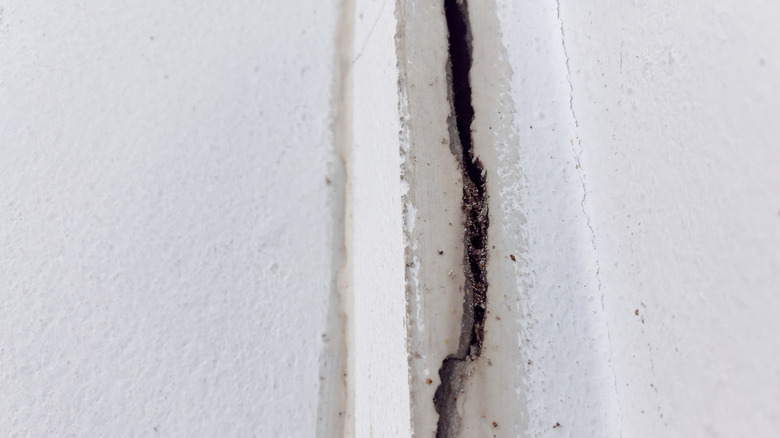
One of the best ways to keep insects out of your home is to block their access points. Remember, bugs don't usually appear in your house by magic. Instead, they're usually either carried in (perhaps aboard a compromised cardboard box) or afforded access via a fault in your home's walls or windows. It could be a crack in the foundation or a fault in one of your door or window seals.
Whatever the fault is, if it's allowing bugs to come inside your house, then it's important that you find it. To do this, visually inspect your property, and if in doubt, try watching the insects. Some bugs, like ants, which tend to follow the same pheromone trails over and over again, are easier to catch. Wherever the fault is, once you've found it, fix it. You may need to reseal drafty windows or doors, which will have the added benefit of temperature control. Or you may need to add caulk or another filler to cracks in your house's walls.
Check for leaks and fix them as a matter of priority
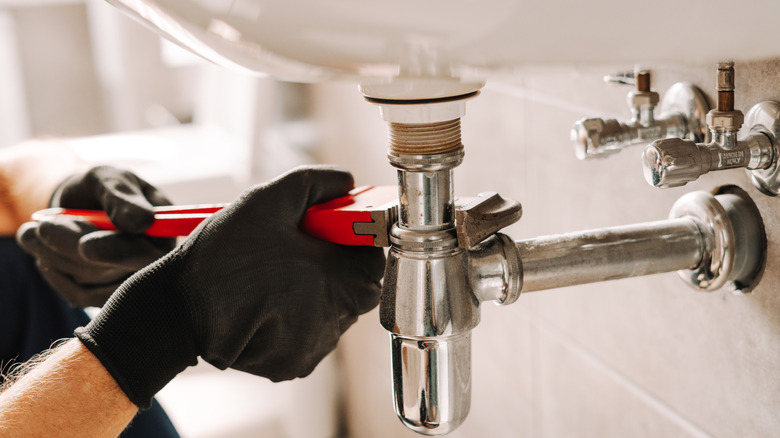
If you're finding bugs in the cupboards beneath your sink, in your bathroom, or anywhere that there's moisture, check for leaks. There are various insects that thrive in high-moisture environments, many of which can cause damage to your home if allowed to colonize. These include ghost ants, millipedes, house crickets, silverfish, booklice, sowbugs, cockroaches, and more.
If you spy any of these in your house, check your home for spots with excessive humidity. Allowing leaks to go unchecked can result in a major pest problem, so be sure that none of your faucets are dripping. Check that the pipework around them is properly sealed, and use a dehumidifier to dry out any areas that may have already suffered from leaks. Finally, if the bugs you've spotted are high in numbers, call a professional. Drying your home out will discourage them from returning, but a fully established insect colony may be better handled by an expert.
Refresh your fruit bowl

The little critters hovering around those beyond-their-best bananas and apples are not only pests, but they're also pretty gross. They're incredibly annoying, especially if they find their way into that expensive bottle of wine that you left out to breathe! If you spot them, the first thing to do is to get rid of any overly ripe fruit. And don't just put it in your household bin, either. Make sure that you take the bag outside, or more of them will fly out whenever you open the lid.
The second piece of advice, if you spot fruit flies, is to act quickly. Fruit flies are prolific breeders, and they don't waste time doing it. In fact, they can produce up to 500 offspring in as little as a week. In other words, things can get nasty quite quickly if you don't take forceful action against the flies around your fruit.
Establish a mulch- and plant-free zone between your flower beds and your foundations

There are certain mulching mistakes that can result in unwanted insect invasions, and one of those is mulching too close to your house. So, if you've started to spot ants and other insects indoors, ask yourself: are your flower beds touching your home's foundations? If so, it may be time to create some clearance between the two.
Mulch and dense shrubbery provide precisely the kind of cover that insects need to thrive and survive. And if it's butted up against your house's walls and foundations, it won't take long for them to find any cracks that lead inside. Adding a 6 to 18-inch gap between your flower beds and your walls helps reduce the chances of this happening. Fill the space with a less bug-friendly material like stone or bricks. This also makes it much easier for you to identify and fix any cracks in the foundation, thus preventing them from getting indoors.
Audit, clean, and seal your pantry
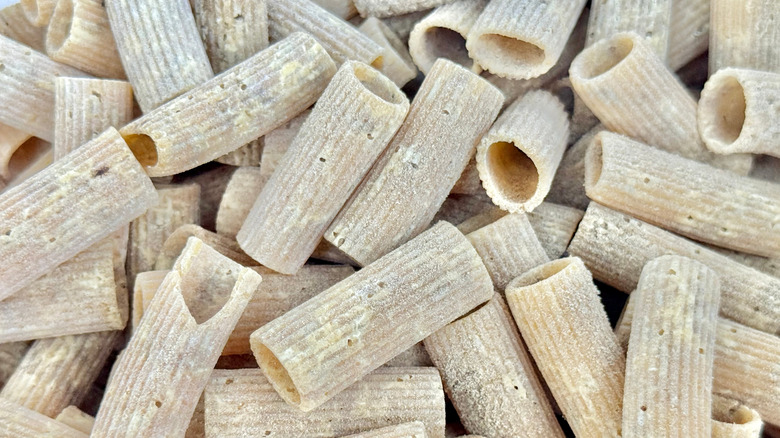
Many of the bugs you're likely to find in your home can be kept out by finding (and sealing) their entry points. However, not all bugs actually need a crack in your home's wall to get inside. Some of them, like pantry moths, just need you to go grocery shopping. They get into your dry goods via infested packages of grain, flour, cereal, and a host of other products. And once they're in, if your storage containers aren't sealed, they can quickly start doing the rounds in your storage.
To nip this problem in the bud, the best bet is to keep your food in sealed containers. Keep in mind that some items could contain insect eggs, so keep them sealed and monitor them regularly. If you've spotted bugs roaming around in your pantry, check all of your food for signs of more. With that done, clean down all of your shelves and containers, then make sure all of your food items are properly sealed. It also doesn't hurt to periodically review your other pantry items, for example, vegetables, and ensure that they haven't gone bad. Any overripe produce, like onions, will also attract various insects.
Check for standing water, and remove it
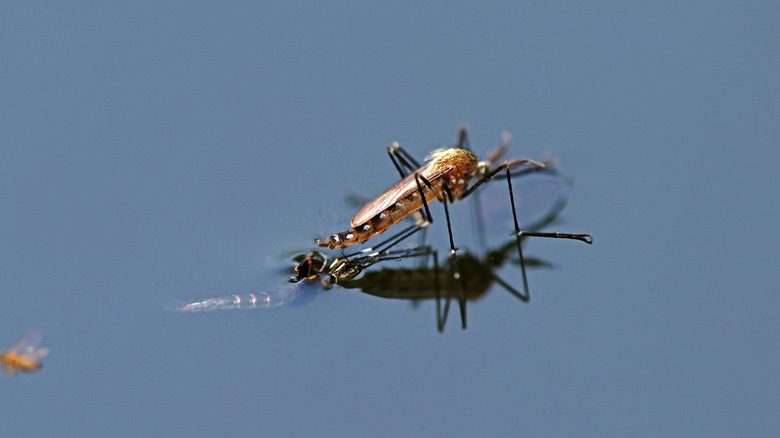
If mosquitoes are starting to buzz their way around your patio, or worse, inside the interior of your home, then there's a reason for it. Mosquitoes favor areas of high humidity, and if they happen upon a source of standing water, they rarely turn down the chance to lay eggs in it. In other words, if you have mosquitoes in and around your home, you should check for standing water, and then remove it.
It could be an old tire swing, a kiddie pool, or even your gutters. Whatever it is that's holding the water, drain it. Once eggs hatch, your problem is only likely to get worse. Inside your house, you can make things less hospitable for mosquitoes by using a dehumidifier. You can also check your pets' water bowls and refresh the water regularly. And if you've had a leak recently repaired, ensure that any pools of water are cleared up and the area is dried out.
Rethink where you keep your firewood
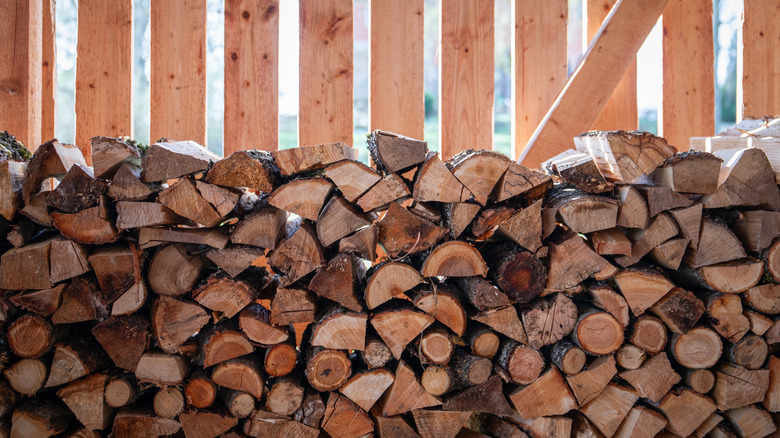
There are various insects that'll gladly set up shop in your log pile. If you've spotted wood-boring beetles, termites, or carpenter ants, and you have a pile of firewood butted up against your house, then it might be time to move it away. Things like termites and beetles can do immense damage to the wooden elements of your home. So the more clearance you can put between the colonies in your wood pile and your house, the better.
Regardless of where you keep it, it can also pay to check your firewood periodically. Look for signs of insect damage, like hollowed-out sections of wood. Even if you can't see the signs, logs may feel unusually light, a good sign that the inside has been devoured. You may also see insects crawling in and around the wood. All are signs of termites, and you should under no circumstances bring that wood indoors.
Adjust your outdoor lights and planting scheme to make your patio less attractive

As your barbecue slowly cools and you pour yourself a glass of wine, nothing could possibly spoil an evening spent relaxing on the patio. Or could it? If you've recently installed new patio lighting, and you're suddenly being swarmed by various bugs, like flies and moths, then the problem could well be the bulbs. While fluorescent and incandescent lights are ideal in areas where you need to see what you're doing, like around your outdoor kitchen, they're also attractive to flying insects.
Warm-colored LED lights, like Qualilux's Dush to Dawn Bulbs, emit different wavelengths that are less attractive to insects. The bonus is that these are also better for setting the mood in the parts of your patio where you like to relax. To deter bugs from your illuminated space, use insect-control products, like citronella candles. You can also add certain plants to your patio borders to repel invasions of pests. Alliums like chives, for example, and herbs like lemongrass can both help keep problem bugs at bay.
Empty and clean out your trash can

Every now and then, build-ups of dried juice, food scraps, and general foulness can start to make your bin highly attractive to insects. Once they arrive, things can deteriorate quite quickly, and there's nothing quite as gross as unleashing a cloud of insects every time you lift the lid. You might also notice roaches scuttling in and around your rubbish. And if ants hear that the getting's good, you may see lines of marching insects queuing up to taste your trash.
If any of this sounds familiar, then inspect your trash can, and if you're in any doubt, clean it out. Scrape away any dried-on food scraps with a putty knife, then clean the can out thoroughly with hot, soapy water. Hose it down outside to remove all traces of waste, and if it still smells, use some bleach to freshen it up. Try to keep your bins cleaned regularly, and ensure they're covered with tight-fitting lids to prevent bugs from getting inside.
Check if errant branches are providing insects access

As well as inspecting your home for faults in your window seals and walls, you should also check the trees and shrubs around the perimeter. Any that are growing too close to the structure could be providing both shelter and an easy highway for insects to access your home. Things like stink bugs, lady beetles, ants, and seed bugs are just some of the bugs to which such branches are a boon. They can also be used by rodents.
So, do a sweep of your home's exterior. If you come across any plants, shrubs, or trees that are either very close to or touching your house, prune them. Try to maintain a minimum distance of 12 to 18 inches between them and your house, and ensure nothing is overhanging your roofline.
Consult an expert for advice and assistance

Depending on the bugs you've started to notice in your home, you may need to consult an expert. For example, if you notice that termites are causing damage to your home's structure, quick and effective action is a must. Invasive insects like cockroaches can even pose health risks, so seeking help from a pro may be your safest bet.
You should also consult an expert if you've found a species that you suspect could be dangerous. Certain spiders, for example, should be treated with caution, particularly those known to be harmful, like black widows and brown recluse spiders. Similarly, if you've found a nest of something dangerous like wasps or hornets, trying to handle the problem by yourself can be risky. Better to keep you and your family clear of the creature in question until a professional can come and deal with it for you.