

Preventing Crabgrass From Becoming A Problem Starts With This Lawn Care Task
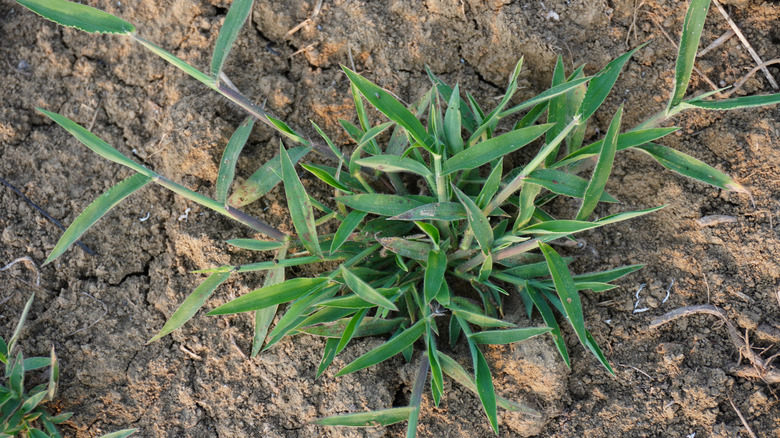
If you've ever had to deal with stubborn crabgrass in your lawn, then you know just how important it is to prevent this pesky annual weed from popping up all over your garden. While getting rid of present crabgrass is one thing, there are a few lawn care tasks that can help prevent it from ever growing in your yard. These tasks include mowing your lawn to the correct height, watering it properly, and choosing the right time to fertilize. Crabgrass typically struggles to thrive in short grass, properly watered lawns, and healthy turf. If you stay vigilant about these three lawn care chores, you should be able to keep your property safe from crabgrass infestations.
The two main types of crabgrass are smooth (Digitaria ischaemum) and large (D. sanguinalis). While smooth crabgrass tends to grow in low clusters, large crabgrass is hairy and produces finger-like stems. Crabgrass is an annual weed, meaning it "lives" for only a year, but during its lifetime, one crabgrass plant can spread up to 150,000 seeds. Prevention of this weed is key, as its seeds can remain in your soil for at least three years. When you keep your lawn trimmed, you prevent the crabgrass from growing into a plant that can produce its seeds. When you apply fertilizer at the appropriate time, you boost the health of your turf so it can choke out weeds like crabgrass. Finally, when you water your grass correctly, you prevent weak grass which can easily be taken over from crabgrass. You can also apply pre-emergent herbicides on your lawn in the early spring, as these will interrupt the germination of crabgrass.
How to properly mow, fertilize, and water your lawn to prevent crabgrass
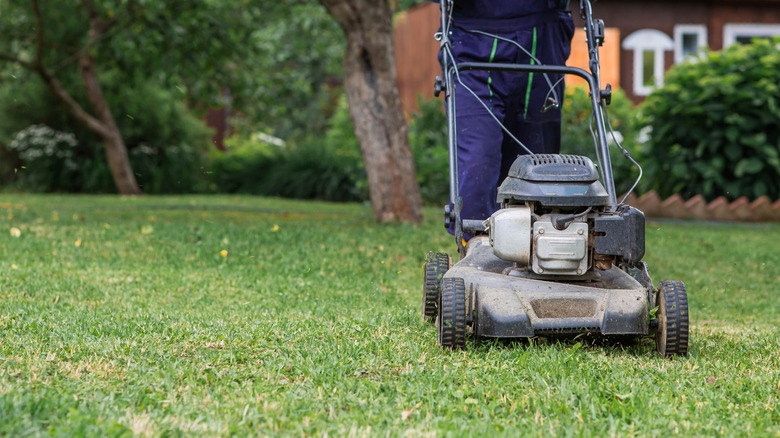
Mowing is one of the most important chores you can accomplish in order to keep crabgrass out of your lawn. In fact, you're actually making crabgrass worse by allowing your lawn to overgrow. Keeping your lawn trimmed decreases the risk of crabgrass growing large enough to germinate its hundreds of thousands of seeds in your soil. Note that mowing your lawn too short can also lead to the growth of crabgrass, so it's important to find a happy medium. It's typically recommended to keep your grass around 3 inches tall.
Crabgrass can be finicky when it comes to water. You may be making a common watering mistake that's encouraging crabgrass to grow in your yard: under-watering your lawn. However, crabgrass can also grow in overwatered lawns. The compromise is to deep water your lawn infrequently, as opposed to constant, light watering.
Lastly, a fertilized lawn is a dense and happy lawn which is powerful enough to choke out any potential crabgrass. Don't worry about accidentally fertilizing the crabgrass itself; this weed's seedlings don't typically win out over your turf. Add your fertilizer when your grass is growing the most, which will depend on what type of grass you have. Warm-season grasses tend to grow actively between June and September, while cool-season grasses grow between February and May as well as between October and December.