

The Big Mistake Everyone Makes After Removing Weeds From Their Yard
We may receive a commission on purchases made from links.
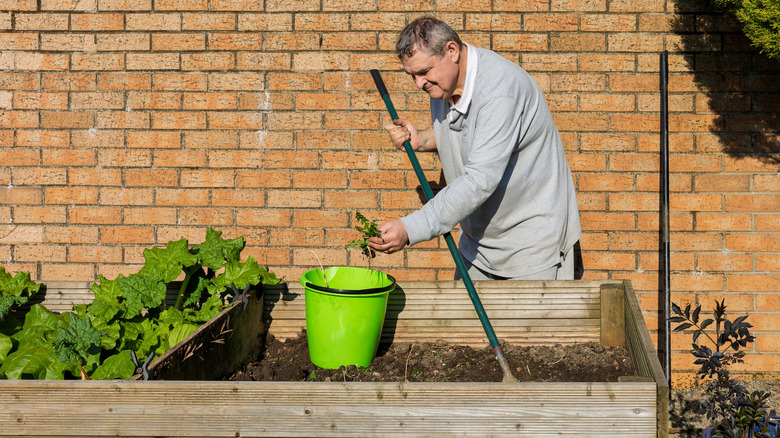
Once you've completed the satisfying chore of removing pesky weeds from your yard, you may think your work is done. That couldn't be further from the truth. There is one mandatory step you may be forgetting that ensures your hard work isn't in vain. If you skip it, the weeds may quickly take over once more. After you've cleared your yard of weeds, you should never leave the ground bare. If you're not yet sure what you want to plant in the just-weeded spot, it's imperative that you cover it with something — even a layer of mulch. Not only does this help the ground stay moist after watering, but it also helps prevent weeds from sprouting up. In addition, make sure to avoid leaving pulled weeds on the ground, which is a weeding mistake that is causing harm to your flower beds.
Avoiding bare soil is vital in gardening. For one, bare soil encourages weed growth. The lack of competition means weeds have free rein to take over that patch of soil. Plus, uncovered soil bakes dry and hot in the sun, creating a heat sink that, on the largest scale, contributes to global warming. Immediately planting new greenery, sowing turfgrass, or at the very least adding a layer of mulch cools the ground, keeps it damp for longer, and chokes out weed seeds and seedlings. Why spend so much time pulling out the weeds only to have their progeny take over once again? Soil cover also reduces erosion, a process by which topsoil is worn down or removed by wind or rain. Eroded soil struggles to take up water; instead, rainfall or water from a garden hose pools and runs off the surface, taking soil particles with it.
Cover the bare soil after you're done pulling weeds
After weeding a garden bed, don't tug off your gloves and call it a day. You need to make sure you cover the soil with something. It may take a few extra hours, but it's an essential part of the process that will keep your garden — and the wider environment — happy. If you already have a planting plan for your now weedless space, sow your selected seeds or plant the seedlings you recently brought home from the nursery. Coordinate your layout carefully to ensure there are no bare patches for weeds to sneak into. Choose plants that will grow quickly. Kale and squash are speedy sprouters with large leaves or trailing growth habits. Zinnias will cover a patch of ground in no time with little care and gift you vibrant flowers.
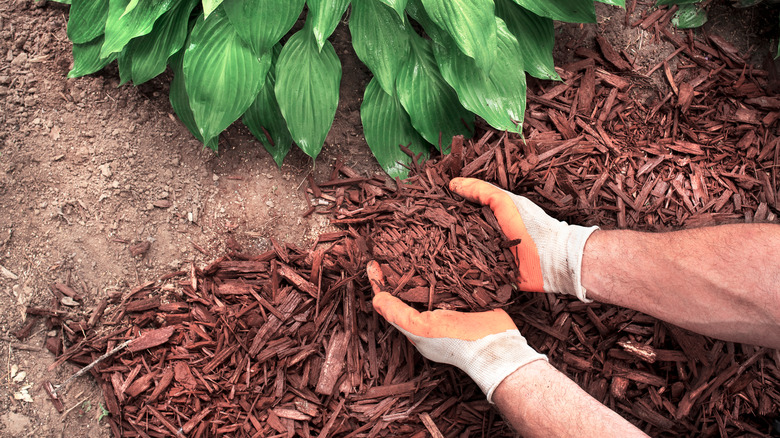
If you want to keep the area clear of plants, cover it with a layer of mulch or even a commercial product, such as an erosion blanket. A 100-plus foot long roll of Farm Plastic Supply American Excelsior QuickGrass Pro Green Erosion Control Blanket costs about $85. Anything is better than nothing. It will keep your soil healthy, weed-free, and ready for when you decide to add in new plants. If you choose to use mulch, apply 2 inches of compost topped with 3 inches of mulch to your patch of bare soil. Ideally, the mulch will be organic — think shredded leaves, pine straw, or wood chips. Bark is widely considered the best kind of mulch to prevent weeds. You can use compost by itself to cover bare soil in raised garden beds. To prevent weeds from peeking through the mulch in your garden beds, replenish it regularly. Organic mulch, in particular, breaks down quickly.