

Why Your Birdbath Cleaning Routine May Be Harming Your Feathered Visitors
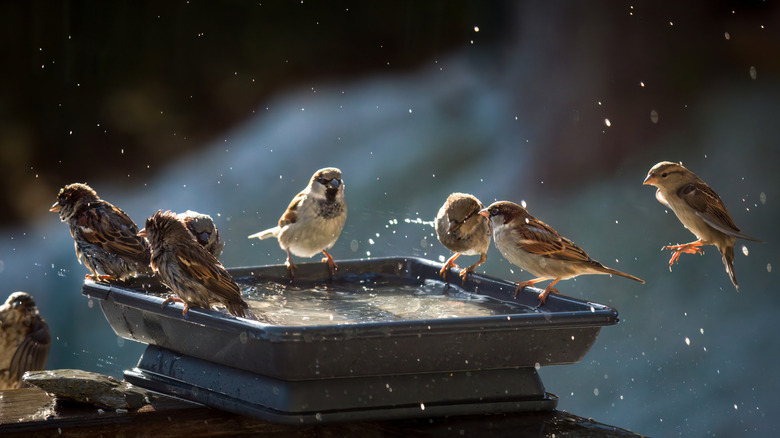
Birdbaths are a lovely addition to almost any yard. Whether you want to spot a variety of birds or simply enjoy spending the morning listening to birdsong, creating a space in your yard for feathered friends to thrive is beneficial. However, putting into action a few birdscaping tips to turn your garden into a bird haven is not enough. You also need to maintain whatever you install so that it stays safe for birds to use — birdbaths included. When researching how to keep a birdbath clean, you will likely come across all kinds of advice, like rinsing out the bowl with bleach. Unfortunately, this particular suggestion may actually harm bird health. Bleach is a harsh chemical, especially if it's used improperly.
Regular birdbath cleaning is important because a pool of standing water is unappealing to birds but very appealing to mosquitoes. Even worse, a bowl that is not cleaned regularly will accumulate bird droppings, feathers, leaves, and dead insects. Your birdbath can quickly become a breeding ground for pathogens that are dangerous to both birds and humans. The water may also fill with algae. This may seem like just a cosmetic issue, but certain types of algae are toxic to birds. If you are trying to encourage birds to gather in your yard, giving them a water feature that could make them sick is definitely not a good idea. To keep them thriving, cleaning is necessary. Using bleach to do it, however, may end up doing more harm than good.
Reasons to avoid using bleach to clean birdbaths
The reason many people reach for bleach to clean their birdbaths is clear. Bleach is undeniably effective for disinfection. Plus, you probably already have a bottle under your kitchen sink that you use for home cleaning. However, if you've used bleach before, you likely already understand some of the associated health and safety risks. The liquid can burn the skin and irritate the eyes and lungs. It can also be extremely dangerous to mix bleach with other common cleaning chemicals, like ammonia or vinegar. Birds could also experience negative effects if exposed to this chemical.
Bleach can irritate birds' respiratory systems and damage their feathers and skin. Preening birds may even accidentally ingest bleach. Heavily diluting bleach with water reduces its concentration and makes it safer to use, but using a solution that's too strong, using too much, or not rinsing it off a birdbath adequately risks exposing birds to this harmful chemical. On the plus side, most birds have a good sense of smell that can detect bleach fumes. The chemical scent deters them until the bleach has broken down into salt crystals, so they will often avoid heavily bleached features instinctively. Have you thought about how you will safely dispose of any leftover diluted bleach after cleaning your birdbath? Pouring it anywhere outdoors can kill plants and harm the environment.
How to safely clean a birdbath with or without bleach
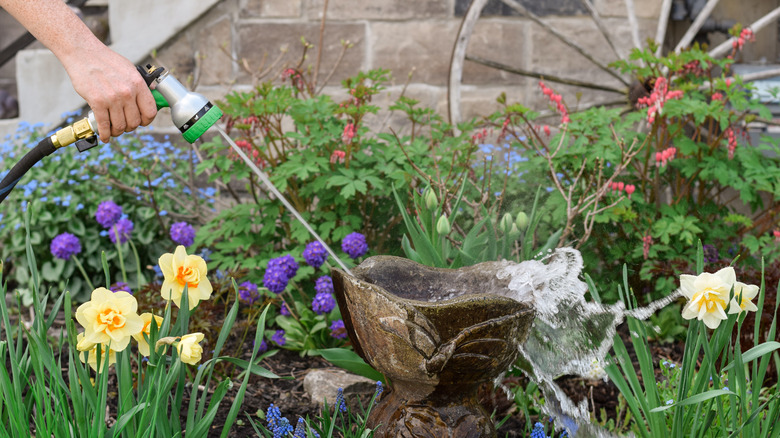
The best way to ensure you don't harm backyard birds with bleach is to avoid using it when cleaning your birdbath. It's pretty high up on the list of cleaning ingredients you should avoid using on your birdbath. Thankfully, there are plenty of safer cleaners. You can, for example, use vinegar to keep your birdbaths (and outdoor fountains) looking like new. You could also simply dump the water out of the bowl and refill it with fresh water every other day. Reconsidering where you put your birdbath in your yard can help reduce the need for deep cleaning — and reduce your reliance on bleach. Situate your birdbath in a shady spot to reduce algae growth. Keep it away from bird feeders, deciduous trees, and other sources of debris.
If you feel you absolutely must use bleach to clean your birdbath, you'll need to follow strict guidelines to keep birds safe. Dilute one part bleach in nine parts water. Pour the solution into the bowl of the birdbath. Leave it to soak for a few minutes to remove debris and kill pathogens, then scrub the bowl with a scouring sponge or stiff-bristled brush. Thoroughly — and we mean thoroughly — rinse the entire birdbath with clean water. Allow the birdbath to air-dry completely before refilling it. Restrict access to the birdbath during the entire cleaning process. If lots of birds use your birdbath, you may need to clean it as often as three times per week. For less frequently visited baths, you could stretch this to once a fortnight.