

What To Do If You Keep Finding Ant Hills In Your Driveway
We may receive a commission on purchases made from links.
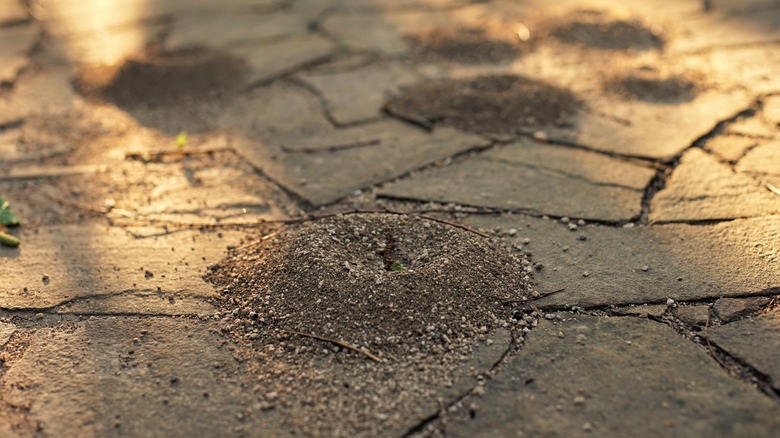
Finding small conical ant hills situated in the cracks of the driveway is a common experience for many homeowners. While finding ants inside the home can be a sign of an underlying issue such as a messy kitchen, ants that live in the driveway typically aren't a cause for concern. There are many kinds of ants that could be plaguing your home, but the small ant hills sprinkled over the concrete likely belong to pavement ants, a nearly microscopic species that is harmless to humans. Ant hills in the driveway are not a major issue, but if you're worried about them invading a home or bothering pets and young children, there are steps you can take to eliminate the ants and hopefully prevent new ones from moving in.
The first step is to survey the area and make a note of where all the mounds are. Once you've found all of them, the easiest way to get rid of the ants is to use an ant bait, like the Terro liquid ant bait system. Ants will find the bait (which is poisonous to them) and bring it back to the queen, eventually killing all the ants in the colony. It's hard to completely prevent ants from moving back into the pavement cracks since they will always be rife with the things they love to eat, like nectar, seeds, and smaller insects. However, something like Ortho orthene ant and roach killer or other ant dusts can keep ants at bay for up to eight months at a time. Once the chemicals have worked their magic, seal the deal by flattening the ant hill with an essential tool you already own, like a shovel or rake.
It's easy to remove harmless pavement ants
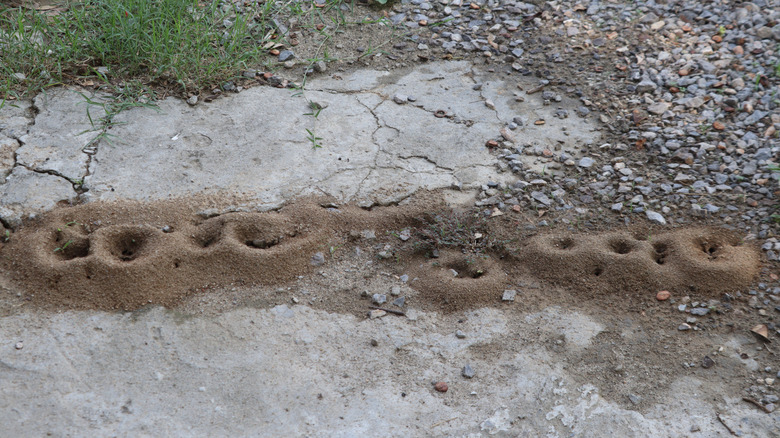
There are a number of more natural methods for combating pavement ants if you want to avoid chemical baits or insecticides. For instance, baking soda is a very effective ant killer. You can use it to create your own ant bait by mixing it with an equal ration of powdered sugar. Place a few spoonfuls close to the ant hills, and the ants will bring the toxic combination back to the colony. For a more direct approach, you can also attack the ant hills with boiling water, which will ruin the nest's structure and kill ants on contact. To avoid hurting yourself or any nearby greenery, it's best to attempt this with something like a kettle or tea pot that will allow you to control the flow of boiling water.
Unfortunately, it's nearly impossible to remove an ant hill from your property without hurting the ants. The best you can do is ensure that your house, garage, porch, and anything near the driveway is clean and free of food waste, so the ants won't have any reason to go inside. You can also treat potential ant entry points, such as door frames, windows, and wall cracks, with either a chemical or natural insect repellent; some natural materials include cinnamon, coffee grounds, and peppermint extract, which are great for deterring ants without killing your garden plants.
The bad news is that unless you are very rigorous with your insecticide treatments, it's likely pavement ants will appear again at some point. The good news is that as long as they stay outside, they pose little threat to you and your property, and can be easily dealt with.