

What To Do If You See A Tick Nest In Your Lawn
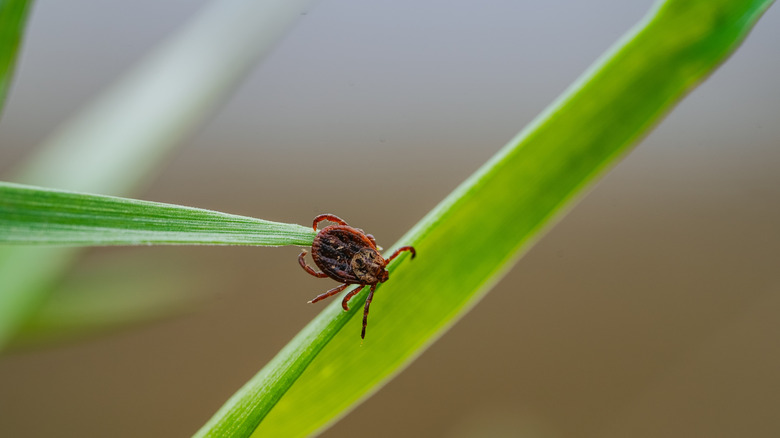
You're out in the yard, enjoying the nice weather and checking on the low-maintenance perennials thriving in your raised garden beds when you spot something unusual in the dirt. It looks like a small, sticky cluster of tiny reddish-brown dots. While it also might look like soil debris or dropped seeds, you could actually be looking at a tick nest. If you're pretty sure that's what it is, call in a professional pest control company right away. Do not try and resolve things on your own.
Finding one of these nasty egg masses on your grass is never a good sign. Why? Because ticks are more than just a creepy nuisance, they're dangerous parasites that carry severe illnesses (including Lyme disease and Rocky Mountain spotted fever) that can hurt both you and your pets. A single female tick can lay thousands of eggs, so catching and staying on top of this problem early is a must for keeping your family and pets safe.
If you spot a tick nest, your first instinct might be to destroy or remove it yourself. Stop right there! Trying to remove it without the right tools and expertise can easily scatter thousands of eggs across your lawn, making the infestation way worse. The safest move hands-down is to call a pest management pro. They can accurately ID the ticks, eliminate the nest, check the surrounding area for other nests, and apply a targeted treatment.
How to keep your yard tick-free going forward

The professionals will take care of the immediate threat. However, you need to create a plan for keeping ticks out of your yard in the future so you and your family stay safe. This plan should involve making your property as inhospitable to these nasty critters as possible.
Like most living things, ticks are drawn to areas that offer shelter and moisture. They adore dense overgrown foliage, tall grasses, and things that are rotting. So for that, your best defense is aggressive yard maintenance, as there are plenty of things in your yard that could be luring ticks. Keep your lawn mowed short and remove any fallen leaves or brush piles immediately. And if your property happens to back right up to a wooded area, create a dry barrier between it and your yard. Laying down a multiple-foot wide layer of wood chips, for example, creates a dry and inhospitable area that ticks won't want anything to do with.
Also consider applying preventative treatments to your yard's perimeter. Chemical pesticides containing permethrin are super effective, as is dusting high-traffic spots with diatomaceous earth — this is a natural alternative that can dehydrate ticks on contact. There are also many plants that keep ticks out of the yard; options like lavender, lemongrass, and rosemary are all great choices. Finally, remember that ticks often hitch rides into your yard on deer, mice, and other small animals. So, installing quality fencing will help keep those bigger critters out of your yard and your garden safe and bite-free all season long.