

Ditch Traditional Bird Seed And Try Using These Vegetables Instead
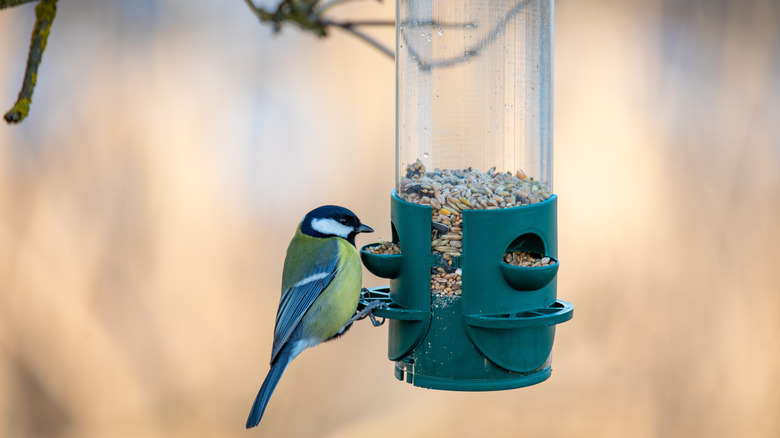
Not many people realize that the majority of bird species are a lot like humans when it comes to diet. No, they don't enjoy dino nuggies and iced lattes — they're omnivores. Being an omnivore means they enjoy a variety of food types, from seeds and nuts to bugs, meat, and even leafy green veggies. Of course, we probably couldn't imagine a chickadee tearing apart some salmon for lunch. But there are many ways to attract chickadees to your bird feeder with the right food. There are quite a few different types of green vegetables you can offer your feathered friends alongside the bird seed you provide in your feeder. Carrot tops, dandelion greens, kale, and even broccoli greens are great to give wild birds, especially in the spring when they need a little more variety in their diet.
Many homeowners understand the benefits to attracting a variety of wild birds to their yards. Bird visitors can help with pollination, rodent control, keeping pesky bugs in check, and are a general pleasure to have around. Most people use traditional seeds in their bird feeders, which is great, but sometimes traditional birdseed isn't the best option. In the spring and summer, birds appreciate veggies for an added bit of hydration and more minerals and vitamins than their regular diet offers. Feeding wild birds a more varied diet of high-quality seed, supplemented with some nuts, berries, and green veggies is a sure way to bring more birds to your yard and help improve their diet during a time when they need it most.
Using vegetables in your bird feeder
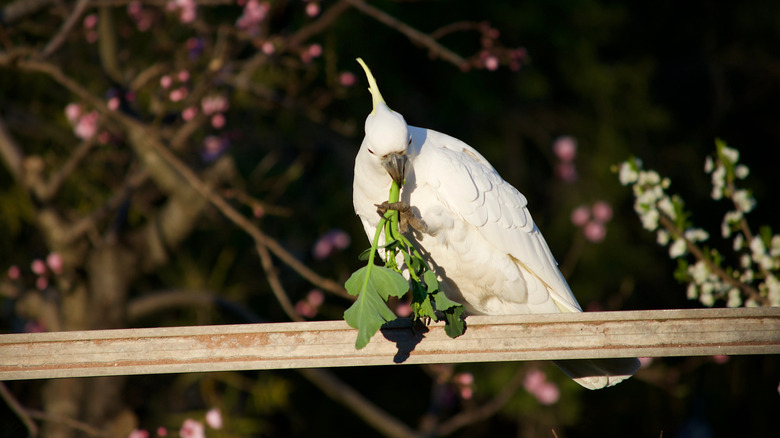
While not all wild birds will be drawn to your leafy green salad bar, there are many that will be, like sparrows, grosbeaks, waxwings, and some finches. With some simple steps, you can use fresh leafy greens to entice these birds to visit. The first step is to use an appropriate feeder to create a bird feeder buffet that'll attract a variety of birds. Offering leafy greens in a traditional tube-style feeder isn't going to work. A tray feeder works best for feeding leafy greens, because these veggies are a little bulky and odd-shaped, plus putting veggies in a traditional bird feeder is going to cause mold. The second step is to place your new veggie buffet near an existing feeder so your local birds can easily find it.
When offering veggies to your wild friends, it's best to stick to fresh, organic greens — you could even use things you've grown in your garden. You can feed your feathered neighbors spinach, kale, carrot tops, alfalfa sprouts, and broccoli greens, as we mentioned above. You can also feed them wild greens like clover, chickweed, dandelion greens, and plantains. Make sure to wash veggies before serving them at your feeder. It's also important to replace fresh greens after a couple of days so they don't go bad. You always want to have a clean bird feeder to help keep your local bird population healthy. Put out your greens early in the morning to attract your veggie-loving friends and enjoy the show.