

Ditch Traditional Bird Seed For Cooked Potatoes
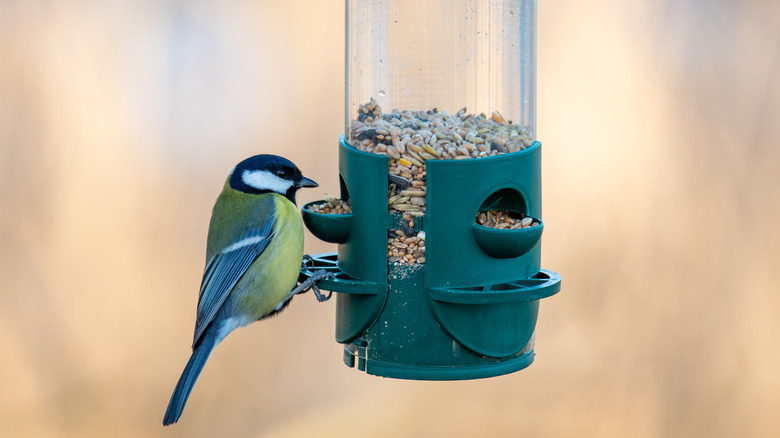
If you enjoy feeding the birds in your backyard, you probably have a bit of a bird feeding routine that involves seeds and nuts, perhaps a suet block if you're feeling fancy. However, there's another unexpected food you could add into your rotation, one that you almost definitely have lying around your kitchen — potatoes — more specifically, cooked potatoes.
Cooked potatoes are actually one of the best foods to keep birds happy especially during colder months when energy matters more than variety. Once cooked, potatoes are really soft which makes them easy to peck and they are also surprisingly easy for little small bird stomachs to digest. As long as they are baked or boiled plain and unseasoned, they're a natural source of carbohydrates that many birds including blackbirds and starlings will enjoy. And there's another benefit to adding potatoes into the mix — they are definitely a more affordable solution to expensive bird feed that you can use on its own or to bulk out your feed without sacrificing how much you set out in your garden.
Why potatoes can pull in different birds
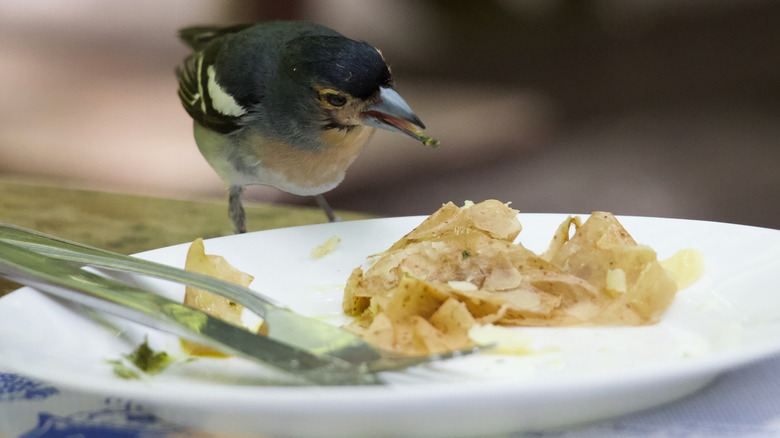
The other appeal in switching seeds for potatoes, outside of simply being better for your wallet, is that it may also change who comes to eat. While some birds enjoy seeds, others forage closer to the ground and prefer moist and soft textures, so offering soft food like cooked potato may attract birds to a new feeder or attract entirely new species of birds to your yard. Specifically robins, blackbirds, and wrens are drawn to foods like mealworms and fruit, more so than seed, especially if you place the food down low. Instead of hanging a high feeder, place cooked potatoes on a flat surface such as a low bird table or even a quiet patch of ground to more closely mimic their natural feeding style.
There's also a lot to be said for variety. If you mix up your feeding spots and food, you're much more likely to attract a wide range of birds throughout the year. So don't look at potatoes as a replacement for seeds altogether but instead something you can use to bulk out your existing bird feed or use on its own to attract a different range of birds in new ways, filling a gap for species that may otherwise fly by. And once you get into the habit, it becomes one of those low-effort additions that quietly makes your setup a bit more inviting for even more wildlife.