

Stop Taking Up Precious Cabinet Space — The Better Way To Display Vases
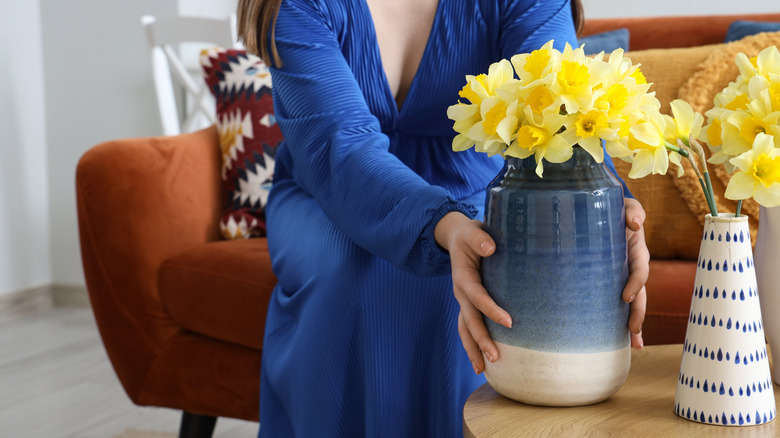
It's hard to pare down a good vase collection once you've started one. These ceramic or glass vessels are useful and beautiful all at once, and some thrift store vases can turn out to be quite valuable. But if you're stashing them in your cabinets, they're hiding away and claiming valuable space when they could add so much character, color, and personality as part of your home decor. Vases are also fragile, so if you store them in a cabinet they can get jostled and damaged as you move things around. Instead of taking up premium space, a better way to display vases is by giving them a dedicated space on sturdy shelves mounted to the wall. In addition to the shelves, you'll need a level and stud finder, and tools to install the brackets securely.
"Sounds good," you may be thinking. "But with all the walls as my canvas, where should I put the vases?" One consideration is safety. Keep shelves that hold vases away from any frequently traveled areas of your home so they won't get knocked over. For example, try adding some dimension to a low-traffic corner that may be missing some decor by displaying a vase on a floating shelf there. Another tip is situating the shelf in the path of a light source like a window so the vases and any other decor will be illuminated. Wherever you decide to place the shelf, artfully arranging the vases can give the display even more visual interest. One technique is pairing vases of different heights next to each other (perhaps with some even placed on top of books).
Shelving options turn your vase collection from clutter to splendor
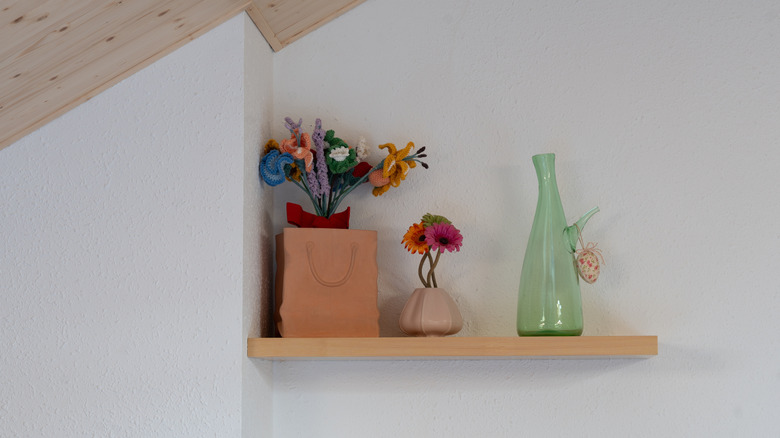
Before picking out specific shelves, it's helpful to measure the width and height of the available wall space and decide how deep you need the shelves to be. A depth of 6 to 8 inches may work for smaller vases, but if you're planning a layer display with bigger and heftier pieces, it's better to have a depth of 11 to 12 inches. Take note of any nearby furniture so you can know the maximum length the shelves can be without making the room look too busy.
And because vases can be heavy, put some thought into determining the perfect material for your shelf. The shelves should mesh with your design preferences while being strong enough to hold the glass or ceramic pieces. Wood and metal are excellent options.
Another factor to consider is whether you mind the shelf brackets showing. Floating shelves, which are designed to conceal the brackets, provide a cleaner look that complements a minimalist style. But if your vases are on the heavier side, visible brackets are better because of the way they distribute weight. Shelves with brackets you can see also work well stylistically in farmhouse-inspired homes. Finally, keep in mind that your walls need to have findable studs in the walls for mounted shelves to work, since they require that solid anchor to provide adequate support.
How to install shelves to display vases on your walls
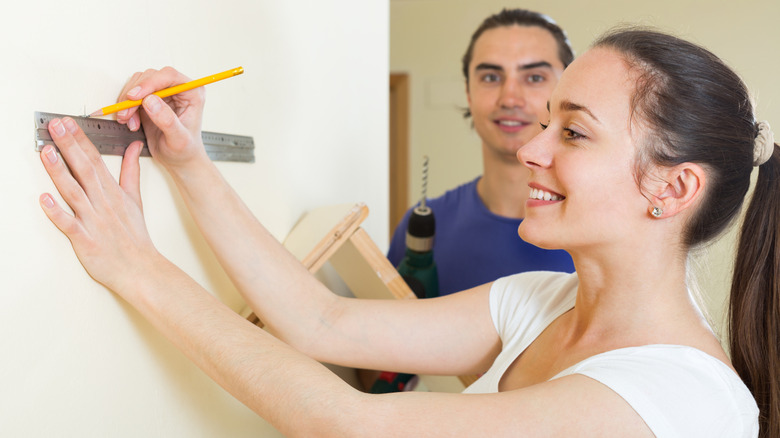
The first step to mounting your shelves is finding the studs in your wall with a stud finder. When you've located two studs, which are usually at least 16 inches apart, pick a point on each stud, use a level to make sure they are even, and lightly mark those spots in pencil. Now drill holes where the brackets or backplate — whichever came with your shelf set — will be attached and use screws to get the brackets or other hardware into place.
Shelves with visible brackets will often sit on top of them, although sometimes the brackets will need to be connected to the undersides of the shelves with more screws. Floating shelves tend to slide onto mounts that are attached to backplates instead. There are several types of reliable hardware for floating shelves, including shelf supports that are meant to connect the wall to the inside of each shelf, and strong adhesives. Once they're up, you can incorporate vases into our tips for styling floating shelves to create a beautiful design.