

Swap Traditional Marigolds For A Variety That Make Your Garden Stand Out
We may receive a commission on purchases made from links.
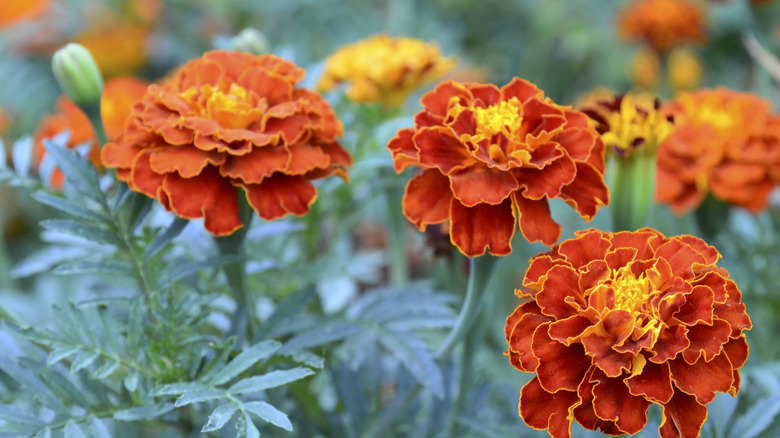
There are around 50 species of marigolds found throughout the world. Despite that, one variety tends to have more fame and higher sales in the United States. Known as the French marigold (Tagetes patula), it's popular for its range of colors and tolerance for different soil types. If you love these marigolds but want a flower that catches attention and makes your garden stand out, there is another species worth considering. It's commonly known as the African marigold (Tagetes erecta), though it is also occasionally called an American or Aztec marigold as well. Despite their more common name, they are actually native to places like Mexico and Guatemala.
These flowers are pretty large, especially when compared to the French variety, making your garden stand out with beautiful, bold blooms, while still carrying that distinct aroma. Their blooms measure about 5 inches in diameter and can reach up to 36 inches tall. Their color range differs slightly as well. Though both come in yellow and orange, African marigolds tend to have lighter shades. Additionally, you can find ones in white or gold. They are generally just one color as well, and there are many cultivars, like the beautiful pale yellow 'Moonlight'. At their peak, the flowers tend to look like pom-poms. They also draw pollinators, and are an excellent way to attract butterflies to your garden.
Growing African marigolds isn't much different from French varieties
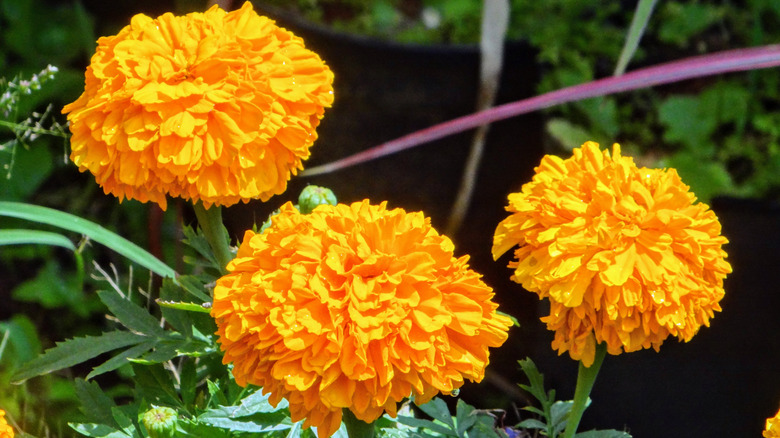
Though they look different, these two marigold varieties have a lot in common when it comes to care. Like French marigolds, they are often grown as self-seeding annuals, especially if you leave the flowers on the ground after deadheading. They prefer to grow somewhere with full sun, and well-draining, dry soil. These marigolds are fairly drought-tolerant once established. Though marigolds help keep pests out of your yard, they can still have problems with aphids, snails, and spider mites.
Of course, there are some differences as well. Because they get so large, these marigolds do best when planted roughly a foot apart, unlike the French kind. Also, staking them can be beneficial, so they have support with their big flowers and against the wind.
If you decide to try this variety, plant after the last frost once soil temperatures are above 65 degrees Fahrenheit. You can grow flourishing marigold flowers from seeds without much of a problem, so you don't need to start germination indoors unless you have a short growing season. However, you do want to plant them early in the spring to enjoy as many blooms as possible. You can buy these plants or seeds at nurseries, home improvement stores, or online. For example, the Sow Right Seeds store on Amazon has Crackerjack African Marigold Seeds — a mix of yellow and orange blooms.