

The Small Tree With Pretty Purple Flowers That Is Highly Attractive To Birds & Pollinators
Growing flowering trees and shrubs that attract pollinators is a great way to establish a dynamic garden design that encourages biodiversity. Spring-flowering trees are especially welcome, as they provide early food for pollinating insects, including bees and butterflies. One vibrant tree that brings stunning color in spring is the redbud (or the genus Cercis), of which there are many species and varieties, including the common Eastern redbud (Cercis canadensis). A newer cultivar with deep red leaves and lovely pink-purple flowers that attracts plenty of activity is the 'Merlot' redbud. Birds, bees, butterflies, and other pollinators will flock to the tree at various times throughout the year for the food and shelter it provides.
Introduced in 2002, after it was hybridized at North Carolina State University, this exciting cultivar is a breakthrough in color and compact size for the well-loved redbud tree. Named mostly for its wine-colored, deep red leaves, the 'Merlot' cultivar also produces wine-colored buds in early spring, which then unfurl into small flowers that are a beguiling shade of pink-toned purple. The blossoms grow closely along the length of branches, creating a beautiful effect in any spring garden.
Because this variety only reaches a maximum of 12 feet in height — unlike the Eastern redbud which reaches up to 30 feet – it's perfect for smaller yards. It does well in both full sun and part shade spots, or as an under-canopy tree where it gets dappled sunlight. The low canopy may spread up to 15 feet wide, creating graceful shapes in all seasons. It will also fit nicely in the back of flower beds as part of a larger design that includes shrubs and perennials.
The 'Merlot' redbud dazzles through all four seasons
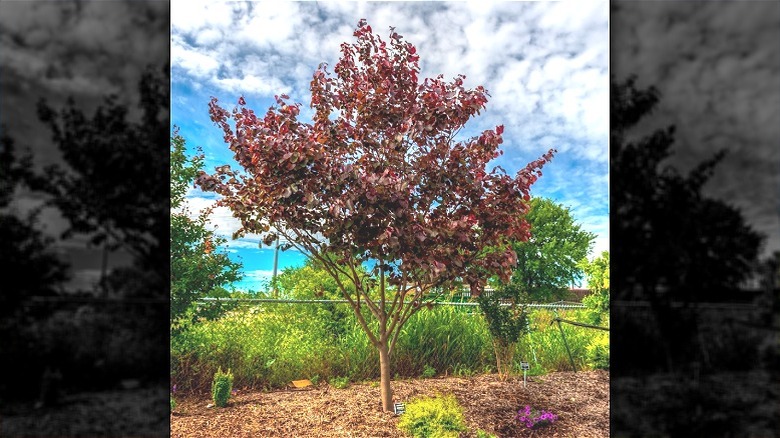
The 'Merlot' redbud can turn your garden into a showcase all year long, even when there are no leaves, buds, or flowers present. This well-shaped tree has a curving canopy of branches, a feature that makes redbuds popular in residential landscaping. With its vivid flower buds and showy blossoms followed by its richly-colored foliage, this tree creates a colorful backdrop from spring through autumn. Redbud trees attract many birds with their legume-like seed pods in mid-to-late summer. Then in winter, the low-hanging canopy provides a shelter and habitat for wildlife.
This cultivar does have some important differences from its redbud relatives. The Eastern redbud is very cold hardy, able to thrive in USDA zones 4 through 9. But the 'Merlot' cultivar is only hardy in USDA zones 6A through 9b, so its ability to survive winters in the Northeast or other cold areas is more limited. Still, this handsome redbud is a resilient, easy-care tree. It thrive in nearly any kind of well-drained soil, with at least two hours of direct sun per day.
This cultivar is also known to be more heat and drought tolerant than the Eastern redbud, so it's a good choice if you're a gardener looking for drought-resistant trees to grow in your yard. It can survive being watered infrequently; water when the top three inches of soil are dry to the touch. However, redbud trees in general are easily stressed by exposure to pesticides and herbicides, so it's important to avoid planting in an area where they might be exposed to these chemicals. Being an important pollinator tree, the 'Merlot' redbud is best situated in an organic garden setting that encourages beneficial insects and wildlife.