

What To Do If You Notice Your Spider Plant Looking Leggy
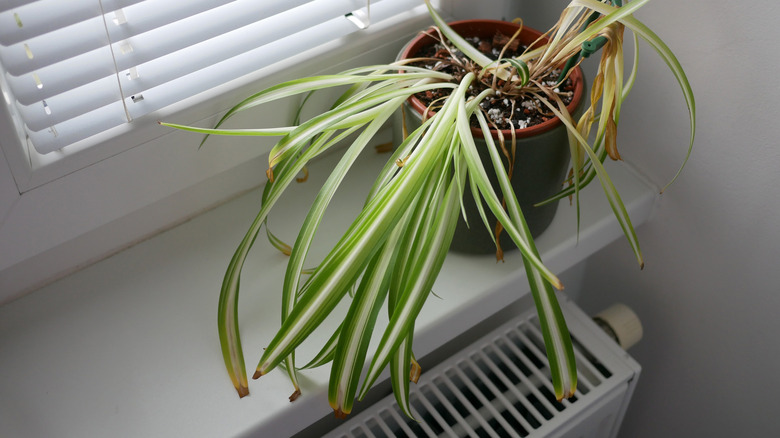
Some of the most appealing and notable characteristics of a spider plant (Chlorophytum comosum) are its long, luscious leaves and vibrant green and cream palette. Its stunning aesthetic and easy-going nature are just some of the reasons why a spider plant makes the perfect indoor houseplant. However, it can be frustrating when you start to notice your typically healthy plant start to turn leggy. This includes symptoms like top-heavy and floppy leaves, long stems, yellowing leaves, and sparse growth. While there's no need to panic, as these symptoms can be easily taken care of, it's important to adjust your spider plant's conditions to reduce the severity of the issue. The most common culprit of a leggy plant is an overall lack of light, but this can also be caused by too much fertilizer, not enough water, or an outgrown container. If you focus on fixing these key issues, the plant should be able to revive back to its luscious self.
The most obvious way to tell that you're dealing with a leggy spider plant is by examining the density of the plant. If it's looking very sparse and like it's missing a great amount of foliage in the center, you're most likely dealing with a leggy plant that needs a readjustment in light, fertilizer, watering, or repotting. Specifically, when a plant isn't receiving the proper amount of sun, its stems can extend without any new growth, stretching desperately towards the light source. It may take a bit of trial and error to determine exactly what your spider plant needs, but once you do, it should be an easy fix.
Why is my spider plant leggy?
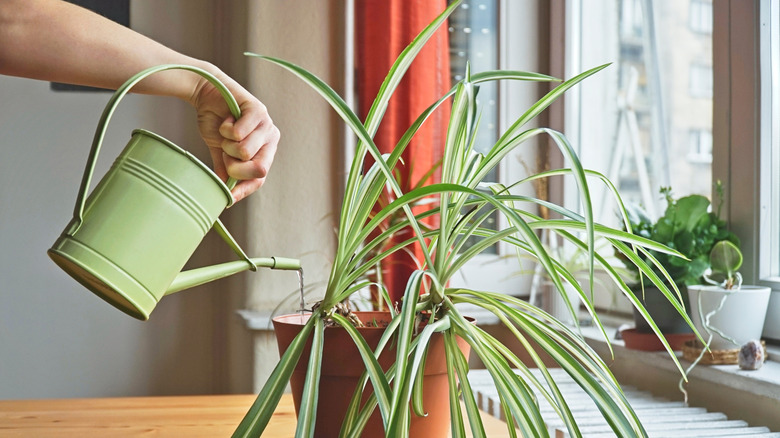
Spider plants, both outside and as houseplants, are generally easy to care for, low-maintenance plants. That being said, there are some basic conditions they require in order to thrive. If you want to prevent your spider plants from growing leggy, there are a few key chores to mark off your houseplant chore list.
One of the first tactics you can try to prevent a leggy spider plant is to relocate it in your home. Most likely, this plant is not receiving the correct amount of light it requires to thrive. These plants prefer moderate to bright light. Once you've relocated your plant, you can start to trim off the leggy leaves. Your leggy spider plant might also be experiencing a lack of water. Give your plant a solid hydration session, making sure that it is kept in a container with ample drainage. To ensure your spider plant lives happily for years to come, you should water it about once a week.
Another cause could be the size of its pot. Your spider plant may grow faster than you might expect, so it's important to keep an eye out for when you may need to repot your spider plant so that it thrives all year. Too many roots squeezed into a small pot can affect your spider plant's ability to grow. Lastly, if you use liquid nitrogen fertilizer on your spider plant, you may be giving it too much. An excess of nitrogen fertilizer can cause your plant's new leaves to droop and halt its plantlet production. Stop fertilizing your spider plant, and flush the soil with water.