

10 Garden Flowers That Will Flourish In The Cracks Of Broken Concrete Pavers
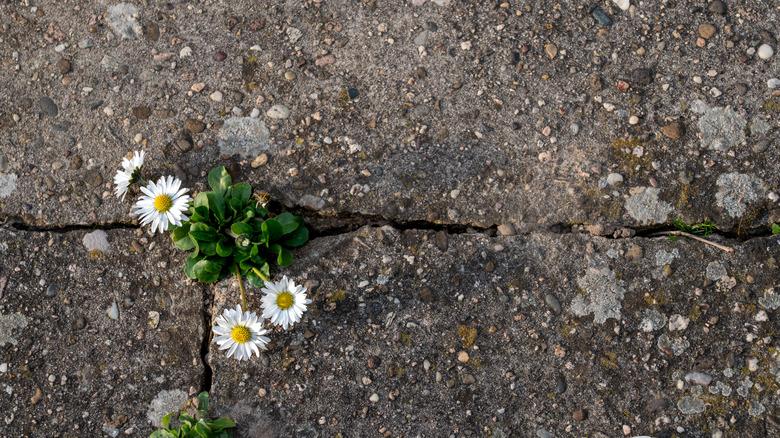
Sometimes you need to embrace the "imperfections" that arise in your garden. For some, that may come in the form of plants sprouting up in the cracks of your concrete pavers. Maybe you've tried to pull them out for a cleaner aesthetic, but try as you might, they just keep coming back. It's time to welcome the chaos and work with it instead of fighting it. Creeping perennials like creeping thyme (Thymus serpyllum) or blue star creeper (Isotoma fluviatilis), or even flowering herbs like Roman chamomile (Chamaemelum nobile), are more than capable of adapting to different types of soil moisture, and these flowers can make your property look magical. There are lots of practical plants that can not only add more beauty to your pavers, but can also thrive in that specific type of environment.
Instead of opting for lawn grass or moss, consider planting a creeping perennial in those tight spaces to upgrade the look of your pavers. Or maybe choose a fragrant herb or flowering annual. Your plant of choice should ideally be dense and durable. When deciding what plant to go for, take into account the light, shade, soil, and potential foot traffic of the area. While a plant like creeping thyme may prefer full sun, others, like sweet woodruff (Galium odorata), usually need some shade.
If you're able, it's recommended to plant your seeds at least six inches deep to give the roots a chance to grow. Avoid weeds by filling any bare areas with compost. After that, make sure the seeds get plenty of consistent water. An irrigation system is highly recommended. Overall, this is an easy gardening task to complete, and some creeping perennials can even stop weeds from growing between your pavers.
Purslane
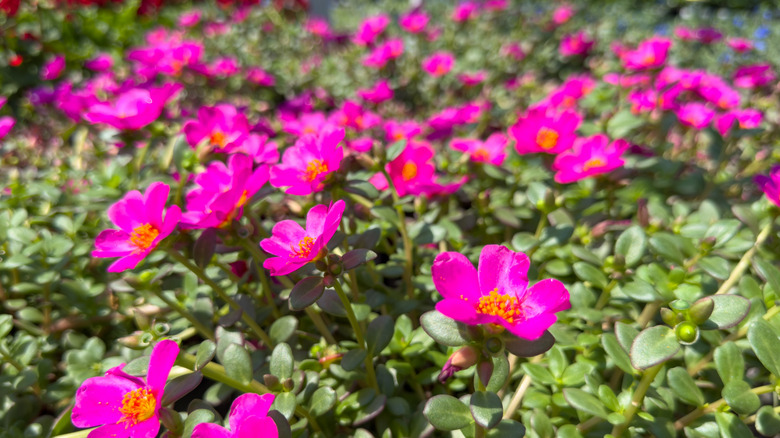
Purslane (Portulaca), also known as Moss Rose, is an annual drought-hardy ornamental plant that produces miniature, brightly colored blossoms. Technically a succulent, this plant can withstand a wide variety of environments, like heat and humidity, and prefers sandy or rocky soil as well as tons of direct sunlight. Purslane is often recommended as a ground cover or as a plant filler in paver cracks, as it has the ability to spread quickly and produces long-lasting blooms.
Roman chamomile
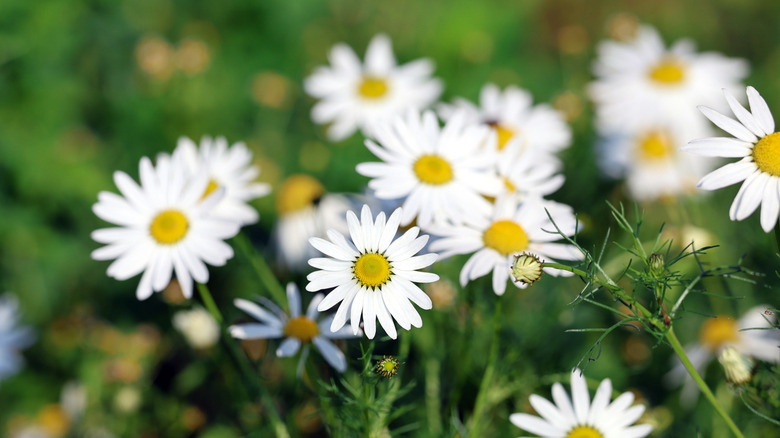
If you want to add a sweet-smelling herb to your property, specifically in between cracks of your concrete pavers, Roman chamomile is a refreshing and simple option, showing off tiny daisy-like yellow and white flowers. This herb can tolerate partial shade as well as full sun, and grows best where the ground is flat. Roman chamomile can spread easily and withstand light foot traffic, even producing a sweet smell when you step on it. It is a perennial and hardy in USDA Hardiness Zones 4 through 9.
Blue star creeper
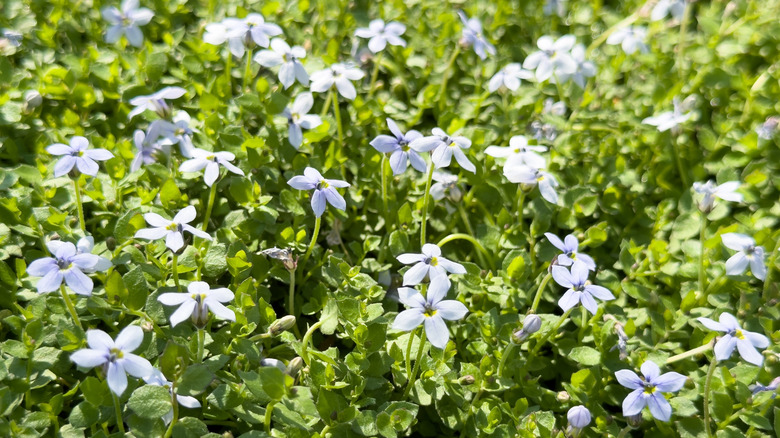
As you might expect from its name, blue star creeper is a low-to-the-ground creeping plant that is an easy option for a between-paver decoration. This herbaceous plant grows in a carpet-like form and eventually displays stunning white and blue flowers in the shape of stars. Blue star creeper can be planted in areas with direct sunlight, but make sure the plant is watered regularly. If that's not possible, it's best to keep it in partial shade. Don't worry about having too much foot traffic; blue star creeper is tough and hardy. This perennial thrives in USDA Hardiness Zones 6 through 8.
Creeping thyme
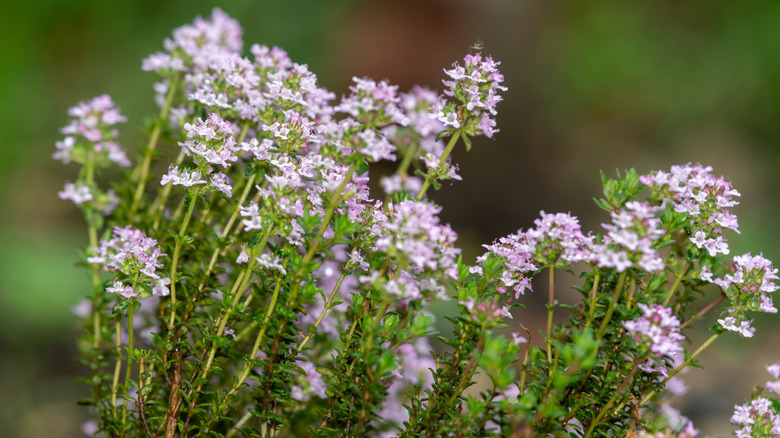
Creeping thyme, also known as wild thyme or mother of thyme, is one of the most popular options for a between-paver flowering plant. Not only does this ground-hugging plant emit a pleasant fragrance, but it can spread easily and quickly, producing its iconic light purple star-shaped blossoms. If you want to plant creeping thyme between your pavers for a gorgeous landscape, make sure it has well-draining soil and gets plenty of sun. This is a perennial plant, and thrives in USDA Hardiness Zones 4 through 9.
Turkish speedwell
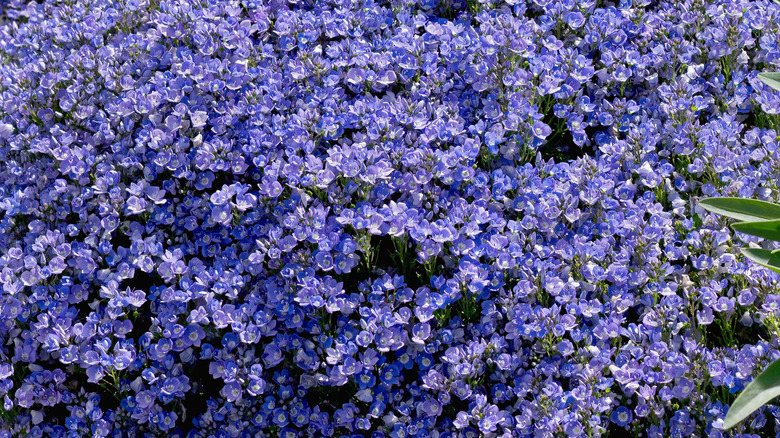
If you plant Turkish speedwell (Veronica liwanensis), also called Turkish Veronica, between the pavers and stepping stones in your yard, you will soon see a mass of vibrant, low-growing purple blossoms. This perennial plant thrives in US Hardiness Zones 4 to 9 and can withstand a wide variety of environments and soil types, making it an excellent option for a paver crack filler. Compared to other ground covers, Turkish speedwell tends to grow and spread on the slower side. While it produces blossoms throughout the spring, it maintains its foliage throughout the year.
Australian violet
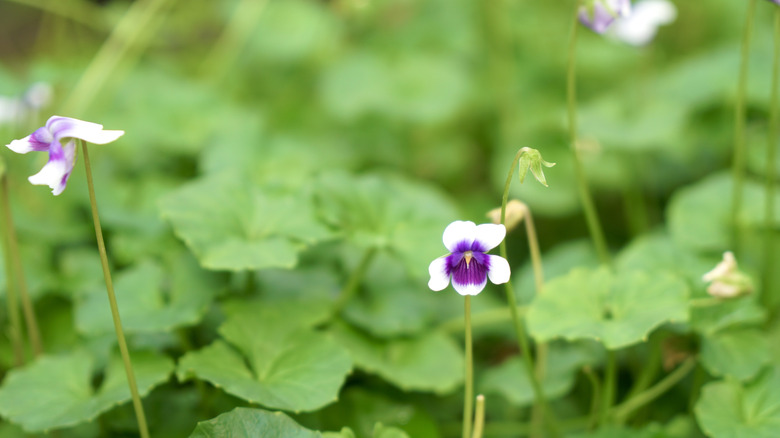
The Australian violet (Viola hederacea) is the perfect flower for a paver filler, as it only grows to about 15 centimeters in height, or just under six inches. It's very tolerant of drought and frost, and prefers a shady environment in which to thrive. Avoid planting Australian violets in an area that receives full sunlight. Make sure it has well-draining soil, and enjoy the pretty white and purple flowers it produces. This perennial flower prefers USDA Hardiness Zones 7 through 9 and can withstand foot traffic.
Sweet woodruff
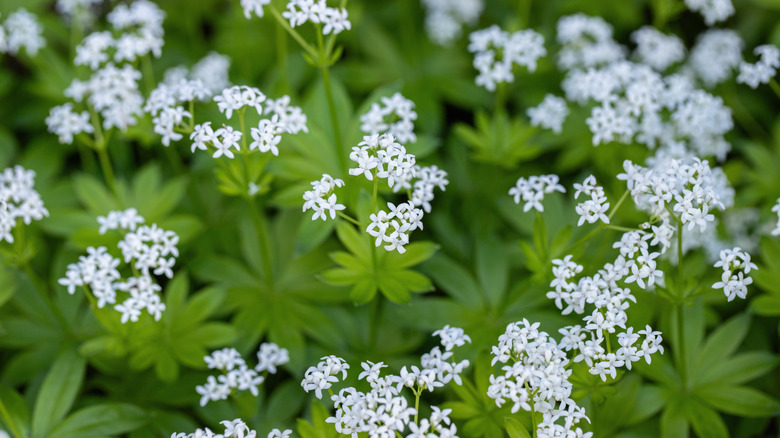
If your property receives mostly shade during the day, you can still bring in a flowery plant to fill in the gaps between your cracked pavers. Sweet woodruff (Galium odoratum) will bring flourishing star-shaped white blossoms to your yard during spring and summer. Like creeping thyme and chamomile, sweet woodruff also has a pleasant scent that can add a sweet smell to your yard. It prefers both shade and moist soils and can easily handle foot traffic. Note that this perennial is hardy in USDA Hardiness Zones 4 through 8.
Western blue-eyed grass
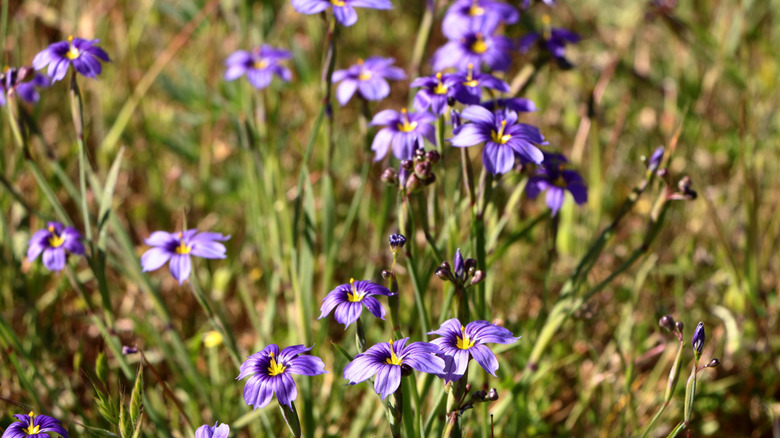
Western blue-eyed grass (Sisyrinchium bellum), also known as California blue-eyed-grass, is perfect for anyone who has paver cracks in a lower-traffic area of their property. Its average height of about one foot and misleading name may make you think it's a type of grass, but it is actually a perennial herb that blossoms with purple flowers from January to July. Western blue-eyed grass thrives in moisture, prefers full sunlight, and can tolerate dry soils, which is why it can work among your pavers. It is hardy in USDA Hardiness Zones 4 through 9.
Hardy ice plant
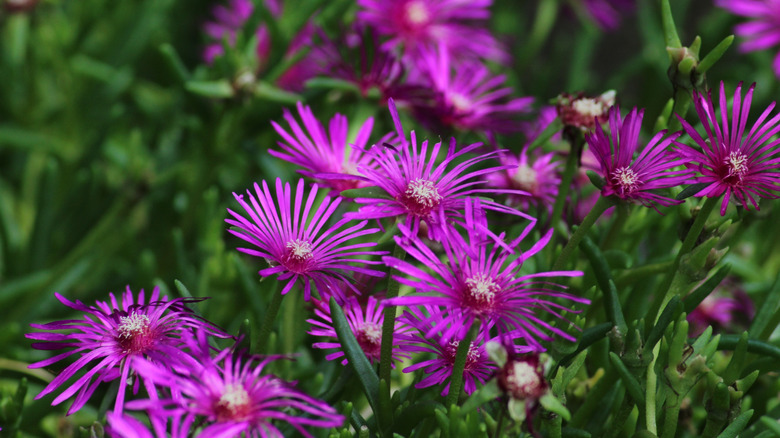
Known as a popular option for rock walls, curbside strips, and sandy environments, the hardy ice plant (Delosperma cooperi) can bring bright purple flowers to your concrete pavers. While it does require well-draining soil, this perennial can thrive in many environments, including heat and drought. It thrives in full sun and grows up to 3 to 6 inches tall. If you want a concrete-friendly flower that grows quickly, the hardy ice plant may be the choice for you. This perennial is hardy in USDA Hardiness Zones 5 through 9.
Clasping Venus's looking-glass
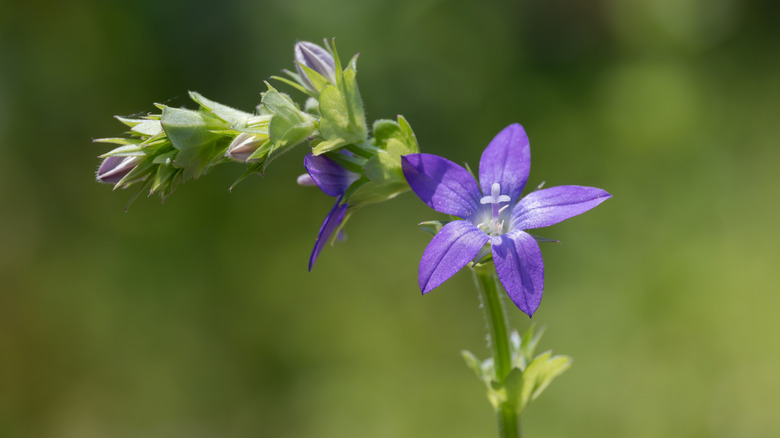
You might recognize the bright green stems and purple blossoms of Clasping Venus's looking glass (Triodanis perfoliata) as this species grows in a wide variety of environments, from the side of the road to grasslands. This annual plant prefers rocky or sandy soils and can be a great option for gardeners looking to add a bit of color and life in between their concrete pavers. If you plant Clasping Venus's looking glass, you can expect it to bloom between May and June in hardiness zones 2 through 11.