

Give This Perennial A Hard Prune In April To Attract More Butterflies
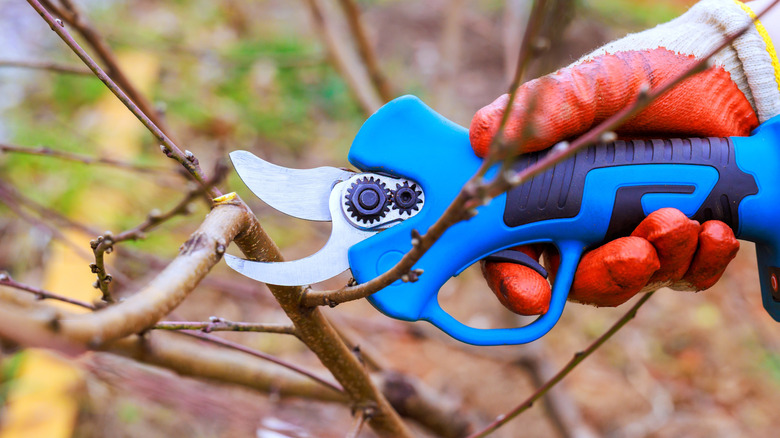
In April, your garden may be showing abundant signs of life. Maybe daffodils, violets, and crocuses have sprung up, and hopefully frost is a fading memory. Still, vestiges of winter may be around in the form of damaged tree limbs to clean up and leaves still on the ground. If you haven't gotten around to shrub pruning yet, it's not too late to take your pruners to an overgrown shrub, especially one that doesn't bloom right away. One of the perennials that benefits from a hard pruning in April is butterfly bush (Buddleja davidii), a shrub with clusters of summer-blooming flowers known to attract butterflies. This type of pruning, also called "rejuvenation," is an important part of caring for a butterfly bush, and if you skip this task you risk overly dense shrubs with fewer blooms (making the plant less attractive to butterflies).
Although this plant is beautiful, it also has some ecological risks. If you're growing a butterfly bush in areas where it's invasive, including several eastern states and parts of the Pacific Northwest, you should replace the plant instead of pruning it. The plant threatens native plants, and its leaves are inedible to caterpillars, making it, counter to its name, unappealing to butterfly larvae. In these areas, it's better to plant a sterile cultivar of butterfly bush, such as 'Blue Chip' or 'Purple Haze,' or a native shrub that's hardy to the same area (USDA zones 5 to 9) and also appeals to butterflies, like buttonbush (Cephalanthus occidentalis).
How to prune butterfly bushes for more summer blooms
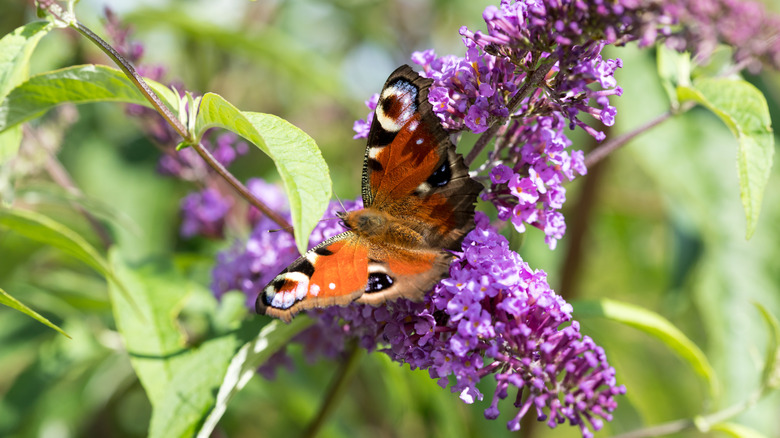
The type of pruning that keeps butterfly bushes healthy in spring involves cutting off between ⅓ to half of its older stems, as well as newer ones that are damaged, diseased, or crowding the plant. You can aggressively prune to shape the butterfly bush until it's around 1 foot tall. In fact, trimming too little is one of the common mistakes you can make when pruning a butterfly bush in the spring. One way to approach the task is cutting off whole stems on the sides of the bush and the tops of healthy branches in the middle, and don't be shy about getting rid of old wood, since the flowers will emerge on the new growth of the current season. With this method, you can ensure plentiful blooms for butterfly species, including monarchs, swallowtails, and painted ladies.
To prune your butterfly bushes, you may benefit from two types of pruners: loppers will help you remove tougher or taller stems and pruning shears are good for tackling the thinner ones. Both tools should be sanitized with either rubbing (ethanol or isopropyl) alcohol or a a solution of 1 part bleach to 9 parts water. As you work, pay attention to the direction the stems are facing as you prune, because it will affect the direction the flowers grow. If you trim outward-facing stems, you're encouraging blooms that face outward, for example. When your pruning job is complete, there's not much to do but wait for the butterfly bush to flower, which should start in June. You should always deadhead this plant for maximum blooms, which can keep new flowers coming through October.