

What To Do If You Find White Cabbage Worms Destroying Your Garden
Although many of us are looking for ways to attract butterflies to the garden, some of the species we get aren't exactly what we're looking for. This includes one unwelcome visitor that's attracted to the broccoli, cauliflower, and cabbage growing in your garden: the white cabbage moth (Pieris rapae), which is technically a type of butterfly. With cabbage moths, a few of them are charming, but outbreak years can make your garden look like a snowstorm. When you see the white cabbage moths flitting about your Cole crops, you can count on them laying eggs, and that's when the real problem starts.
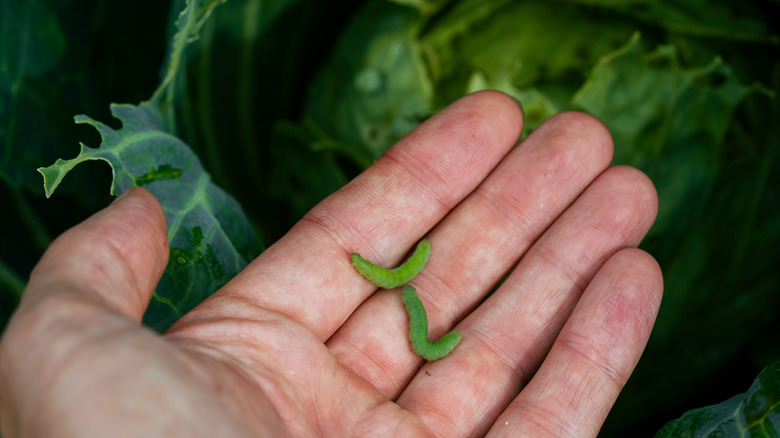
The moths lay their eggs one at a time on the underside of leaves, and what comes next isn't quite as charming as the white butterflies dancing around your garden. In about 4 to 8 days, the velvety green cabbage worms hatch and start eating your plants. One of the first signs you may notice is the Swiss-cheese-like holes in the leaves. You may also start to see fecal droppings as the cabbage worms get bigger. Unfortunately, the presence of cabbage worms in your plants can ruin the entire harvest.
The good news is that if you're paying attention, you can minimize the damage. By acting swiftly when you see an adult cabbage moth flying around your garden, you can still enjoy growing plants like cabbage and broccoli. A mix of pest prevention techniques, including everything from companion planting and netting to using safe insecticidal sprays, ensures a successful harvest.
Discover techniques to keep cabbage worms from destroying your garden
Although picking a single cabbage worm off a head of broccoli or cabbage may be no big deal, it's quite another thing to cut into your vegetables and have them completely infested with cabbage worms. The entire lifecycle, from laying eggs to pupating into an adult, takes about 3 to 6 weeks, and is repeated with up to 5 generations per year.
You can interrupt the lifecycle by using netting over your cabbage plants as soon as you set them out. This physical barrier is one of the most effective solutions for home gardeners. The cabbage worms overwinter in the pupal stage in host plants, so removing debris in your garden also helps break the life cycle. Since brassicas are cold-hardy, another effective technique is to plant earlier in the spring before the first generation of cabbage worms gets started.
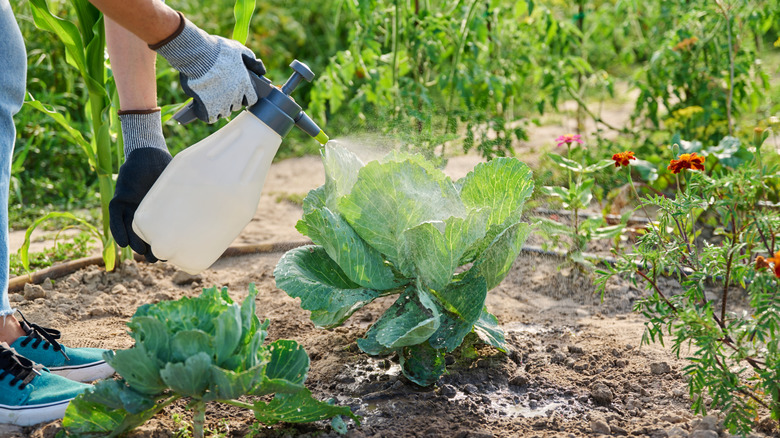
Other methods to get a handle on pesky cabbage worms include treating your plants with a mixture of flour and salt. Manual methods like handpicking the eggs from the undersides of leaves and spraying the worms off with water are also effective. You can also spray your plants with insecticides or use an organic method such as Safer Brand Caterpillar Killer. This product contains Bacillus thuringiensis and can also be used to get rid of tomato hornworms. Companion planting with strongly scented plants like oregano, thyme, marigolds, and onions is a natural method that will help deter the white cabbage moth.