

The Simple Guide For Identifying And Removing 7 Types Of Laundry Stains
We may receive a commission on purchases made from links.
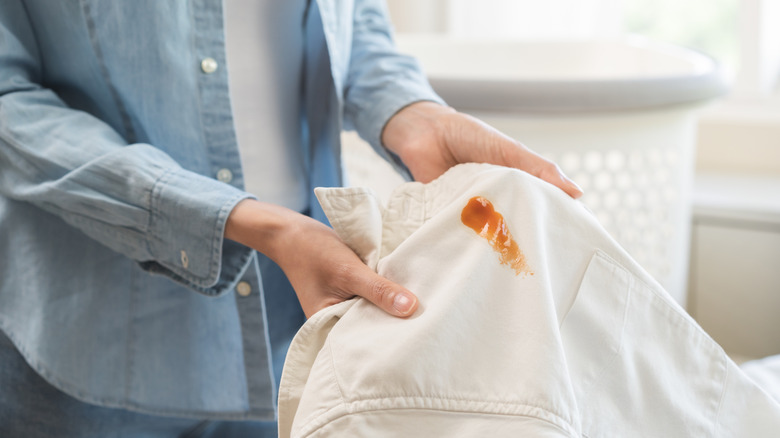
No matter how careful you are while eating, gardening, or applying makeup, your clothes are bound to sport stains at some point. Fortunately, you don't have to discard your soiled clothing if you act promptly. That's because the longer the stain interacts with the environment (moisture or heat), the deeper it sets and becomes difficult to remove. However, to remove the unsightly marks on your garments, you must first know how to identify them, since the elimination process differs for each type. Broadly, stains can be classified as protein, particulate, oil, tannin, or a combination of these (think ink, makeup, or rust), and differ in their texture, color, and smell. After identification, you can choose the appropriate treatment.
That being said, don't expect miracles on the first try. Depending on how obstinate the stain is, you may have to repeat the treatment. In fact, five to seven applications aren't unheard of. That's because each application aims to neutralize the stain in small sections — sequentially — without excessively stressing the fabric. Even then, you may notice some weakening of fibers or discoloration, especially in an old textile. Also, avoid putting the clothing in the dryer until you're positive the stain is entirely gone, as heat can set it. Always dab the treating agent rather than harshly rubbing it, or you'll push the stain deeper into the fabric. Don't forget to check the care label because not every treatment is safe for every material.
Is it a protein-based stain?

From bodily fluids to dairy spills, protein stains cover a wide variety. At their core, they're a result of biological interactions, and may be plant, human, or animal-based. Common examples include blood, sweat, egg, milk, vomit, and baby food.
One common trait connecting all protein stains is that they're encircled in a hard crust, so they have a well-defined edging. Also, they don't tend to bleed all over the fabric. You'll even notice a certain deepening in color if you don't tend to the marks immediately. For instance, blood stains start as shiny, bright red spots (or splatters) but eventually turn dull, brown, and flaky. They may smell metallic, too. Sweat stains are yellow and are concentrated around the collar or hems. As for the stench, we're pretty sure you'll recognize the nose-curling stink anywhere. In contrast, dairy stains like ice cream, are a mix of protein and oil, sugars, or dyes. They can be pale yellow or white and emit an unpleasant odor. Grass stains, too, are protein-based with other components including organic matter and chlorophyll. These stains are water-based but become difficult to remove when exposed to heat. That's because, rather than just sitting on top, proteins coagulate and entrench themselves into the fibers when heated.
Remove protein stains with enzyme treatment
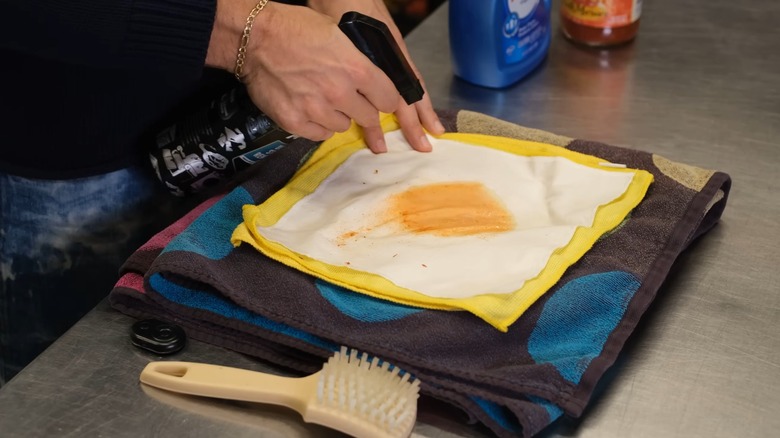
Before you kick into treatment mode, you should first get rid of any major protein chunks. The easiest way to do it is to simply run the fabric under cold water or dab the spot away with a damp paper towel. Then, get hold of an enzymatic stain-removing spray. The key ingredient to look for is protease. We like Shout's Active Enzyme Free Laundry Stain Remover Spray. These live enzymes target or "digest" protein compounds, splitting them into smaller sections, so they become water-soluble and are washed away. Spritz the dedicated solution directly onto the marks and gently work it in (no hard scrubbing).
Depending on the severity, you can either let the treatment sit for an hour or overnight. Afterwards, toss it in the washer drum and run a warm water cycle. You can also use them in powdered form, but don't forget to wet them before applying, or the enzymes won't kick into action. Another option is to choose a strong detergent, already enriched with enzymes (like Dirty Labs' Bio Enzyme Liquid Laundry Detergent), and run a normal warm water cycle. Take care not to go down this route for protein-based fabrics like wool and silk, and consult a dry cleaner instead.
Recognizing particulate stains
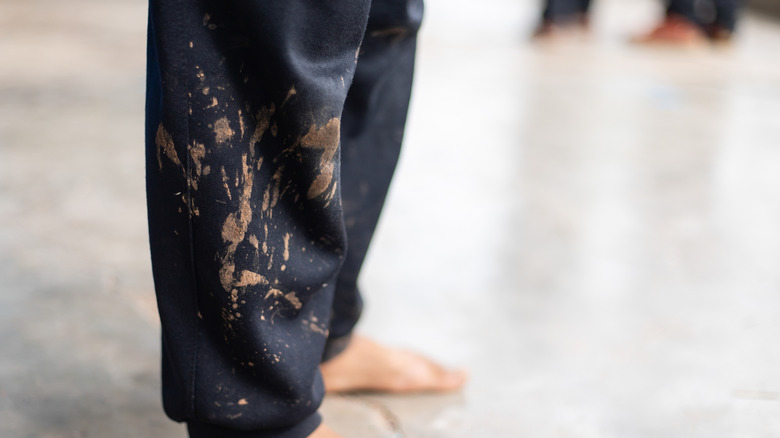
Particulate stains encompass marks related to grime, mud, clay, sand, soil, soot, along with any other derivative of dirt. Due to dust particles being omnipresent, they're a staple in every household. From clay-caked sneakers and sandy beach towels to your kid's soiled clothing and your gardening gear, you'll have to deal with these stains day-in, day-out.
Fortunately, they're quite easy to identify. Dirt is likely to build up on pants and skirts around the hemlines, most visible on light-colored clothing. Depending on whether you're dealing with mud, sand, or clay, they may be a different shade of blackish-grey, ochre-red, or brown. Rather than a greasy or a waxy texture, they almost feel dry and gritty to the touch. Dust particles let loose when the stain is scratched, sometimes leaving behind a powdery streak (like in the case of red clay).
Eliminate particulate stains with builders or laundry boosters
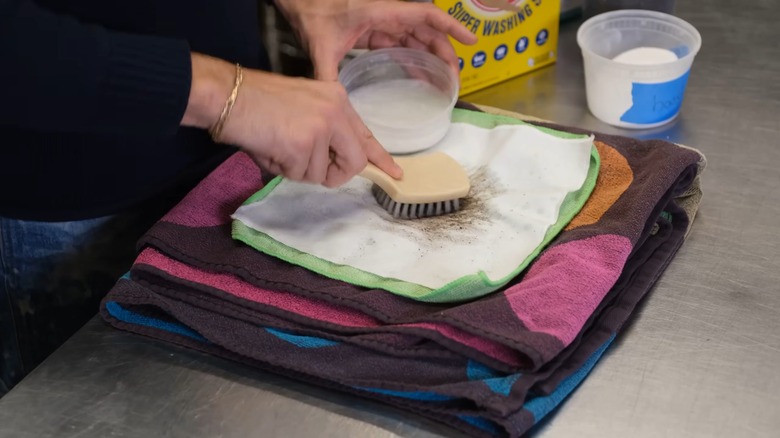
It's best to treat particulate stains after they dry fully. This is because when they're wet, any scrubbing or agitation pushes the dust deeper into the fabric. Unfortunately, this will lead to unnecessary smudging and smears that make the stain look worse. So, after your soiled fabric is dry, clean out any excess. You can either scratch at its surface with the edge of a cardboard or a spoon. If you have a handheld vacuum, use it to suck up the scraped-off mud.
After that, expose the particulate matter to a detergent containing builders. These compounds will soften the water the clothes are washed in, which helps break apart minerals. Most powdered detergents already contain builders, so running the laundry through a typical cycle should work. If this doesn't work, add laundry boosters, such as OxiClean's Odor Blaster and Laundry Stain Remover Powder, to your wash cycle or follow the manufacturer's instructions. They'll remove the toughest particulate stains, including those that may have set in. Apart from commercial offerings, you can make use of a borax-based solution, like this detergent booster from the 20 Mule Team, to pre-treat a particularly stubborn stain. Baking soda or washing soda are equally great options. Dilute ⅛ cup of the booster in water and dab it on a muddy stain. Then, put your dirty garment in the washer and follow this up with your usual detergent.
Does this stain contain tannin or is it oxidizable?
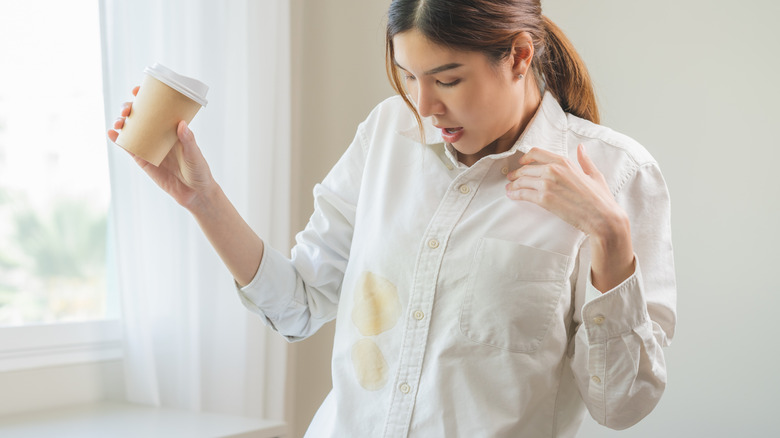
Tannins are complex compounds commonly found in plant-based foods, such as fruits and vegetables, and are well-known for their antioxidant properties. They're also present in beverages like coffee, tea, cola, wine, and beer, in which they enhance flavors or make an item astringent and dry. So, if you regularly consume caffeine-based drinks, liquors, fruit juices (think apple and grape juice), gravies, or sauces (tomato, especially), and have had the misfortune of spilling them over your cute pair of shorts, you're dealing with a tannin or oxidizable stain.
In case you aren't sure of the source, examine a stain's color and texture. Fruit juice or sauce spills are usually bright in color and smell the part. Coffee, tea, or cola stains are brown in color. And, over time, heat causes their sugar content to oxidize, deepening the stain's color and sometimes creating a ring-like pattern. Stains from sauces like mustard can sometimes have properties of tannin stains but also contain dyes, which may require special treatment.
Treat tannin stains with white vinegar and lift dark-colored spots with oxygen bleach
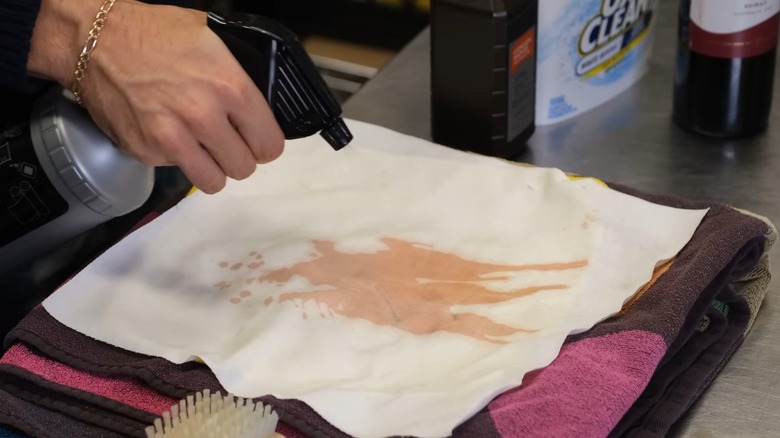
If you keep powdered detergents that include oxygen bleach (sodium percarbonate or hydrogen peroxide) as an additive, you don't really have to go through the loops to remove tannin stains. Just toss them in with the regular load, and your clothing will be as good as new. Oxygen bubbles produced by the detergent will oxidize and help to lift the stain (though it may take a few washes to see it fully disappear).
Otherwise, break out a mild acid, like distilled white vinegar. When poured over a tannin stain, it charges the color pigments. These eventually pull away from the fabric, leaving it clean. Be sure to let it sit for about 10 minutes before rinsing in cold water. If this proves ineffective, engage the help of an oxygen bleach spray like Oxi-Clean. Messy sauce stains stand no chance against this solution, nor does red wine. You may, alternatively, use a 3% hydrogen peroxide solution. But ensure the fabric is colorfast. However, avoid chlorine bleach, as it can damage wool and silk fabrics, while cotton and linen fibers may discolor over time. These oxidizing agents behave similarly, snapping the bonds between colored particles. Sadly, they aren't fast-acting, so you may have to repeat their application multiple times until the stain is undetectable. Once you get it out, drop it in the washer to get rid of the bleach.
Spotting grease and oil stains

Grease and oil stains are a part and parcel of life. From splatters of cooking oil, butter, food grease, mayonnaise, and fats to body oils, lotions, and sunscreen, there is no escaping oil-based marks. The motor oil smudges on your favorite T-shirt fall under this category, too.
Although recognizing oil-based stains or grease on your apron may be a no-brainer, you may struggle to spot them on other fabrics. Most often, they start as a translucent yellow marking, clear enough that you can see the back of your clothing. But given enough time, they may grow deeper in color. They usually appear irregular or circular in shape, without any solid contours. This is unlike water stains that feature hard edges. Oil-based markings tend to spread along the fabric, sometimes in an "X" shape. In the case of body oils, the stains may become obvious, especially on colored clothing, until they catch dust. A closer examination may reveal pale yellow markings. The final sign that brings this all together is the texture. Oil stains have that slick, slippery texture that just makes you want to wash your hands with soap.
Use surfactants to get rid of oil stains
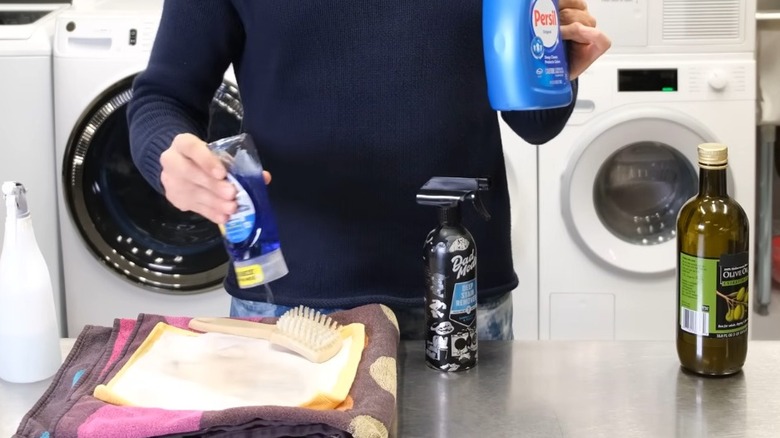
Fats, grease, and oil respond well to surfactants or emulsifiers, such as a dish soap or a liquid detergent. Even better, if they include lipase — a protein-based molecule that helps break down fats, thereby accelerating the process. In fact, it also works great on polyester or synthetic-based workout gear. On its own, oil repels water. But when surfactants enter the picture, they surround the stain and break apart the chemical bonds. They're effective because they include both water-loving and oil-attracting parts. This helps them pull apart the oil, leaving your laundry clean. The best part, though? They even work on old greasy stains.
To get rid of oily marks, simply squirt a tiny amount of soap or detergent on the stained area and tamp it down with a brush. Alternatively, just rub the fabric together to create surface tension. If it's still too greasy, add a dash of cornstarch or baking soda for neutralization. Rinse the cloth in cold water and then load it up in your usual laundry cycle. Do check that the stain is fully gone before popping it in the dryer, or just allow it to air dry if you'd like to play it safe.
Recognizing ink or dye stains
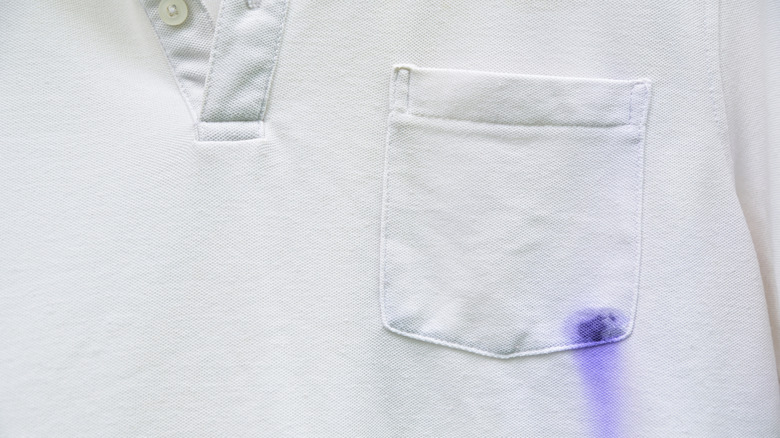
A leaky pen can cause all sorts of havoc, whether it explodes all over your fingers or, worse, inside your handbag. Frankly, ink stains are easy to recognize. They either appear as sharp streaks or huge blotches with uneven edging on clothing. Exposed to water, they bleed on the surface. Interaction with perspiration or perfumes can further set the color.
In their case, however, it's important to identify the kind of stain you're dealing with. Some inks, like those in a fountain pen, are water-based and are easier to remove. In contrast, oil-based inks, as are common in ballpoint pens, tend to be more obstinate since they're quick to dry and rarely smudge. Gel ink, permanent markers, or hair dyes are similarly troublesome, appearing thick and heavily pigmented.
Expose ink marks to solvents
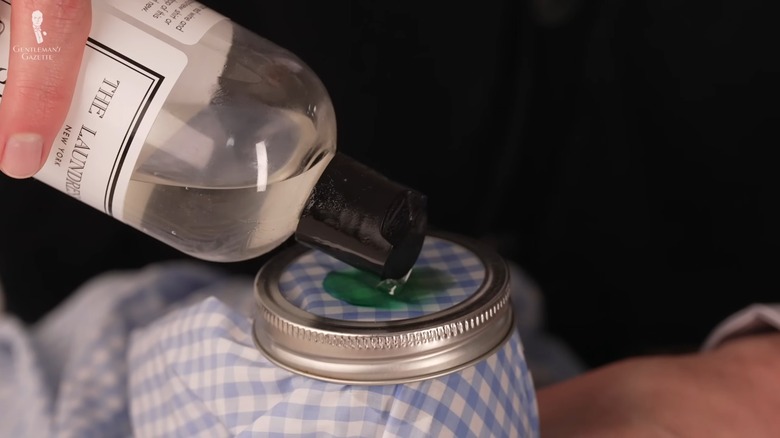
To successfully get rid of ink stains, you have to act fast. After all, they're formulated to ensure they leave a permanent mark. If you got lucky with a water-based ink, a dose of liquid soap, followed by a cold water rinse, will have your shirt looking like new in no time. But you must dab, not rub, the stain so it lifts without bleeding.
However, for more permanent, oil-based inks, or bleeding dyes, you'll need to enlist solvents. Think acetone, rubbing alcohol, or a hand sanitizer. Grab a cotton swab or Q-tip, pour a small amount of any of these solvents on top and use it to lightly blot out the ink. Remember not to scrub too hard, as it will only push the ink further into the fabric. Give it a few minutes before rinsing in cold water and pop the clothing in the washer afterward. If the stain persists, use an oxidizing bleach or turn to hydrogen peroxide, provided the fabric is colorfast. These dissolve the chemical bonds in the ink, and thus the color. Otherwise, leave your garment (especially if it's expensive) with a dry cleaner; they have specialized ink-removing agents that might work wonders on your victimized shirt.
Identifying stubborn makeup stains
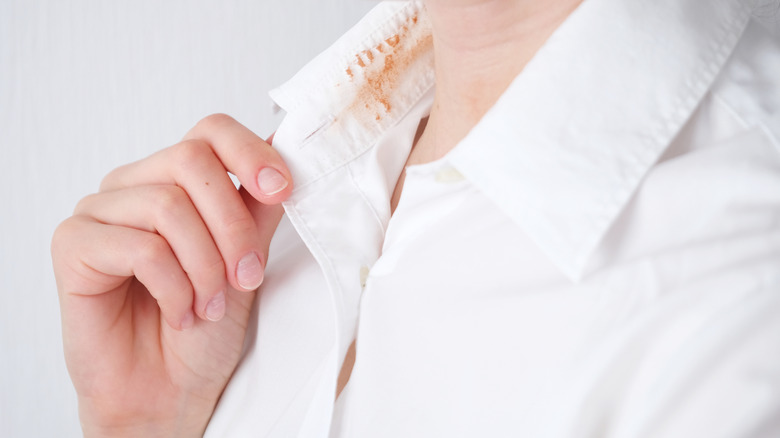
The absolute horror of getting a foundation or lipstick stain on your clothes or transferring it to your towels and bedsheets requires little introduction. But if a mystery stain catches you off guard, the easiest way to tell whether it's from makeup is by the color and waxy residue. Most cosmetics are created to last and contain myriad oils, waxes, pigments, and dyes — sometimes silicones, too. And this heady cocktail of chemicals leaves behind a stubborn mark.
A foundation stain may appear as a thick, creamy, beige smear. Even powder-based formulations leave a streak from where the spill was dusted off. Nail paint and lipstick stains are quite vibrant and leave a buttery stain if smudged, while a mascara (good luck getting that one out if it's water-proof) stain is dark in color. If you don't get them out right away, they will just bond with the fibers, making removal so much harder.
Spot treat makeup stains with liquid detergent or makeup remover
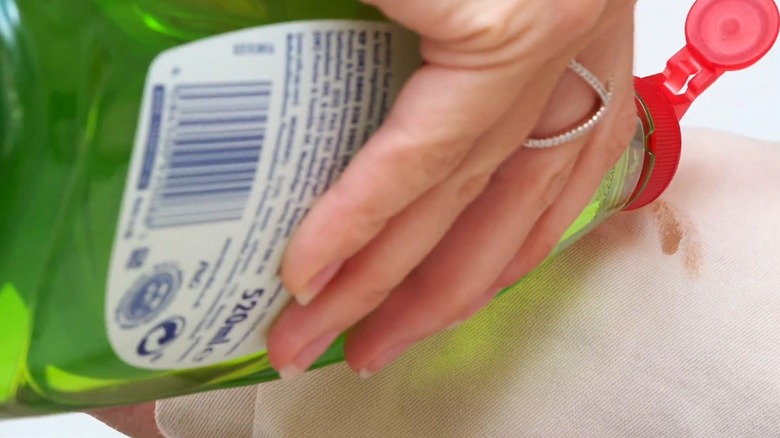
Removing makeup stains can be a little tricky, as they're made of different formulations, and some, like those from a matte lipstick, are more pigmented than the others. However, one catch-all method that works for most makeup stains — whether fresh or days old — is a strong, liquid detergent (Tide is one such example) or a dishwashing liquid (think Dawn). These behave like emulsifiers and help dissolve persistent pigments and dye stains.
Blot away any extra with a tissue and spot treat the stain with a tiny amount of the detergent or soap. If it has had time to set in, consider stretching the fabric a little to really get the soap in with a soft brush, or you might still find remnants of it. Work on the stain from the outer edge through to the center to avoid spreading it further. Place your stained clothing in the washer and run a usual cycle with detergent. However, if you're dealing with waterproof makeup, go in with a makeup remover since micellar water can change your stain removal game. As on your face, it does a good job of dissolving the oils and pigmented dyes marring your laundry — just follow the same routine outlined for detergent.
Is that rust on your clothes?
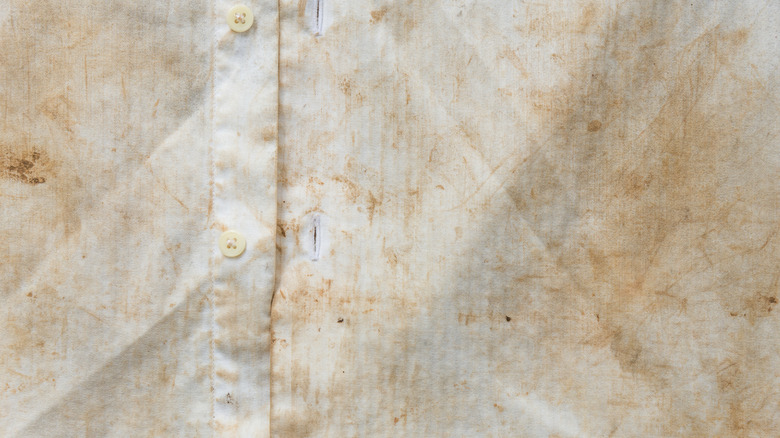
You're probably familiar with the reddish-brown or orange stains that get onto your clothes after you run into an eroded fence or sit on a tarnished chair. Usually, it's rust, formed because of iron reacting with moisture. Sometimes, however, you may find these rusty marks or smears on your linen after washing, even if they didn't come in contact with any rusted items. This could have several reasons. If your city supplies hard water, the iron may oxidize, leading to red stains. You'll face a similar problem if your water pipes have corroded over time. This is more common in older homes without PVC piping.
If your chemical sunscreen includes avobenzone, it may react with hard water. Rust-like blemishes, in this case, will have a yellowish tinge. Any oxidized metal elements inside your washer, such as around the gasket or detergent dispenser, may also leave those pesky stains on your freshly laundered linen. While treatment remains important before the marks set, make sure to address the underlying causes as well by investing in a water softener, changing out your pipes, switching your sunscreen, or consulting pros.
Tackle rust with lemon and salt, or a commercial rust remover
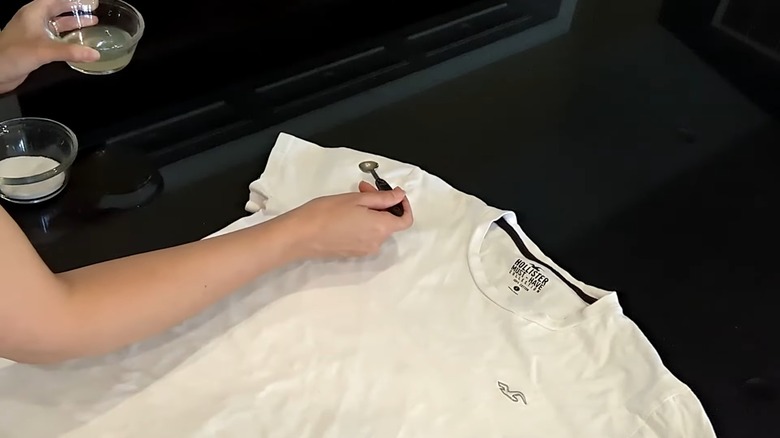
Since iron oxide in rust fuses with clothing fibers, it isn't the easiest to tackle. However, with a bit of elbow grease, a couple of household ingredients, and lots of patience, you can be successful. As a side note, though, avoid applying chlorine bleach, as it can darken the stains.
One of the best ways to tackle unsightly rust stains on clothing is to use lemon juice and salt. This is because they work together to neutralize oxides. For them to work, pour a tiny pinch of salt on before squeezing a lemon on your stain. To fast-track the process, put the clothing in a sunny place to dry. Afterwards, rinse it in cold water. If the stain persists, redo until you're satisfied. Later, launder it as usual with a heavy-duty detergent. Keep in mind, lemon juice can cause discoloration because it's acidic. So, patch test before using it on your colored garments.
Alternatively, use a commercial rust remover. Outdoor products, like the Iron Out Powder Rust Stain Remover, can prove helpful, too. Just make sure it doesn't contain hydrofluoric acid, as it can damage the porcelain component of your washer during the rinse cycle. Although the typical modus operandi is to leave it on the stain for a couple of seconds and wash off, stick to the manufacturer's instructions for better results.