

Here's Why You Might Not See Ladybugs In Your Yard Anymore
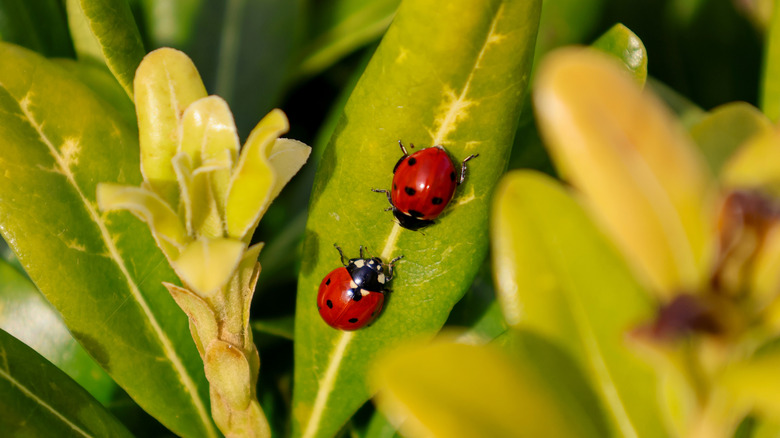
Do you remember those good old days when you would just sit out in your yard, doing nothing much, and then suddenly a tiny, adorable ladybug would come along and settle gently on your hand? It felt almost magical. So why doesn't that seem to happen anymore? The truth is a bit unsettling. Over the past few years, ladybug populations have been steadily shrinking across the globe. In a study looking at midwestern farmland, their numbers have dropped by a striking 39% over the last 30 years. This helps to explain why you aren't seeing ladybugs in your yard anymore. As for what is behind this decline, there are a number of reasons. From climate change and invasive species to pesticide use and changes in landscape composition, the list goes on.
Even something as simple as having too many artificial lights in your landscape can affect the number of beneficial insects such as ladybugs in the area. That's because light pollution affects the bugs' behavior, foraging, and reproductive success and can drive their numbers down over time. Climate change has also led to an increase in global temperatures and heat waves. These changes reduce ladybug larval body mass and interfere with how they respond to chemical signals in their environment. Climate change has affected rainfall patterns, too, which have also played a part in their decline.
And then there are invasive species. These newcomers disrupt natural food webs and alter how nutrients move through ecosystems. Plus, they often bring along pathogens and diseases that can harm ladybugs and reduce their numbers.
Landscape management also influences ladybug numbers
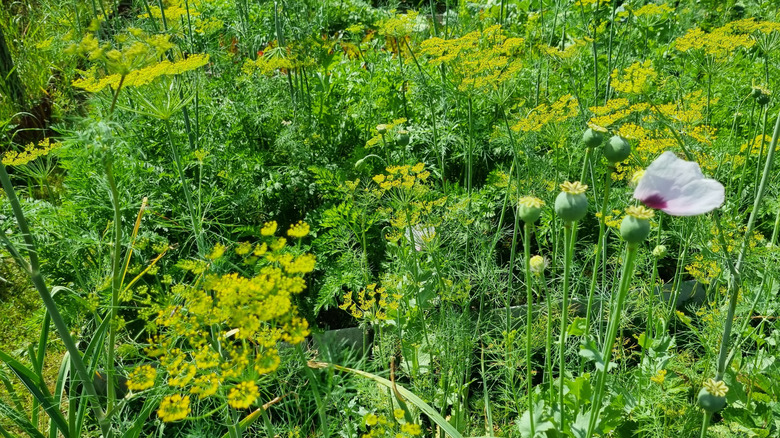
It is not only climate change and invasive species driving this decline; the way we manage our landscapes matters, too. Take, for instance, insecticides. These chemicals don't pick and choose between harmful pests and helpful insects. And their overuse has been linked to a reduction in ladybug numbers in many studies internationally. Plant diversity in landscapes is another factor that affects ladybug numbers. A wide variety of plants supports beneficial insects such as ladybugs by providing continuous food and shelter throughout the seasons. Unfortunately, diverse plantings are decreasing rapidly in both agricultural and urban landscapes, and this is hurting ladybug populations in backyard gardens as well.
So, is there anything you can actually do to help? While you might not be able to control climate change or agricultural and urban landscapes directly, you can certainly help by making some changes in your own yard. For example, you can grow plants that naturally attract ladybugs into your garden. Some great choices include dill (Anethum graveolens), fennel (Foeniculum vulgare), yarrow (Achillea millefolium), and parsley (Petroselinum crispum). In addition, instead of sticking to a single type of plant or closely related group, try creating a more diverse planting scheme to support ladybugs.
You should also learn how to identify an invasive plant and remove it. Invasive plants reduce diversity and upset the balance in ecosystems, which hurts ladybugs. Finally, reduce lighting in your yard and garden where bugs tend to gather, and cut down on the use of chemical insecticides and pesticides. Instead, grow plants that work as natural pest control in yards and gardens, such as catnip (Nepeta cataria), garlic (Allium sativum), clove (Syzygium aromaticum), and thyme (Thymus vulgaris).