

The Flowering Shrub That Creates Privacy And Sends Butterflies Flocking To Your Yard
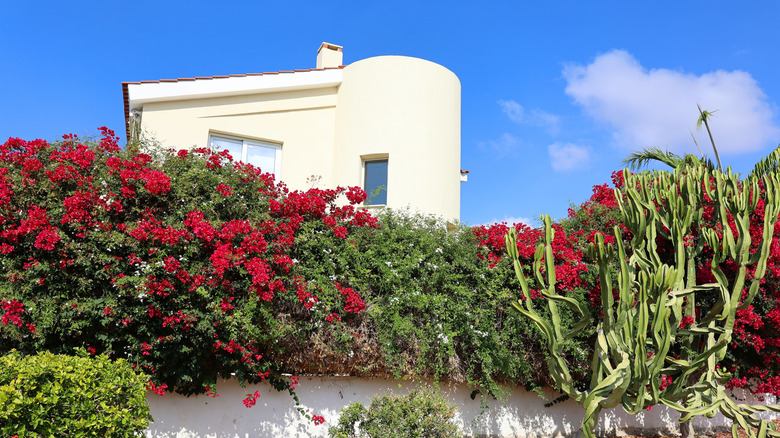
When you want to add a natural privacy fence to your landscape, the default image that comes to mind is probably rows of evergreen, plain hedges. Sure, they can solve the problem, but are they actually the best option? The short answer is no. That's because there's a much showier way to get privacy and create a tropical-inspired space. Enter, the rose of Sharon (Hibiscus syriacus). It's a star shrub thanks to its large, colorful blooms and lush green wall of foliage, which provide a living screen year-round and will bring all the butterflies to your yard.
Rose of Sharon is great as a bushy privacy fence for lining landscape edges, framing patios, or acting as a layered backdrop behind shorter plants. When you plant them in rows, rose of Sharon shrubs won't leave you feeling boxed in as you might experience with traditional hedges. Just be sure to give them plenty of elbow room. The perennial can reach up to 12 feet tall and 10 feet wide, with pretty, crepe-like petals that are 1 to 3 inches long. It prefers hot weather and thrives in USDA Zones 5 through 9, though the rose of Sharon can be invasive in some states.
The rapidly growing plant handles heat, drought, and poor soil like a champ. So, if any of those things apply to your garden, this is the kind of shrub that delivers — along with delivering butterflies and other pollinators — without over-complicating your life.
Rose of Sharon turns your yard into a butterfly magnet
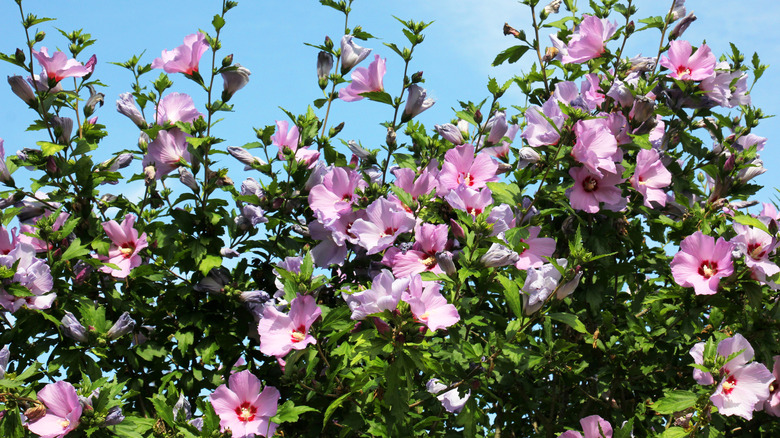
We predict the rose of Sharon will definitely not be one of those popular garden ideas you'll regret down the road. Outside its main role as a privacy shrub, the rose of Sharon earns its keep by literally bringing your yard to life. Blooming from summer into fall, the shrub will give you a steady stream of butterflies, bees, and even hummingbirds stopping by your yard. The brightly colored flowers, in pink, purple, yellow, and white hues, will be like beacons they won't be able to resist, especially as other blooms thin out for winter. So, instead of competing with dozens of other plants, your rose of Sharon rows become the main attractions in your yard. Since it's a self-seeder, baby rose of Sharon seedlings can pop up in other parts of your landscape.
With proper care, your rose of Sharon can live from 20 to 30 years. And to maintain its butterfly magnet status, it needs to stay in tip-top shape. That means it should be planted in an area that gets at least two hours of direct sunshine per day. Even if your soil isn't the best, the rose of Sharon can handle it, but the soil should have adequate drainage.
If you want to keep your rose of Sharon company, there are even more colorful varieties of hibiscus flowers that will add a tropical pop to your yard.