

What To Do If You Find Spots On Your Spider Plant Leaves
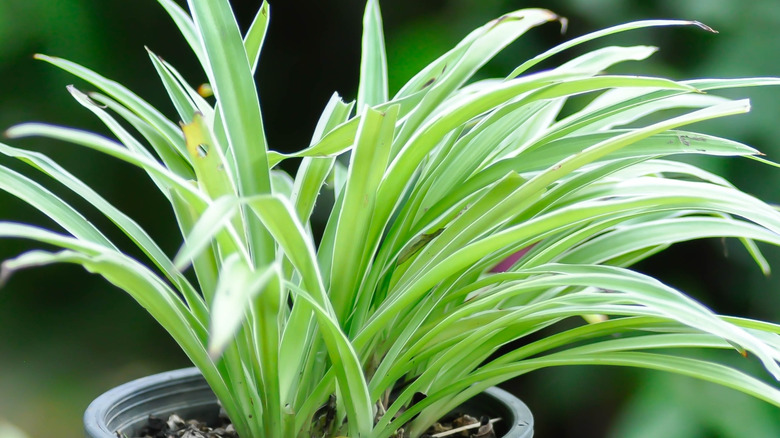
Noticing an unexpected change to your plant's appearance can be a disconcerting experience. It may have you wondering if the change is a natural mutation in the plant's growth or something you should be addressing right away. This can be a particular issue with plants like the common spider plant (Chlorophytum comosum). The spider plant makes the perfect indoor house plant thanks to its eye-catching striped foliage, so any changes to this iconic appearance are particularly unnerving.
The first thing to do if you find strange spots on your spider plant is determine the cause of the new markings. If the spots are small speckles that sit on top of the leaves and are not embedded in them, then these could be the droppings of a pest. Look for small bugs on the plant or soil such as spider mites, aphids, or whiteflies. If, on the other hand, the spots are affecting the leaves themselves and are soft and brown, this could be a sign of overwatering causing the leaves to go soggy with moisture. If the spots are brown but are not wet and are instead accompanied by a fine white crust, this could be caused by mineral build up from watering with unfiltered tap water. Finally, one less common but possible culprit is leaf spot caused by fungal pathogens. This type of leaf spot can wreak havoc on your plant by preventing it from accessing much-needed sunlight, making it weaker. This fungal issue appears as yellow, brown, or black spots that disrupt photosynthesis. Once you have identified the cause of the spots on your spider plant, take a look at the appropriate solutions to help keep your plant happy and healthy for longer.
How to address the source of spider plant spots

If you believe that the spots on your spider plant are actually the droppings of pests, you will want to explore how to manage or get rid of the specific pests plaguing your plant. For example, spider mites can be kept under control by regularly spraying them off the leaves with water or by using an insecticidal soap. Alternatively, if you have determined the cause of the spots to be overwatering, there are some solutions you can try for a healthy and luscious spider plant at home. First, let the plant dry out by avoiding watering for a week or so, improve air flow in the room, and offer more direct natural light. If the soil is still soggy, remove the plant from its pot, place it on some absorbent material like newspaper, then repot it once most of the excess water has been removed.
If you notice a white crust on the leaves, a sign of mineral buildup from tap water, try using filtered water instead to flush out some of those minerals which hang around and affect the health of the plant. If you believe your spider plant is suffering from leaf spot caused by pathogens, enough to damage its overall health, try utilizing a general fungicide to solve the issue. Finally, once you have the source of the spots under control, prune the leaves that have already been affected to improve the look of the plant and help it to focus on new, healthier growth.