

What To Do If You Find A Carpenter Ant Nest In Your Home
We may receive a commission on purchases made from links.
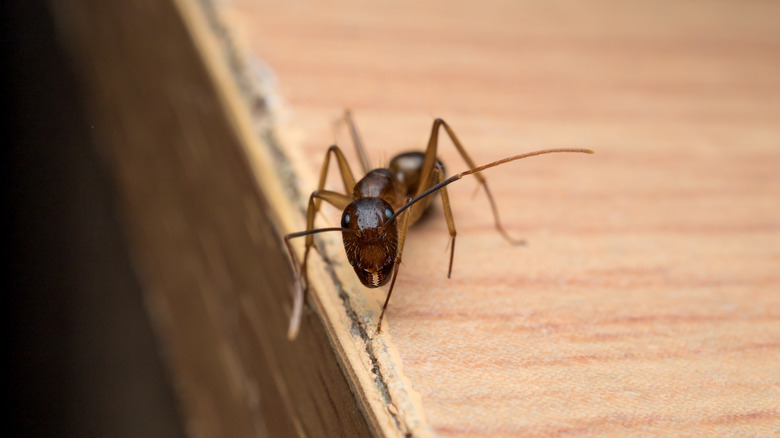
Finding a carpenter ant nest in your home is alarming, and for good reason. Unlike other types of ants, these ants excavate wood to build their nests. Over time, their destructive behavior can weaken the structural elements of your home. Once you've identified a nest, there are clear steps you should take to address the problem: tracking their movements, clearing scent trails, treating infested areas, and calling professionals for assistance.
Carpenter ant (Camponotus pennsylvanicus) nests are usually hidden inside walls, ceilings, or other wood structures. There are two nest types: a main nest with the queen and satellite nests that contain workers and larvae. It can be difficult to spot these nests, but you can watch out for signs that carpenter ants are invading. For instance, you may hear some subtle rustling noises through the walls. Visually, one of the most common indicators is frass, piles of sawdust-like debris pushed out of nests as ants build their tunnels.
Test for hollow spots in wood surfaces of your home where ants may be nesting by tapping and listening to the sound, and look for the ants moving throughout your space. They are usually hiding in damp locations such as under the sink and around window and door frames. It can be tempting to reach for an ant spray when you spot the insects inside, but that doesn't fix things. Spraying insecticides only affects the ants you see, not the colony itself. Using sprays can even make things worse by scattering the ants, causing them to form new nests.
Handling carpenter ant infestations and calling professionals
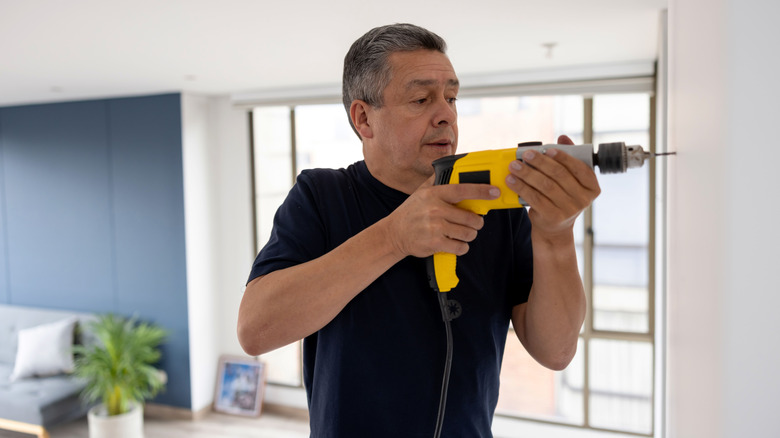
If possible, follow the ants when they are most active at nighttime to identify their entry points into your home and trace them back to their nest. If you find the nest, you can take steps to treat it yourself. The easiest way to get rid of carpenter ants is by drilling ⅛-inch holes in your walls near the nest area and putting boric acid inside each hole to dry the insects out as they pass through. You can also use insecticides designed specifically for carpenter ants, like the Spectracide Terminate Termite and Carpenter Ant Killer. Place poisoned bait in frequented areas so worker ants will carry it back to the colony.
Carpenter ants are attracted to wet and decaying wood. You should fix any leaks and replace water-damaged materials that you find throughout your home. Wipe down your home's surfaces, and store your food securely. You can also clean up carpenter ant scent trails with solutions such as ammonia or vinegar, disrupting the ants' ability to navigate. Keep in mind that ants you find inside the home could be coming from an outdoor nest in a woodpile or tree stump. You should also treat potential outdoor nest sources. Going forward, consider using cellulose insulation to keep carpenter ants out of your home and prevent new infestations.
While these methods can work for smaller nests, carpenter ants are difficult to eliminate completely. Call pest control professionals for major infestations and if you notice that ants are returning after treatment. It's also a good idea to bring in the pros if you suspect there are multiple nests. Exterminators have specialized tools that quickly locate and eliminate the colonies more effectively.