

For Gorgeous Peonies, Use Only This Fertilizer
We may receive a commission on purchases made from links.
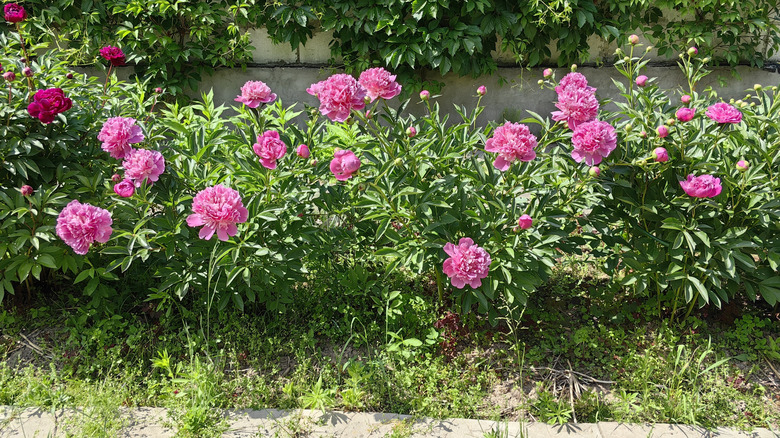
Few flowers put on as spectacular a show in the mid-spring garden as peonies (Paeonia spp.). No matter the species or cultivar, it is sure to have huge, colorful blooms. Peony enthusiasts are always on the lookout for ways to ensure their carefully tended plants thrive. After all, what's the point of growing peonies if you're getting lackluster blooming? When learning about how to successfully grow peonies, the question of which fertilizer to use is often top of mind. Peonies do need feeding to put on their dazzling show, but a good dose of compost usually does the trick, ensuring their soil is full of the rich organic matter they crave.
Unless your garden has poor soil, peonies don't always need fertilizer. A simple soil test will tell you what's lacking. Compost, on the other hand, is a natural source of organic material with benefits that far exceed a quick dose of NPK (nitrogen, phosphorus, and potassium). It adds nutrients to the soil, supports beneficial microorganisms, helps soil hold water, and enhances soil structure. You can also expect better drainage and improved air circulation in garden beds or containers amended with compost — both conditions that these pretty plants need. Peonies grow best in a loamy mix with sand and clay, and an organic amendment like compost benefits both soil types. If you don't make your own compost, a 10-pound bag of R&M Organics Premium Organic Compost costs about $25.
Give your peonies compost to meet their need for rich organic matter
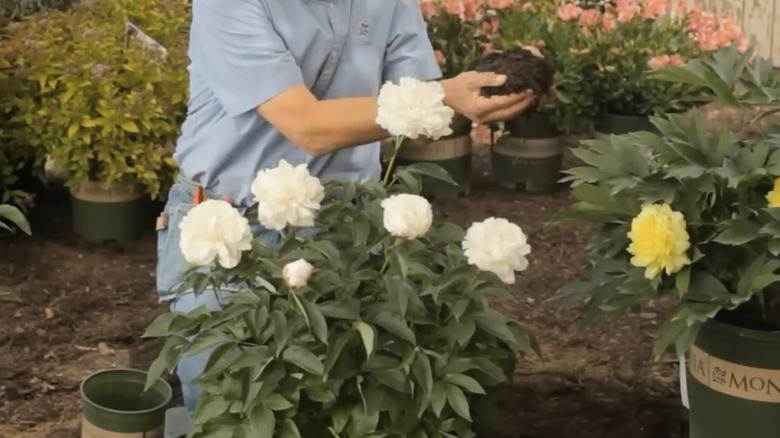
Before you even start planting, employ a soil tip that will help your peonies thrive in the garden. Instead of applying the compost directly to the topsoil, work it into dirt below the level of the peony tuber — that is, about 1 foot below the soil surface. Then, mix some compost into the sandy, clay-based soil you will plant your peony in. For example, a healthy peony planting mix might include ⅓ sand, ⅓ clay soil, and ⅓ compost.
Peonies are perennials you should be dividing in fall. While this composting approach is tailored to planting or transplanting new peonies, it can also be used when planting peonies split from divided clumps. You add compost to the soil before replanting, as outlined above. If you don't plan to divide your peonies, apply a light layer of compost to the topsoil in early spring each year. Lay it in a circle around the plant's drip line, and avoid the plant's crown to reduce the risk of rot.
In most cases, compost will provide your peonies with all the nitrogen, phosphorus, and potassium they need. However, it's still worth conducting a soil test if you haven't done one recently. Soil health fluctuates with the seasons, so checking regularly for nutritional deficiencies using a SaySummer 4-in-1 Soil Test Kit is always a good idea. If you decide to fertilize your peonies based on the results, avoid nitrogen-heavy fertilizers. They reduce blooming and boost foliage growth.