

Ditch The Shingles: The Recycled, Eco-Friendly Alternative For Your Roof
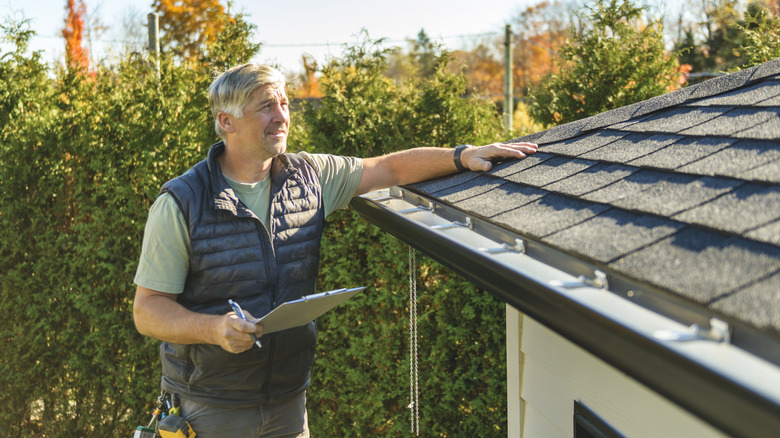
Being an eco-friendly homeowner can sometimes feel like a full-time job. There's always a more energy-efficient gadget to consider buying or a more sustainable way to decorate your patio. When it comes to big home improvement projects, it's easy to default to traditional methods and materials. If you're really dedicated to making environmentally conscious choices, there are often better, more sustainable options to explore. For instance, instead of sticking with asphalt roof shingles, you could opt to replace them with a similar roofing material made from recycled tires.
Asphalt roofing is by and large the most popular roofing in the U.S., with roughly two-thirds of new roofing projects using the material. The problem is that around seven to 10 million tons of tear-off waste are generated yearly from asphalt roofs, with the majority of old shingles ending up in landfills. Recycled tire roof shingles, on the other hand, help divert approximately 400 to 600 tires per roof from landfills and onto residential homes.
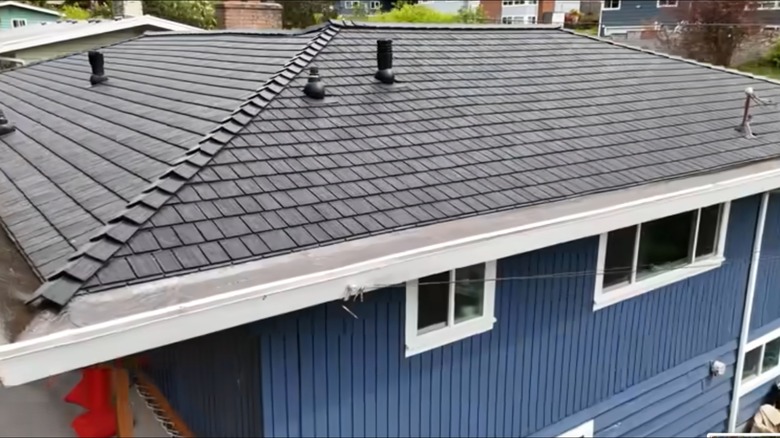
These alternative shingles — made from spent tires — are designed to look similar to luxurious slate or wood shake shingles. Although they cost more than asphalt roofing, they are easier to install and far more durable. In fact, recycled tire roofing has a Class 4 impact rating and holds up extremely well against the elements. It's an excellent option if you live in an area with a lot of hail, for example. If you're looking for a roofing material that will best stand the test of time, this may be the option for you.
What to know if you want to install recycled tire roofing
Before deciding on roofing materials, you need to see signs that your roof needs replacing ASAP. Age is one of the easiest to understand indicators. If your roof is roughly 20 years old, it's likely near the end of its life. You can usually safely consider a roof ripe for replacement if you notice obvious signs of wear and tear. Curling, bald, or cracked shingles point to a roof that's worn down and ready for a refresh. Dark streaks and lots of moss growth are also signs you should call your local roofing company pretty soon.
Once you've deduced that your roof needs replacing, it's time to pick the best roof for your home. Recycled tire shingles could be the best option if you live somewhere with frequent hail and big winds. Rubber shingles can withstand wind uplifts of 110 miles-per-hour. They're so sturdy that some home insurance companies will give you discounts if you install them. You may also want to consider recycled tire roofing if your home has poor insulation. This material does a great job at keeping hot or cold air inside your home, saving on energy costs. And, of course, recycled tire roof shingles are is also a fantastic product for climate-conscious homeowners.
However, you may not be a good candidate for recycled tire roofing if you're looking for the cheapest product on the market. While rubber shingles aren't the most expensive roof material out there, they're not as cheap as asphalt shingles. In some cases, rubber shingles release an unpleasant odor into the air when hot, though the effect is usually temporary. If you're not bothered by these downsides, rubber shingles might just be the best roofing material for your environmentally friendly home.