

Attract Butterflies To Your Peonies With A Pollinator Companion Flower
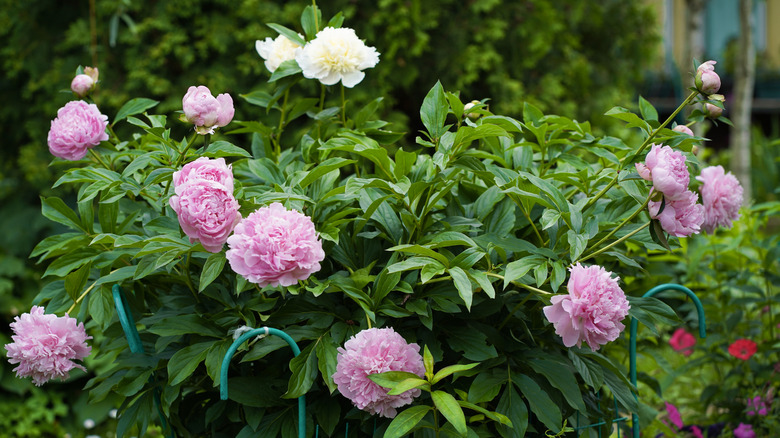
Peony (Paeonia spp.) are gorgeous flowers, and if you have them in your garden, you probably have a pretty proud green thumb. Don't hold your breath waiting for butterflies to show up, though. Despite their lovely smell and gorgeous petals, peonies don't usually attract many pollinators. If you're looking to get more of our tiny fluttering friends around your flowerbed, you'll need to add a companion flower. There are some peony companion plants you should avoid in the garden, but a good one for your peonies is salvia, which butterflies love.
A companion flower is one you grow near other flowers because of specific benefits they offer the flowers around them. In this case, salvia will draw in the pollinators that the peonies aren't attracting, and growing them close together can bring more butterflies to your peony garden. To ensure you avoid the common companion planting mistakes everyone makes, you need to choose a companion flower with homogeneous growing conditions. Peonies and salvia work well together because they do well in similar USDA Hardiness Zones (peonies in Zones 3 to 8 and salvia in Zones 3 to 10), both need full sunlight, and prefer well-drained soil. This makes growing them in the same space a breeze.
How to grow salvia as a pollinator companion for peonies
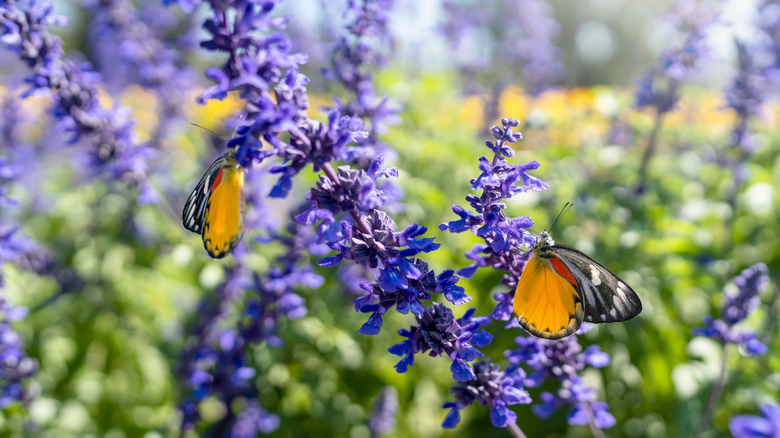
There are many varieties available to add to your garden, like the magenta-blooming salvia that pollinators can't resist, 'Smokey Jazz.' Regardless of the plant you choose, be sure to wait to plant it until the temperature is consistently over 55 degrees. When the conditions are appropriate, mark the spots where you want to plant the salvia, making sure they are 24 to 36 inches away from each other. If you are transplanting salvia that has been purchased already growing in a planter, dig a hole in the soil that is twice the size of the planter. Remove the planter and place the salvia root first into the ground. Use extra soil to fill in the hole and lightly water the soil after planting.
Alternatively, you can begin salvia seeds inside about nine weeks before you want to plant them outside in the garden. Using a seed-starting tray or small pots, add a seed starting potting mix and moisten it slightly. Make sure the container has adequate drainage holes. Place seeds on the mix and cover to keep the moisture in and temperatures from getting too low. You should see the seeds begin to germinate in about one to two weeks.
You don't need to water salvia very often. In fact, it's preferred to let the soil become dry to the touch between waterings. Ideally, the soil will maintain a slightly moist consistency — neither too dry or too wet. This is why well-draining soil is important. To encourage more growth, you can trim the top leaves as they grow. You can also prune them back in the summer to promote greater growth and flowering.