

Keep Your Home A Relaxed Oasis With This Calming Trend Of 2026
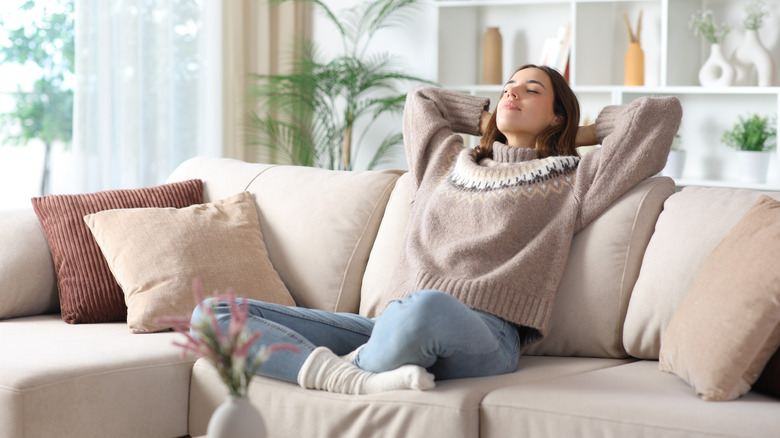
If you're over trying to keep up with fill-in-the-blank-core and other TikTok-inspired decor trends, you're not alone. Sure, the inspo is creative and can be fun to partake in, but most, if not all, are fleeting fads. However, every now and then, one of these core trends rises to the top because it resonates with almost everyone. That's exactly how the "considered calm" trend feels. Taking a proverbial backseat to bold home designs, the considered calm movement embraces serene softness, cohesion, and a clutter-free approach that carries throughout the entire home. This approach shifts the focus toward comfort and ease, emphasizing how a space feels to the brain over how it looks to the eye. "Considered calm" is more than just plastering everything in beige. It's about working with the existing elements in your home to foster rooms that feel welcoming and well-planned.
Mindfulness and prioritizing mental health aren't new. However, these concepts are somewhat novel in home design. Of course, the concept of a peaceful home aesthetic is somewhat subjective and will vary from person to person. Despite this, the considered calm look features a few common threads, starting with balance. Like the cozymaxxing home decor trend, the goal is to turn a home into a comfy place to unwind. But unlike cozymaxxing, it isn't built on abundance. Considered calm takes the restraint of minimalism and makes it more comfortable. "I've reduced cognitive load with visual minimalism. Every single object your brain has to process contributes to mental clutter," decor and lifestyle influencer Kyyah Abdul explained on TikTok. The lack of stuff doesn't translate to a boring environment; it can actually inspire you. Interior designer Young Huh told Real Simple, "Having some emptiness in a room can open you up for clarity and the opportunity to imagine."
How to bring the 'considered calm' trend into your space
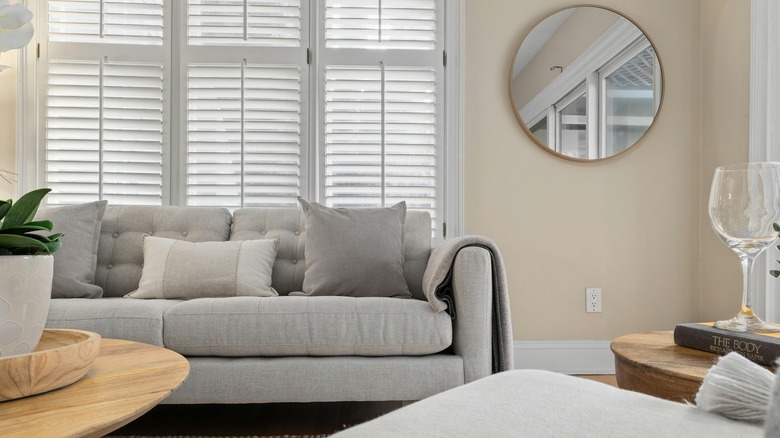
Bringing the considered calm aesthetic into your home doesn't mean you need a complete makeover. Instead, think about paring down your decor. A good place to start is to remove clutter from tables and countertops for an instant shift. Any decor that remains on your surfaces should be simple and well-organized, always allowing enough space to rest a coffee mug, a novel, or a journal. While there are plenty of simple design tricks that calm a busy gallery wall, try to choose wall art that focuses on quiet colors, soothing scenery, or figures in relaxed poses. Lighting is another easy-swap decor element that can make or break how calm your home feels. Instead of harsh or bright overhead lighting, reach for warmer ambient lighting. This way, your lights are enhancing your sense of calm rather than stealing from it.
The colors you choose also contribute to a peaceful environment. Rather than stark white walls, calm interiors typically lean into nature-inspired tones, including warm whites, muted greens, soft taupes, and some blue hues. But don't forget the "considered" aspect; these rules aren't universal. Colors should create a seamless backdrop that makes you feel connected. Kyyah Abdul explained (via TikTok), "If you live by the beach and you have a beach house with a bunch of white walls, that's a bit different, because your brain associates [bright white] with nature and the open space of the ocean, which allows you to feel open and airy and still relaxed." Depending on the context and style of your home, a rich color or playful pattern can also fit into "considered calm."