

What To Do If Carrot Flies Are Wrecking Havoc In Your Garden
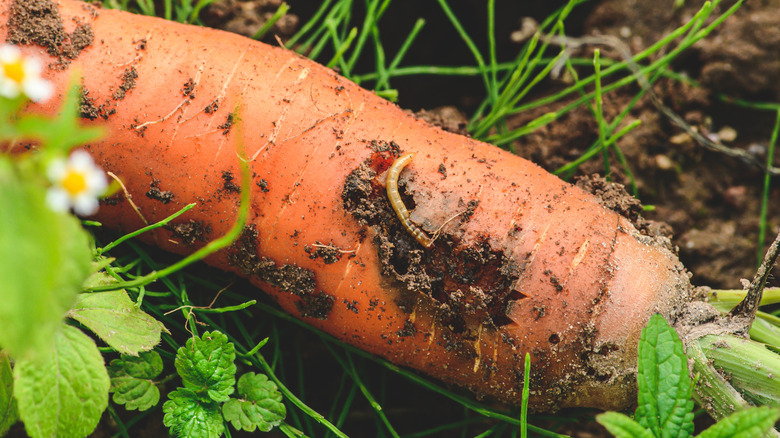
There are plenty of tips that make growing carrots a breeze, so it can be disheartening to pull one up only to find it riddled with blacked tunnels inside. If you've noticed the leaves of your carrots turning a bronze color, or harvested carrots filled with dark tunnels inside and tiny yellow maggots, you're likely dealing with the dreaded carrot fly. These frustrating pests can be devastating to a vegetable patch, and ruin your harvest before you even know they're even there. Fortunately, there are some steps you can take to completely get rid of these bugs and ensure they stay away from your garden beds. With actions like tweaking your seed-sowing schedule and using hardy physical barriers to protect your crops, your garden will be in good shape going forward.
While the term "carrot flies" suggests the flies are the direct issue, the adult insects aren't the ones actually eating your crop. Instead, they lay eggs in the soil next to plants that are vulnerable; victims typically include carrots (hence the name), along with other crops with taproots like celery and parsnips. Once they're born, the maggots find the closest plant and start feeding on its root hairs, then make their way to each plant's taproot. And because these flies breed quickly, creating about two to three generations a year, an infestation can get out of hand rapidly, which is why they are one of the worst garden pests and it's so important to get them under control immediately if you do find them.
How to adjust your gardening habits to defeat carrot flies
The best thing to do if you currently have a carrot fly infestation is to pull up all of the infested plants, and toss them along with their roots and greens. Or, if you have one, put them into a high-heat compost heap; this destroys their life cycle, stopping the maggots from continuing on as adult flies. Then, use carrot fly nematodes mixed in your water to saturate the soil. The organisms will kill off any in-ground larvae.
A good preventative option to start with is companion planting. Since the green leafy tops of carrots have a scent that carrot flies are drawn to, planting something even more fragrant nearby (like an onion) can deter them from your carrots altogether. This diversion tactic works with many insects. Plus, companion plants can help your carrots thrive. However, you'll need at least three rows of onions to every row of carrots for an effective deterrent.
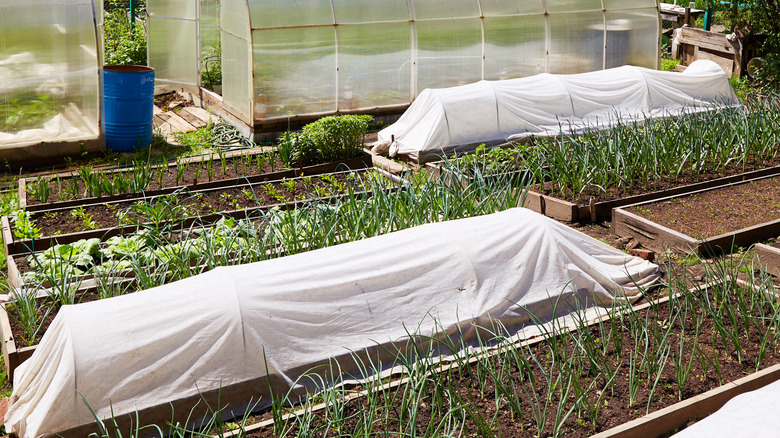
Another option is to keep your carrots separate from your other in-ground plants by either planting them in a raised bed or a separate elevated pot. Carrot flies are low-flying critters, so these options literally remove them from the equation. One of the best ways to stop carrot flies is using physical barriers to block them. The minute you sow your seeds, get them covered with something like insect-proof netting, burying the edges securely in the dirt. Another solid option is to choose carrot varieties that are resistant to these flies for better odds, like the 'Flyaway' and 'Resistafly' varieties. Now you can look forward to delicious carrot side dishes, not the flies.