

The Simple Way To Give Your Indoor Pothos Plant Shiny, Glossy Leaves

Do you suffer from shiny pothos leaf envy? When you see healthy-looking pothos leaves in photos, stores, and the homes of your friends, you may be wondering how to make yours look the same. But did you know gleaming leaves not only look great? Keeping them clean actually supports their health — a layer of dust covering your houseplant's leaves can prevent them from photosynthesizing to their full potential. While there are plenty of suggestions out there for keeping your pothos leaves sparkling, the best treatment is simple and. maybe the most obvious — regular, gentle cleaning.
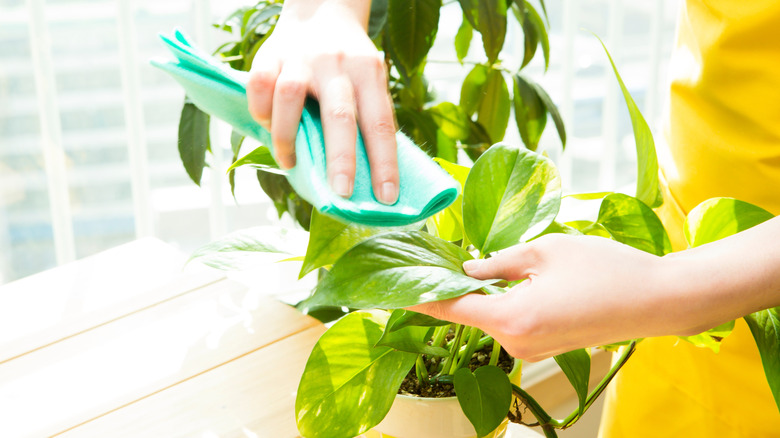
You can clean your pothos leaves in several safe ways, starting with wiping them gently with a soft cloth dampened with lukewarm water while holding the leaf in place with your other hand. Another option is to use microfiber leaf cleaning gloves to carefully wipe away dust and dirt. Also consider showering your indoor houseplants, including your pothos, in lukewarm water. You can vary your regular watering routine to include showers or treat your pothos to regular cleaning showers while covering their soil so they don't get overwatered. Using a sink sprayer would enable you to easily target leaves. As for frequency, aim to clean your plants every four to six weeks. If you notice your leaves are especially dusty between cleanings, feel free to wipe them down or give them a shower. Every cleaning gives you the opportunity to inspect your plants closely for any problems, such as signs of pests or disease.
The dos and don'ts of polishing pothos leaves
Not every suggestion for making pothos leaves shine is created equal. In fact, several substances recommended for polishing leaves are problematic because of fat or oil content, while ironically, others are questionable, in part, because they break down fats. Would-be cleaners with fat content include milk, coconut oil, and mayonnaise. Fats and oils clog the stomata (pores), harming cell membranes and decreasing transpiration. And then there's the Martha Stewart gardening trick you should avoid at all costs — using leaf shine spray, which may contain oils and waxes that have the same blocking effect on stomata as other fat-containing products.
Some indoor plant enthusiasts suggest diluted acidic products like vinegar for cleaning, but consider that vinegar is also used as an herbicide. Montana State University reports that the acetic acid in vinegar ruptures plant cells, drying out plant tissue as fluids leak out. The acid also destroys the leaf's lipid-based (fat) cuticle.
To give your pothos leaves that gleaming shine you crave, you should use neem oil. Wait, didn't we just say oils are harmful on leaves? Yes, but remember that diluted neem oil is used routinely on plants to deter pests, so it's been tested. Used in excess, it does still have the ability to block stomata, burn leaves, and it can also vanquish beneficial insects. That's why we suggest using it only occasionally and sparingly. For a safe solution, use a tablespoon of neem oil to a gallon of water. You'll also need a teaspoon of liquid soap (such as castille soap) as an emulsifier. You can spray it on or apply it with cloth gloves or a soft cloth.