

Goodbye Flooded Driveways: This Underground System Looks Good & Improves Drainage
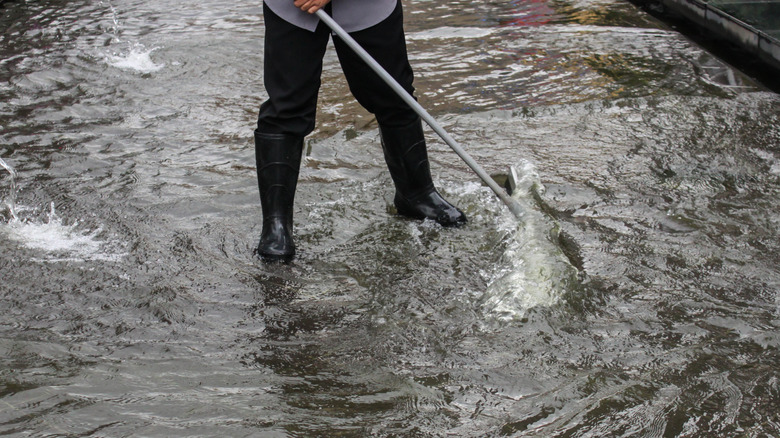
If your driveway floods regularly, you may face way bigger problems than just soggy shoes and a wet carpet. That rainwater has to go somewhere eventually, and if it doesn't run off into your yard, it could be getting under your house. There are a number of ways floodwater can harm your home, and the damage can lead to thousands of dollars in repair costs. One way to say goodbye to flooded driveways is to install a French drain, and once the project is finished, you wouldn't even know the drain is there.
Interestingly, French drains have nothing to do with France. They take their name from Henry French of Massachusetts, who developed the system in the 19th century as a way to reduce flooding in fields growing crops. In principle, it's quite a simple concept. You bury a perforated pipe into the ground along the length of the driveway on a slight slope. Then, water soaking through the dirt will take the easy route and flow downhill through the pipe to wherever you direct it. As a result, rainwater won't build up on the driveway and cause flooding.
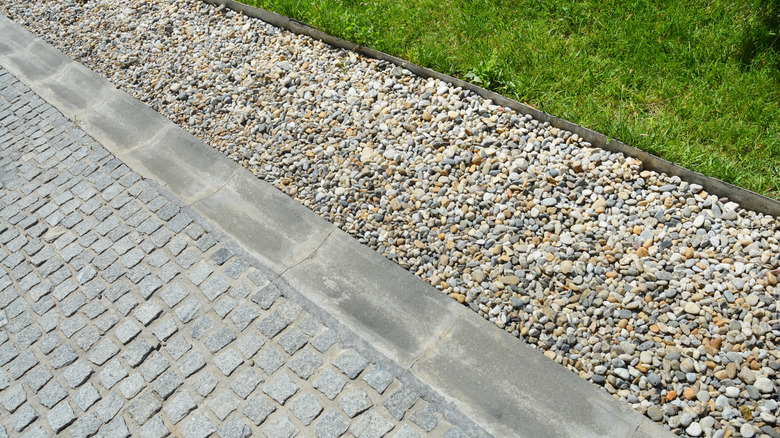
Although it is possible to cover the perforated pipe with sod, this can lead to problems with dirt getting inside and causing blockages. Instead, it is usually covered with gravel or rock. There are a number of different types of gravel to consider that will complement your existing driveway, so a French drain isn't just functional — it will also look good.
Here's what French drain installation typically entails
The materials required to install a French drain are both affordable and durable. If you're reasonably fit, it's possible to do the work yourself, though getting quotes from landscape contractors is always an option. The ditch in which you'll bury the pipe needs to be 6 to 12 inches wide and 18 to 24 inches deep. The slope should be around 1 inch for every 8 feet. So, while you might start at 18 inches, the trench could get considerably deeper at the downhill end.
French drains are common, but some jurisdictions regulate their construction, so check with local building officials to see if you need a permit. Also, think carefully about where the water will go. Dry wells or rain gardens (which are a smart solution for excess flooding) are ideal. Bear in mind that it may be illegal in your locale to direct the overflow onto the street or into municipal drains. You may also face legal problems if the redirected rainwater damages a neighboring property. Finally, there will be a considerable amount of dirt excavated from the trench, which you will need to either use elsewhere in the yard or dispose of in compliance with local ordinances.
It can take a lot of work to install a French drain. If you're doing it to keep the driveway from flooding once or twice a year, it may not be worth your time and money. On the other hand, if the problem is frequent, or excess rainwater is threatening your home, this solution is well worth considering.