

What To Do If You Find Carpenter Ants On Your Deck Or Patio
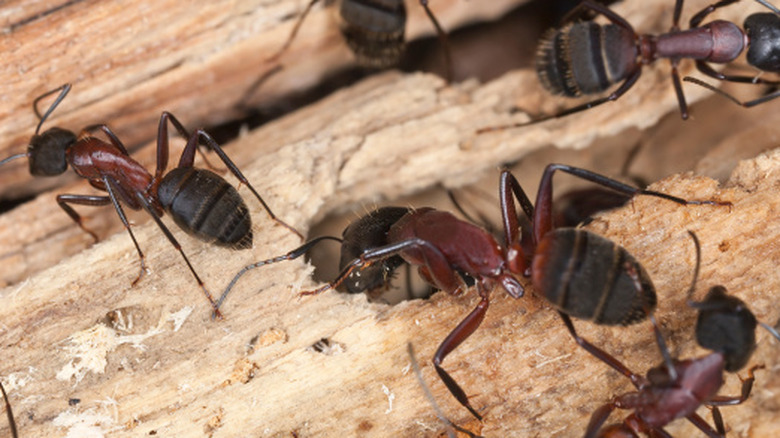
Spotting a trail of ants on your deck or patio is enough to make anyone groan with frustration. A line of carpenter ants, however, is both a frustration and a cause for concern. While little black ants on pavement are harmless to you and your property, carpenter ants can cause serious damage to wooden structures like decks or patios. (These insects can also bite you, leaving small, harmless, but burning wounds. This, however, is rare.)
Common signs of a potential carpenter ant invasion include piles of small wood shavings, tiny holes in the wood, small rustling noises, and the presence of dark, winged insects. You'll need to inspect your deck or patio for damp, decaying areas, which will attract more ants. If you think you have an infestation, immediate action to take includes using insecticides and removing infected or moist materials, as these ants thrive in soft, damp wood. Then contact a professional for full removal.
If you've never dealt with carpenter ants before, there are a few key pieces of information to know. There are two main types: C. modoc and C. vicinus. These are some of the largest ants in North America, a quarter-inch to a half-inch long. While carpenter ants don't eat wood, like termites do, they use it to hide their expansive nests, digging into the material and weakening it. It's important to know which pest is damaging your property.
While you may not immediately notice the damage from carpenter ants, the colony will eventually make itself known. This may even take a few years. Once the colony has been removed from your deck or patio, you can use preventive measures to ensure it doesn't return, like replacing the affected wood and fixing any potential sources of moisture.
Simple steps to carpenter-antproof your deck or patio
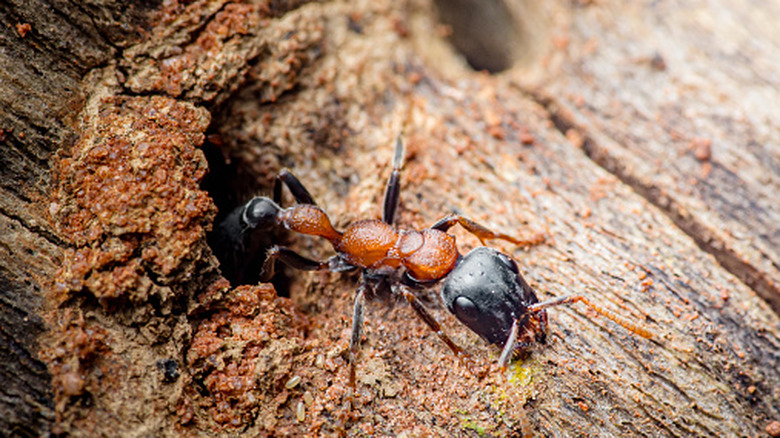
If you've started to notice a growing presence of carpenter ants on and around your deck or patio, it's time to inspect the wood and see if an infestation is present. A few carpenter ants here and there doesn't exactly imply an infestation, but it's important to conduct a thorough search to confirm this. If your porch or deck are moisture-prone, decaying, and covered with tiny wood shavings or piles of dead insects, you may be dealing with a colony. Another way to tell is by lightly tapping on the affected wood, listening for a sound that appears empty or hollow.
Once you've determined the presence of a colony, you can see just how much harm the ants have caused to your deck or patio. If the damage is extensive, you will most likely have to remove and replace the decaying wood. One of the main draws for a carpenter ant colony is moisture, so if you have a water leak above or below your deck or patio, you should address that root issue so the ants don't return.
You can try to get rid of carpenter ants yourself by spraying insecticide or DIY treatments like boric acid into the nest. However, if the damage or nest is extensive, or if you can't locate the colony, you will want to contact a pest control professional. Typically, it's best to let the experts handle it.