

What To Do If You Find Deer Droppings In Your Yard
We may receive a commission on purchases made from links.
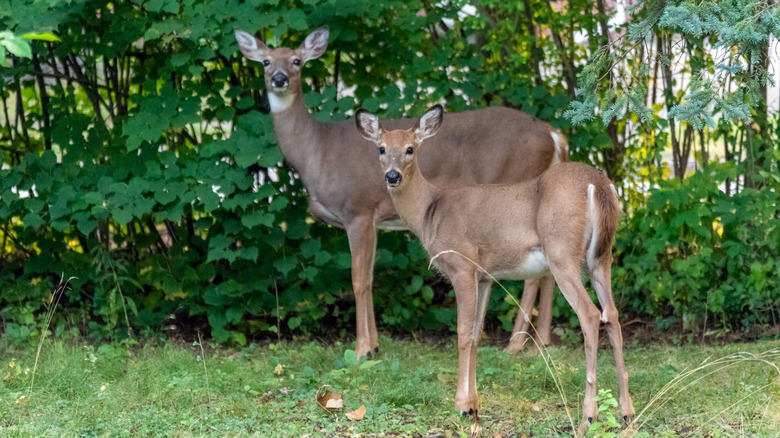
It's rewarding to step outside on a crisp, clear morning and admire the lush green lawn you've worked so hard to perfect. Discovering a pile of pellet-like deer droppings on the neatly clipped grass can put a damper on the whole experience. While spotting wildlife in your neighborhood is generally pretty magical, the things they sometimes leave behind are anything but. Deer are common visitors to suburban yards, drawn in by the buffet of tasty plants passionate home gardeners unwittingly cultivate. Unfortunately, what they eat eventually ends up on your lawn. If you discover deer poop in your yard, you need to clean it up quickly and dispose of it rather than leave it in place.
You might think you can just leave the distinctive, bean-shaped pellets where they are. Could deer scat be one of the best natural fertilizers for your lawn, you may wonder? However, these droppings often end up doing more harm than good in your garden. Animal waste typically has high levels of nitrogen, a plant macronutrient needed in moderate amounts. However, it's highly concentrated in deer droppings. An overabundance of nitrogen can burn turfgrass, leaving unsightly brown patches in your otherwise lush green lawn. Beyond aesthetics, deer poop poses a health risk for you, your family, and your pets. That seemingly innocuous pile could harbor dangerous pathogens. The small pellets also hide in the grass, making them challenging to spot and clean up. Nonetheless, ignoring them isn't the best strategy if you want a nice-looking lawn and a sanitary backyard.
How to clean up deer droppings and prevent future messes
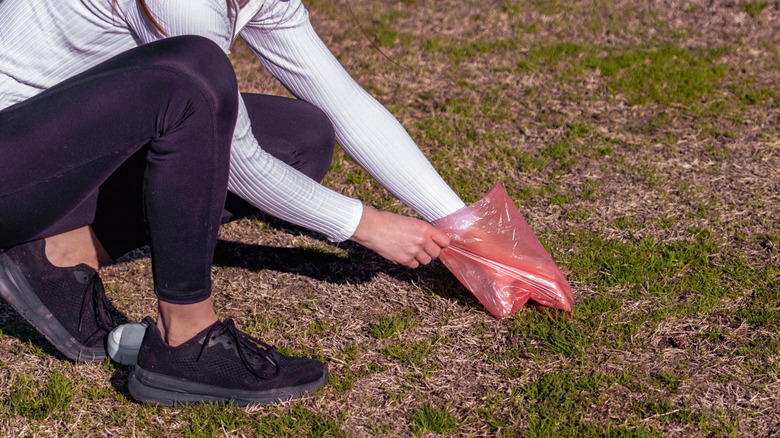
When cleaning up pesky deer droppings, your safety should be a top priority. As mentioned, deer scat may be contaminated with pathogens, so never handle the pellets directly. At minimum, pick up the poop with a plastic bag over your hand. Ideally, wear disposable gloves and a mask, and use a scooping tool — like a garden trowel or small shovel — to pick up the waste. A Heeyoo Dog Pooper Scooper with a tray and rake would also do the trick. Drop the deer poop and the gloves into a sealable plastic bag, close it completely, and toss it in the outdoor trash can. Afterwards, clean and disinfect your gardening tool — or whatever implement you used to scoop the droppings — using diluted bleach or a disinfecting spray.
To solve the problem in the long term, you need to employ humane deterrents to keep deer away from your property. There are plenty of options to explore. Motion-activated sprinklers are harmless to deer; they work by startling them. You could also grow plants that keep deer away. They typically have a scent or taste that deer dislike — think a dense hedge of boxwood shrubs. They may also have mechanical defenses, like the thorns on Rubus species brambles. If these natural methods fail to keep deer out of your yard, apply deer repellent, like this highly rated I Must Garden Natural Deer Spray, around the perimeter of your yard. The repellant works by creating a strong scent or bitter taste that discourages deer. Once the deer droppings on your lawn are gone, you can enjoy your backyard without worrying about nasty surprises.