

The Budget-Friendly Countertop That You Saw In Every Kitchen In The '60s
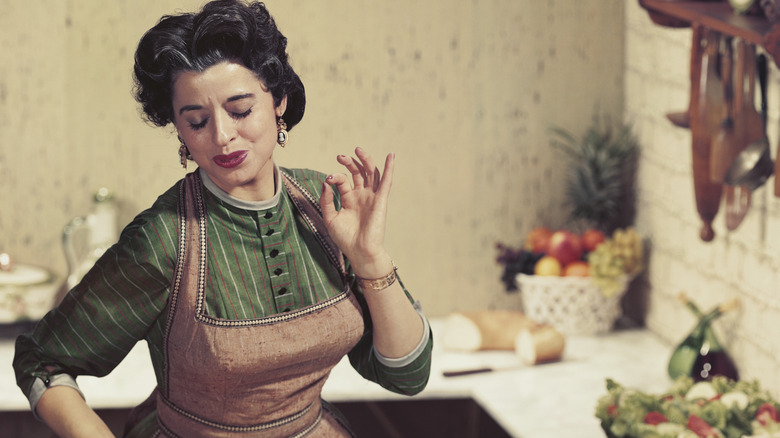
You would be hard pressed to walk into an original 1960s-built home without catching sight of at least one laminate countertop. This material became popular in the post-war period because it had become associated with durability, a resistance to staining, and a relatively low price point. In addition, that specific time period involved an emphasis on human-made materials due to advances in technology, so surfaces like laminate were often chosen over natural materials like stone or wood.
Laminate was sold in a variety of colors and patterns, though the most popular shades in the '60s tended to be either muted earth tones such as brown and olive green — inspired by Mediterranean designs — or bright, neon shades motivated by the pop art movement of the time. As such, it wasn't unusual during this decade to walk into a kitchen and be greeted by a neon pink or bright green countertop, a reflection of the experimentation of the era. In fact, laminate was so popular during this era that it was used everywhere from public music venues to commercial ships.
Modern interior design trends have since shifted away from obvious human-made materials and bright, artificial colors in favor of organic materials like wood and tile, or at least laminate that emulates the patterns and grains of those natural textures. But if you find the solid-color laminate countertops of the 1960s charming and you like the idea of having this budget-friendly option in your own kitchen, you may be wondering if there is still a place for it in contemporary interior design.
Modernize one-tone laminate countertops
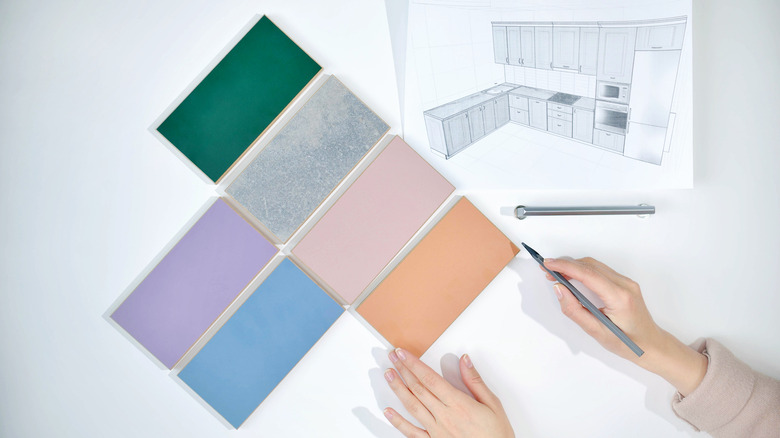
Single-color laminate countertops are still available in a variety of shades. This means you can easily bring this classic '60s material into the modern day by choosing a tone suitable for current trends. For example, rather than the burnt orange characteristic of the post-war period, you could opt to get a laminate counter in a more rustic, red clay shade. This is a popular color at the moment — as shown by HGTV Home by Sherwin Williams' Color Collection of the Year — and it still allows you that stunning pop of color in your kitchen that was so common in the 1960s without looking too retro or outdated. In a similar vein, you could swap the old-fashioned avocado green for a muted, dark green similar to Behr's 2026 Color of the Year, Hidden Gem.
Once you've selected a laminate color that you like and that feels like a good balance between 1960s inspiration and modern decoration, you need to consider how to style your kitchen around it. Texture is an important element of interior design because it introduces visual interest and depth to a space. Therefore, if you have a solid-color laminate countertop, you may want to add texture to your home decor by using wicker baskets, greenery, and dynamic metal finishes such as brushed copper.
Another great way to ensure your kitchen feels dynamic and interesting with a single-color countertop is with lighting. By using multiple light sources — such as lamps, ceiling lights, and even strip lights — you can draw focus to different areas, add depth, and make your kitchen more attractive.