

What To Do If You Find A Dead Bird In Your Pool
When thinking of ways to keep your pool interesting and exciting, discovering a dead animal floating in the water is most definitely not on the list. While unpleasant, it's fairly common for homeowners to find dead creatures taking a swim in their backyard retreat before they can. If left uncovered, you may find colorful feathered friends flocking to your yard, your pool's reflective, glimmering surface a tempting bathing or drinking oasis. While ingesting small amounts of chlorinated water are not typically harmful, consuming larger amounts can lead to fatal results due to the chemicals used to keep pools clean and sanitized. Birds can also drown in pools, leading to an untimely demise. If you find a dead bird in your pool, don't panic. While unsightly, the avian carcasses are unlikely to cause major health risks to those swimming in the water. However, it is important to take the necessary steps to remove the dead bird from your pool and disinfect it accordingly.
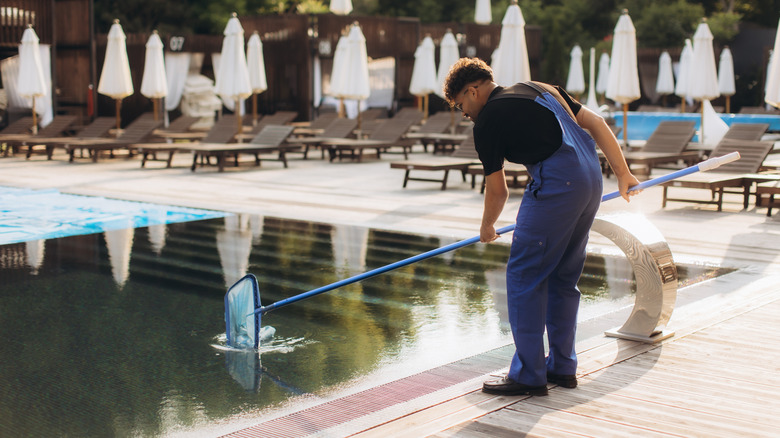
You can use a pool skimmer to gently scoop the dead bird out of your pool. You can also take the carcass out by hand. If opting for the latter, it's important to use gloves when handling the bird corpse, as they can carry diseases and various bacteria. After removal, place the remains in a plastic bag, and dispose of it in your garbage bin. Alternatively, you can bury it in your garden, but ensure you dig a hole at least 2 feet deep so it can be properly hidden from scavengers.
Clean and disinfect your pool after removing the dead bird
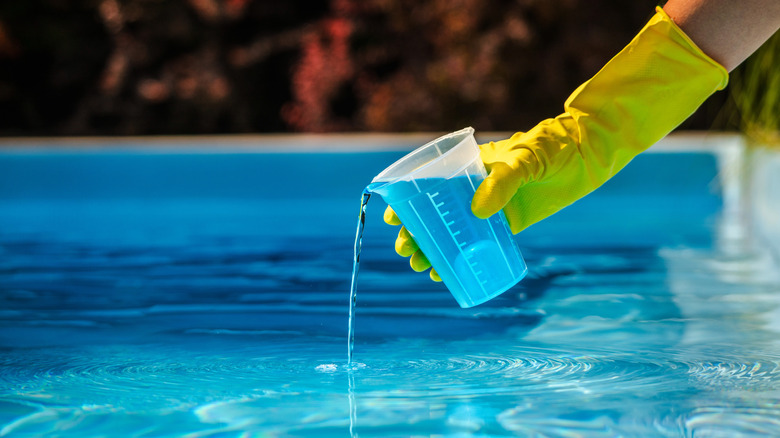
With the dead bird removed, you can start the task of disinfecting and cleaning your pool and any equipment used to remove the remains. Even if you wore gloves to remove the body, wash your hands thoroughly with soap and water after properly disposing of it. To effectively sanitize the water, increase the amount of chlorine to 2 parts per million, making sure pH levels are at most 7.5. The pH and chlorine levels should stay consistent for at least half an hour to ensure the water is being adequately cleansed and disinfected. Chlorine can effectively kill germs within a few minutes if maintained at proper pH levels, which is typically between 7.0 to 7.8. It's also important to maintain a temperature of 77 degrees Fahrenheit while cleansing. If you increase your pool water temperature in the hopes of increasing disinfecting time, it will actually have the opposite effect since chlorine can evaporate quicker in hot temperatures. Your pool filter should also be running during all of this, as well.
The entire disinfecting process should take between half an hour to one hour. While waiting, you can disinfect any items used to take out the dead bird by fully submerging and cleansing it into the sanitizing pool water. If levels and temperature are properly maintained, you should be able to safely swim in your pool after that time period. For ease of mind, however, you can leave your pool closed off overnight and go back to happily swimming in it the day after. Just make sure to properly cover it overnight and after every use to prevent more animal casualties.