

What To Do When A Hole Appears In Your Yard
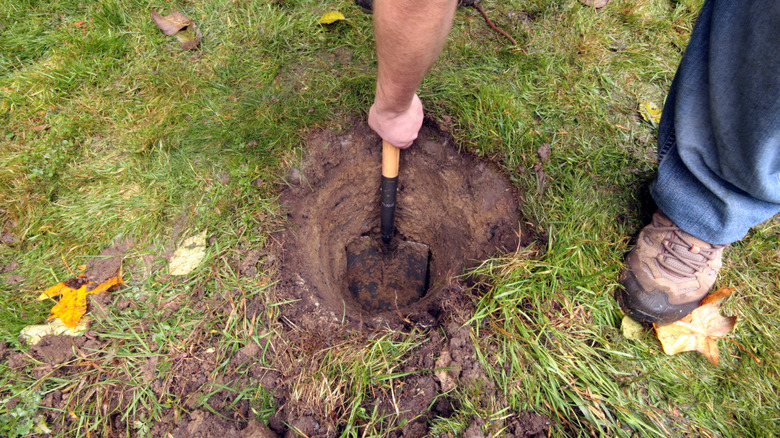
While admiring your yard, you may notice a hole has appeared. You're probably wondering where it came from, but more importantly, if it's something to worry about. It could be a safety hazard or a sign of a larger underlying issue in your lawn. The good news is that most yard holes are manageable once you understand what's causing them and how to properly deal with them. By filling it with a compost and soil mixture, or stabilizing the base with large stones or gravel first, you can quickly and safely carry on.
Holes in your lawn are common, and they're usually not random. Critters like moles, voles, birds, and large spiders, for instance, can dig into the ground for food or shelter. They leave behind small dips across your yard. If you know the critter causing the problem, such as identifying and dealing with a mouse hole, you can use specific methods when filling the hole to keep it from coming back.
Not all yard holes are caused by animals, though. Rotting tree roots, irrigation issues, or simple soil settling can create sudden dips or openings. Heavy equipment can cause ruts and low spots. Foot traffic or kids playing outside can even put ruts in the dirt. The holes may be scattered or in one specific spot, so if you find one, you should look for more. If you ignore the hole, it could lead to bigger problems, so it's important to understand what the holes really mean.
Don't ignore the hole; fill it in
Holes in your lawn create an uneven surface that could cause a person to trip or twist their ankle. If the hole is part of an underground system, the surrounding soil could also be unstable. Leaving holes could allow animals to reuse or expand them, which can weaken your yard's structure and damage plants over time.
You can safely fill the hole in, but this is where homeowners may make mistakes. If it's small, you should cut around it, fill it with sand or compost mixed into the soil, and press it down firmly. If you notice more holes appearing, you can take some extra steps as well. Filling the hole alone may not solve the long-term problem. Ensure you've eliminated food or shelter sources in the area. Pick up any fruits or vegetables as soon as they are ready, and trim overgrown shrubs and bushes.
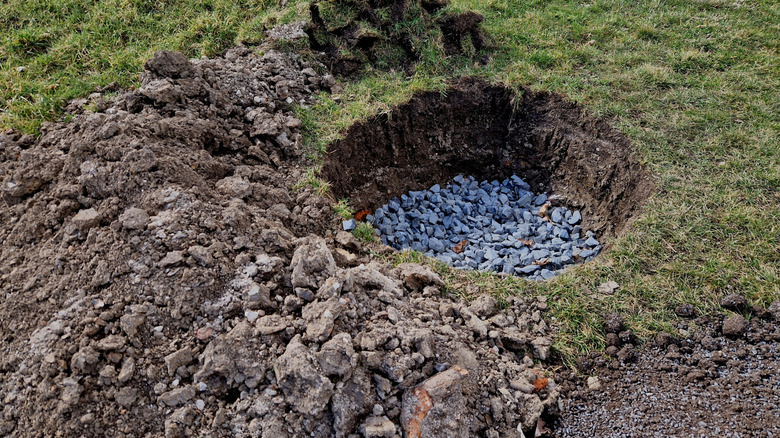
For deeper holes, you should fill the base first. It's a simple fix that makes your yard safer and more durable. You can use broken bricks, gravel, or some large stones to fill in the bottom. Doing this creates a secure foundation and prevents the hole from collapsing again down the road. Once you've filled the hole's base, you can layer soil on top and press it down firmly. Leave it 1 or 2 inches above the surrounding ground so it can settle, and feel free to add in grass seed so it can blend back in with your lawn. This method ensures you remove the hazard and can also discourage animals from re-digging.