

What To Do If Weeds Start Taking Over Your Flower Pots
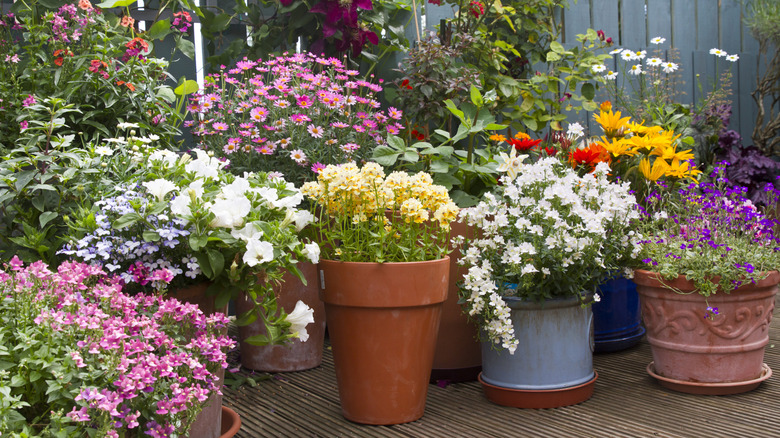
Whether you've got a single potted petunia or you've used creative flower and plant combinations to create a dynamic container garden, discovering weeds in your flower pots can be downright maddening. While you expect a few stray dandelions to pop up in your lawn, spotting weeds in planters can feel like a direct attack on your carefully cultivated plants. This pesky greenery isn't just an eyesore. It actively steals sunlight, water, and nutrients from whatever you want to grow. Pots contain limited resources, so a weed infestation is dire. Your plants' growth may be stunted, or they could be smothered completely. Thankfully, dealing with weeds in containers is easy, as long as you have some mulch to add on top of the soil.
The best way to start tackling this common gardening issue is by hand-pulling the weeds. Grab the entire weedy plant, from its leaves to its roots, and wiggle it out of the soil. Check to make sure you haven't left any plant parts behind before moving on to the next weed. Resist the urge to spray the problematic greenery with herbicide. If you're manually pulling weeds from a planter and applying mulch, then — as we'll discuss later — herbicide is unnecessary. If your pot is overrun with weeds, your best bet is to carefully remove the plant you want to grow. Shake the soil off its root ball (along with any weed seeds and root segments), and repot it in fresh, sterile soil.
Use mulch to naturally prevent weeds from growing in your potted plants
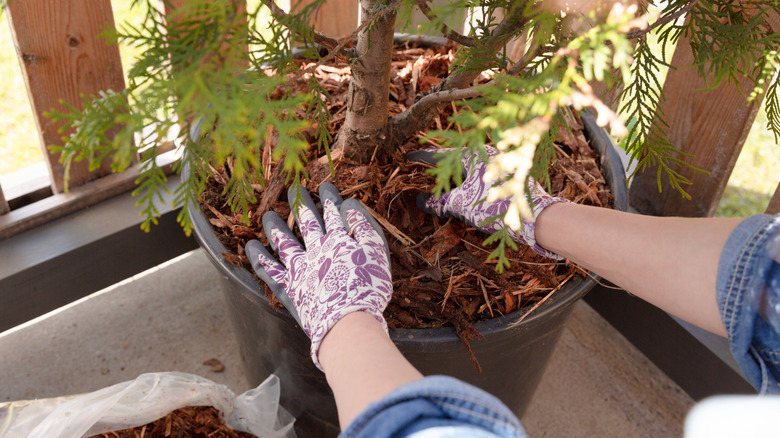
Once you've cleared out the existing invaders from your flower pot, it's time to prevent weeds from growing in there to begin with. Applying some mulch to the container is hands down the best option for creating a barrier. Spread a layer of organic material at least 1 inch thick, such as wood chips or shredded leaves, across the surface of the soil. It will stop sunlight from reaching dormant weed seeds. It's also an inhospitable landing spot for seeds floating in on the wind. Germination is stopped in its tracks. Bonus: Mulch helps the soil hold onto moisture during hot summer days.
Prevention is better than a cure in gardening — as is the case in many other areas of life. If you need to repot a plant or you are creating some new containers, use fresh, high-quality, sterile potting mix rather than old potting mix or garden dirt. Often, upcycled soil is riddled with tiny weed seeds and other unpleasant amendments, such as fungi or pathogens. If you're reusing a flower pot, clean and sanitize it before planting anything in it.
Finally, pay attention to where you situate your planters. Pots sitting nearby overgrown lawns or garden beds are prime targets for wind-distributed weed seeds. If they're on a patio, deck, or balcony, regularly sweeping the area to keep it free of debris can reduce the chance that unwanted greenery will set up camp. By using mulch and keeping things clean, your potted flowers will thrive and you'll no longer be making the biggest mistake with your container garden.