

What Do The Numbers On Plastic Nursery Pots Mean?
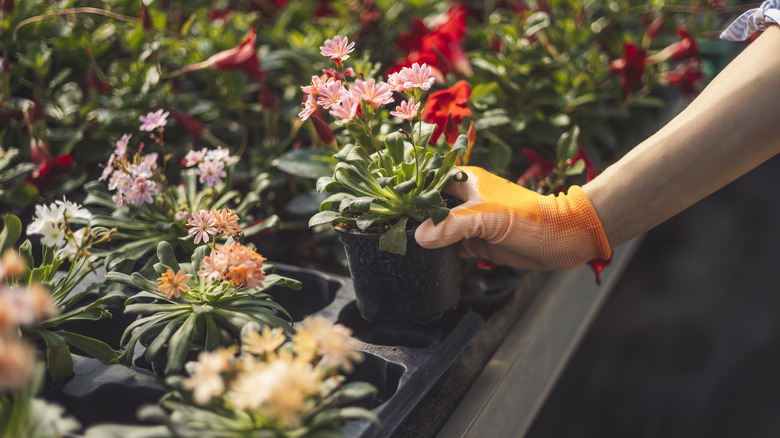
Buying plants online is never easy, but it's especially difficult when you're looking for a specific size plant. While searching online or through a catalog, you may see a # symbol next to a number in the description. These symbols are meant to be helpful, giving you an idea of the size of a nursery pot and the plant within so you can better plan out your yard. If you're looking to buy the right planters for your garden, there are a lot of factors, size being one of them.
However, thanks to terminology differences and little standardization across companies, these numbers may end up confusing you more than helping. Though they are often associated with different dimensions, these numbers denote sizes specifically within a company rather than standard measurements. From one plant nursery to another, you could see pots of different sizes that share the same number. While it's frustrating, understanding more about these numbers and what to look for is an important tip to help you confidently shop for houseplants online.
These numbers are meant to differentiate sizes between plants. They are called trade gallons. For example, a #1 pot is technically a 1-gallon container. However, that's not an accurate measurement. Despite its name, the pot doesn't necessarily hold that much. This terminology was brought over from World War II, when plants were sold in surplus gallon cans. Though the sizing has changed, the name remained, leading to confusion for people buying plants in nursery pots.
Understanding the numbers on your nursery pots
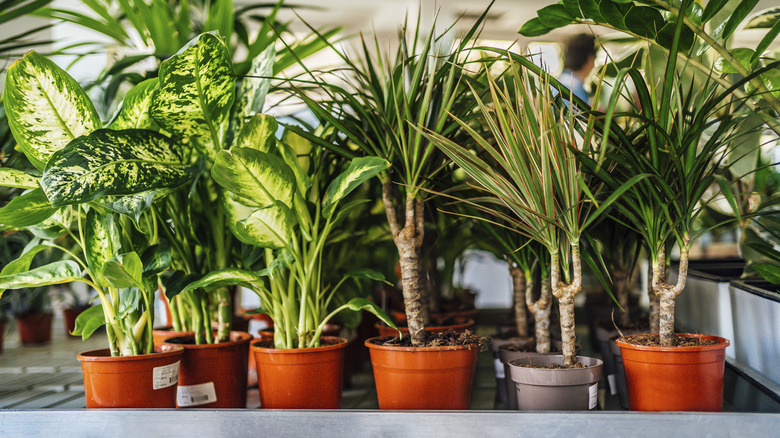
Instead of being used to represent specific measurements, these numbers differentiate size changes within each company. For example, plants in #3 pots will always be smaller, and usually younger, than those in #4 from the same place. Additionally, though every nursery is different, there are some generalizations you can make. Most perennials and very young shrubs and trees can be grown in numbers under five. After that, you get into pot sizes really only for large shrubs and trees, or a series of companion plants in one pot.
If you need a specific pot size, try to find a company that gives a bit of a better measurement. For example, some places will give you a little more specific measurements by offering liter sizes or the diameter of the nursery pot. However, these still can be a little different from the regular size, as they don't necessarily tell you things like whether a pot is short and wide or tall and long. Even nursery pots measured in inches can be measured based on the height or the width depending on the company. While it's unfortunate, if you do end up with the wrong size, you can put it to good use. For example, you can reuse old nursery pots with a clever potting tip to help fill up space in larger containers.