

Cover A Concrete Patio With An Option That's Softer (No, It's Not Tile)
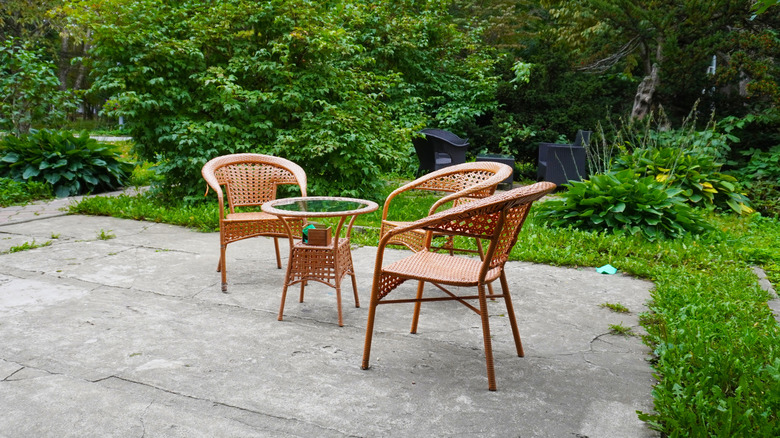
Concrete is a wonderful patio material. It's long-lasting, easy to clean, and can define an outdoor entertaining space. However, that doesn't mean it's perfect for every situation. There are many outdoor patio ideas that can revamp your space, and if you don't like the way your concrete looks, there is a solution — and no, it's not standard outdoor tiles. Instead, consider covering your patio in a rubber overlay.
While installing composite decking tiles is an easy solution to upgrade old patio concrete without having to repave it, these tiles don't fit everyone's aesthetic preferences. In contrast, rubber overlays can be poured onto concrete patios to create a single, solid surface. They come in a variety of colors and can mimic the look of stone, allowing you to customize your patio, covering up any imperfections while also making it a bit safer than hard concrete. Plus, rubber overlays can be applied over existing imperfections in your concrete, saving you from having to level the surface or demolish it beforehand.
What to know before installing a rubber overlay
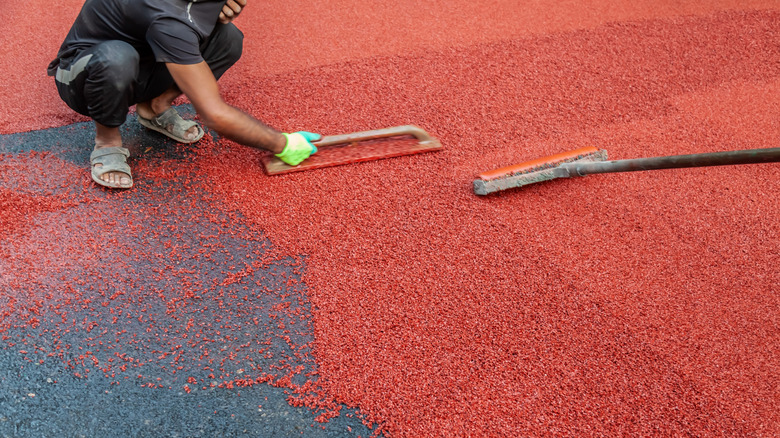
Like any patio material, there are pros and cons to consider before opting to install a rubber overlay. Since it's often made from recycled materials such as old tires, rubber stone may be the durable and sustainable alternative to your outdoor hardscape needs, which is a solid pro if you're looking for an eco-friendly patio solution. Its flexible material expands and contracts in the heat, is slip-resistant, and provides a softer landing compared to concrete if someone were to take a spill. It's also cooler to the touch than many other patio materials, which is ideal if you live in a climate with sweltering summers.
While there are many upsides to opting for poured rubber surfacing, cost needs to be factored into your choice as well. You can expect to pay about $8 to $15 per square foot for material and labor, depending on the company you work with, your design choices, and local labor rates. Maintenance isn't high, but you will need to keep the rubber overlay free of dirt and debris, and reseal it about every five years. If the price of poured rubber is a bit out of your budget, consider rubber tile pavers, which you can likely install yourself, saving on labor costs.