

Coverings For Sliding Glass Doors Are More Than Just For Looks
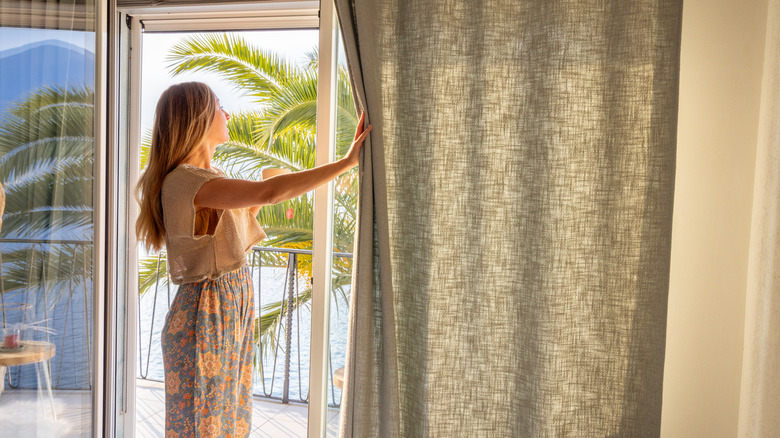
Adding coverings to your sliding glass doors is an opportunity to add fun colors and a bit more style to your home. Since they can take up a whole wall, you want something that looks nice and matches the rest of your space, whether it be blinds, shades, or curtains. However, while picking the right kind is important when it comes to your design, you want a covering for more than just decoration. While having too much natural light at home isn't necessarily wrong, it does lead to some problems — and one of those is its effects on your floors.
Many types of flooring are not designed to withstand constant heat and sunlight. When the same area is exposed day after day, it can warp, fade, or change colors. This happens with wood, vinyl, and laminate. Even carpet can lighten over time when exposed to constant light. While there are some modern alternatives and protectants that make your flooring more sun-resistant, it still isn't perfect. The heat that comes in from the sun can also lead to issues, especially with warping.
In some ways, your sliding glass doors are just giant windows, letting in light and heat. Many types of flooring are not designed to withstand constant heat and sunlight. This is why coverings are for more than just looks. Using them is one easy solution to help prevent your hardwood floors from fading over time, as well as several other materials.
How sunlight through sliding glass doors can damage your floors
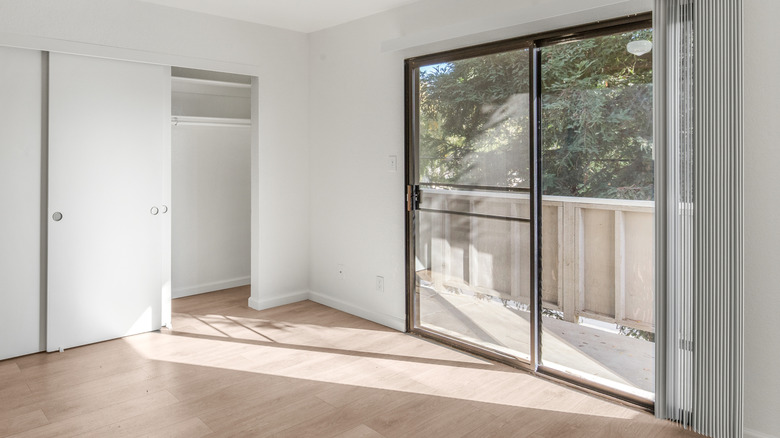
While any flooring can fade over time, natural floors are the most susceptible. Woods like poplar, cherry, and walnut are highly sensitive and will either lighten or darken when exposed to regular sunlight. However, other materials like hickory, maple, and red oak are slower to change and will lighten with regular sun exposure. Sometimes the finishes you place on top of your floor can also react to the light and change. Oil-based finishes may develop a yellow tint. Sunlight can both alter finish color and weaken protective layers, leading to long-term damage. Regular temperature fluctuations may lead to swelling and shrinking of your floors, as well. Over time, you may notice cracks or warping in areas where temperatures fluctuate the most.
Carpet is also susceptible to light and may become brittle and deteriorate. Laminate and vinyl have improved over the years to withstand heat and sunlight better, but they can still warp and fade with constant exposure. The glue you use to attach this type of flooring can also melt in the sun, causing it to lift and move. Sunlight won't just affect your flooring: it can fade things like blankets, furniture, or art over time.
Choosing the right coverings for your sliding glass doors
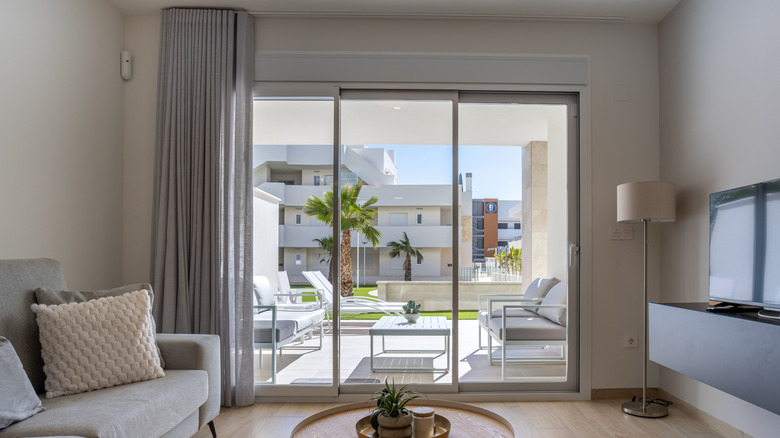
Now that you understand their importance, you can choose the covering that best fits your needs. If you want to find a balance between letting light into your home, but not warping your floors or heating it up, you can keep sliding glass doors covered and private with a customizable solution — solar shades, which block some of the heat and the UV, while still allowing visible light to enter. UV window films are another option, as they block significant light and heat and slow fading.
Horizontal blinds can work, but if you frequently use your doors, vertical options may be more practical since they don't need to be fully opened to function properly. And if you're just going to leave it open to avoid the headache, it defeats the purpose of protecting your floors.
However, there are other options to consider. You can also look at vertical blinds, cellular shades, curtains, and drapes. Each has its own pros and cons, but generally does a decent job of blocking out at least most light and heat when closed. It mainly comes down to figuring out the balance you want between ease of use, light entering your home, and protecting your floors from damage.