

The Temperature Mistake That Could Be Stressing Your Spider Plant's Health
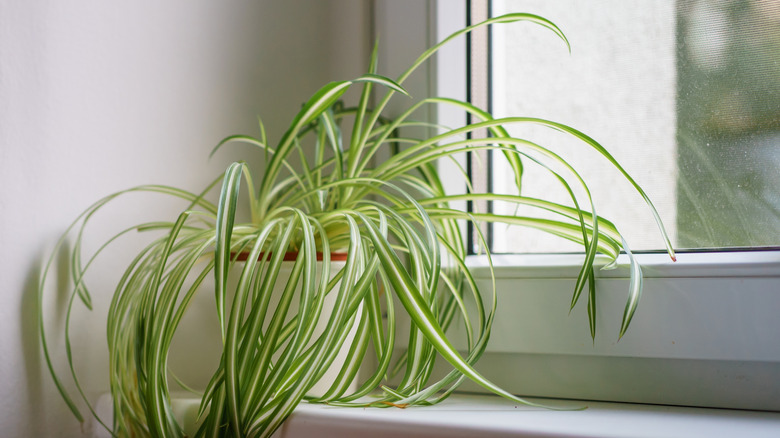
It's easy to comprehend and implement care of spider plants (Chlorophytum comosum) if you remember one thing: Spider plants are tropical. That simple fact should guide house plant enthusiasts in such care aspects as humidity, watering, and temperature. These house plants seek a warm, moist environment, and it's just not temperature spider plants are sensitive to, but temperature consistency. Spider plants want a consistently comfortable temperature and are prone to suffer from extremes and sudden changes. Allowing your spider plant to remain in a spot that's too cold or changeable in temperature could be the reason your spider plant is dying — or at least the reason it looks like it is.
Spider plants thrive at temperatures from 65 to 75 degrees Fahrenheit, and especially like warm temps during the day. Colder temperatures — particularly below 50 degrees Fahrenheit — can affect their growth and cause such damage such as crispy and discolored leaves. If exposure continues, plants become vulnerable to pests and disease as they weaken. You'll likely notice similar foliage changes, including limp leaves, if your spider plant experiences sudden changes in temperature.
Keep your spider plant out of cold spots and drafts
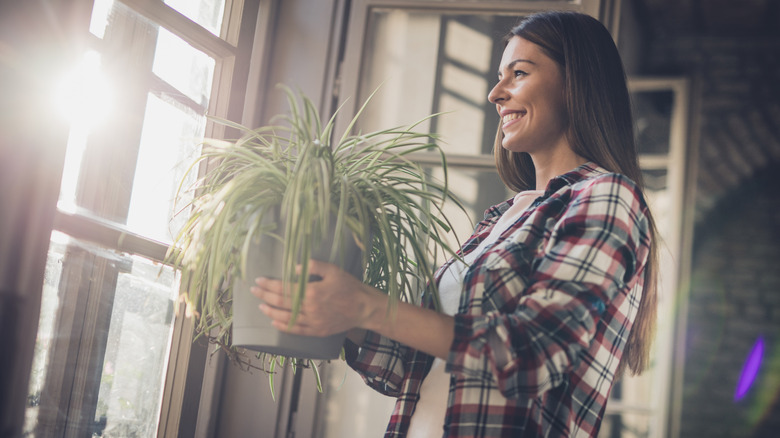
Placement is key for ensuring consistent temperatures for your spider plant. A window can be ideal because of the plant's requirement for indirect, bright light, but be on the alert for chilly drafts and consider moving the plant away from the window in the winter. In fact, be sure to keep spider plants happy all winter by following temperature and other tropical plant guidelines.
Be careful where you place any spider plants in hanging pots or baskets. It's important for the plant to be away from air conditioning units or heating vents. If you're considering taking your indoor spider plants outside in the summer, make sure it's at a time when temperatures, especially at night, don't drop below 50 degrees Fahrenheit. Don't forget to bring them inside when outdoor temperatures reach that point.
Good air circulation around your spider plant helps provide the consistent temperature it likes; consider using a fan in your spider plant's space, but not close enough to the plant to dry it out. Monitor the temperature in the area around your spider plants, and also consider the impact that temperature has on the humidity the plants need. Heating and air conditioning reduce humidity. The flip side is that adequate humidity makes temperatures feel warmer, so these factors go hand in hand with spider plant care. You may need to look into ways to increase humidity for plants, such as adding a humidifier.